What Runners Should Know About Quadratus Lumborum Pain
The quadratus lumborum, or QL, doesn’t get the attention runners give their quads, hamstrings, and glutes. That’s a mistake: this deep trunk muscle helps steady the pelvis and torso with every stride, and irritation can affect both running form and breathing. The trouble is that a sore QL may be taking the blame for strain created elsewhere.
The QL connects the lower spine to the back of the pelvis. It helps you arch your back, bend sideways, rotate your upper body, and—in running—keep your trunk and pelvis controlled. It also assists with inhalation. Those roles are described by Nicole Haas, PT, DPT, founder of Boulder Physiolab in Colorado, and Spencer Agnew, PT, DPT, a physical therapist at Sword Health and run coach with Wisconsin-based Ascent Endurance Group. Runners may know the larger muscles better, including the hamstrings, but smaller stabilizers can shape how those muscles work together.
If the QL is irritated, pain may show up in the back or around the sacroiliac joints, where the pelvis meets the lower spine. Here’s the thing: that doesn’t necessarily mean the muscle itself is tight. It may simply be absorbing extra load because other parts of the body aren’t doing their share.
What Causes QL Pain?
Tight hip flexors can tug on the QL. When the psoas, a large hip flexor running from the lower back to the front of the hip, shortens, it can tip the pelvis forward and increase the arch in the lower back. The psoas and QL attach to the same group of lower spine vertebrae, so that shift can place added tension on the QL. Tight hip flexors are one possible contributor.
Weak glutes can set off a different chain reaction. If they don’t help maintain sound running mechanics, the knee may fall inward at landing while the opposite hip drops. The torso then has to bend and rotate, loading the QL over time. Downhill running may add to the strain by encouraging more arch in the lower back.
Limited movement elsewhere can matter too. Stiffness in the upper back, or pain and injury affecting the shoulders, hips, or mid-back, may shift work onto the QL. Haas’s description gets at the less obvious point: sometimes the muscle is “overworked and underappreciated,” irritated by the extra load around it rather than shortened on its own.
How QL Pain Can Affect Running
A QL problem can change your stride. If it contributes to shortened hip flexors and a forward-tipped pelvis, your knee may not lift as much. Agnew says that can limit forward force and leave you running with a more arched back—a combination that can compromise running mechanics while increasing the chance of back pain.
Breathing may also feel harder. The QL helps with inhalation, so when it’s tight or irritated, you may find it difficult to take a deep, easy breath. The available explanation points to a possible effect, though it doesn’t say how often QL irritation is the cause of breathing trouble.
A Three-Step Routine for Relief
For discomfort you suspect is coming from the QL, Agnew recommends a home sequence combining soft-tissue pressure and movement. If pain significantly limits your running, the routine can be done daily; for milder symptoms, try it two or three times a week. On running days, do the myofascial release, pelvic tilts, and hip hikes before heading out, then complete the remaining exercises afterward.
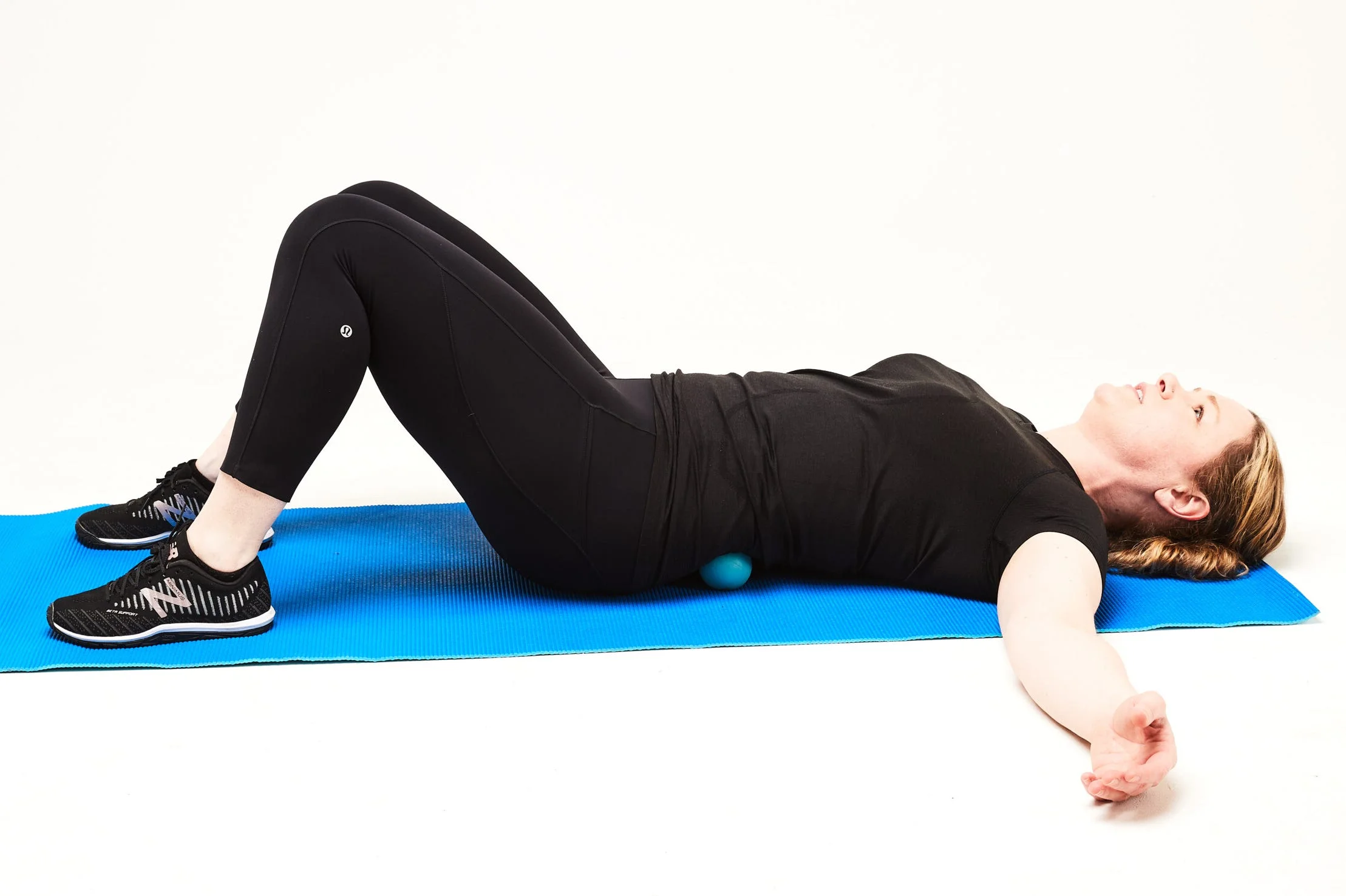
Step 1: Myofascial release
Agnew says gentle pressure may reduce the pain response by desensitizing soft tissue. Lie on your back or stand by a wall, place a softball, lacrosse ball, or trigger-point ball against a tight area of the lower back, and hold pressure for about 30 seconds while breathing deeply into your belly. Move the ball to another spot and repeat for two to five minutes, or for as long as you have. The pressure can feel uncomfortable, but it should remain tolerable for the full hold; ease off if it feels too intense.
Step 2: Pelvic and QL exercises
Pelvic tilts help you practice controlling the pelvis, while hip hikes activate the QL. A kettlebell side bend is intended to increase blood flow to the muscle, and a suitcase carry builds strength, stability, and muscle engagement for running.
Pelvic tilt
Lie on your back with your knees bent and feet planted. Alternate between arching your lower back and pressing it toward the mat for 30 repetitions. Then find the midpoint where your pelvis feels neutral; that’s the position to aim for in the next movements and while running.

Build strength before chasing more stretch
The exercises here take a practical approach: strengthen the muscles around the quadratus lumborum (QL), then work on mobility. That distinction matters. If stretching leaves your back more painful, more stretching may be the wrong answer. Start with these three strength moves:Hip Hike
Stand with your left foot on a step and your right leg hanging off the side. Keep the standing knee straight as you lower the right side of your pelvis, then bring it back level. Do 12 to 15 repetitions, switch sides, and complete two sets.
Kettlebell Side Bend
Hold a heavy kettlebell in your right hand while standing tall. A dumbbell, another free weight, or a heavy household object can work too. Bend your torso to the left, then pull upright while keeping your trunk firm. Keep the movement in the side bend: don’t twist or lean backward. Do 12 to 15 repetitions, change sides, and complete two sets. If you can’t reach 12 reps, use a lighter weight.
Suitcase March
Stand upright with a heavy weight in your right hand. March slowly, lifting each thigh until it’s parallel to the floor, and keep your pelvis steady as you alternate legs. Complete 12 repetitions on each side for two sets. Walk forward if you have room; otherwise, march in place. A kettlebell, dumbbell, other free weight, or heavy household object will do.
Stretch the QL and hip flexors
A half-kneeling side bend targets both the QL and the hip flexors. Kneel with your right foot forward and left knee down, with both knees bent at 90 degrees. Reach your left arm overhead and lean to the right, keeping your pelvis neutral. You should feel a gentle stretch at the front of the left hip and along the left side of your trunk. Hold for 30 to 60 seconds, switch sides, and repeat until you’ve accumulated about two minutes per side.
More ways to stretch your QL
These mobility moves can be done daily or several times a day, before or after a run. But pay attention to how your back responds. If stretching makes your QL hurt more, or the pain returns soon afterward, stop; Haas says stretching is likely not the solution.Child’s Pose With Side Stretch
Begin on hands and knees, with shoulders above wrists, knees beneath hips, and feet together. Keep your back flat as you move your hips toward your heels, stopping when you feel a stretch in your back, hips, or side body. Reach your arms forward and rest your torso on your thighs and your head on the mat for a breath. Walk both hands to the left and hold for 10 to 15 seconds to stretch the right lower back. Then move them to the right and hold for the same length of time.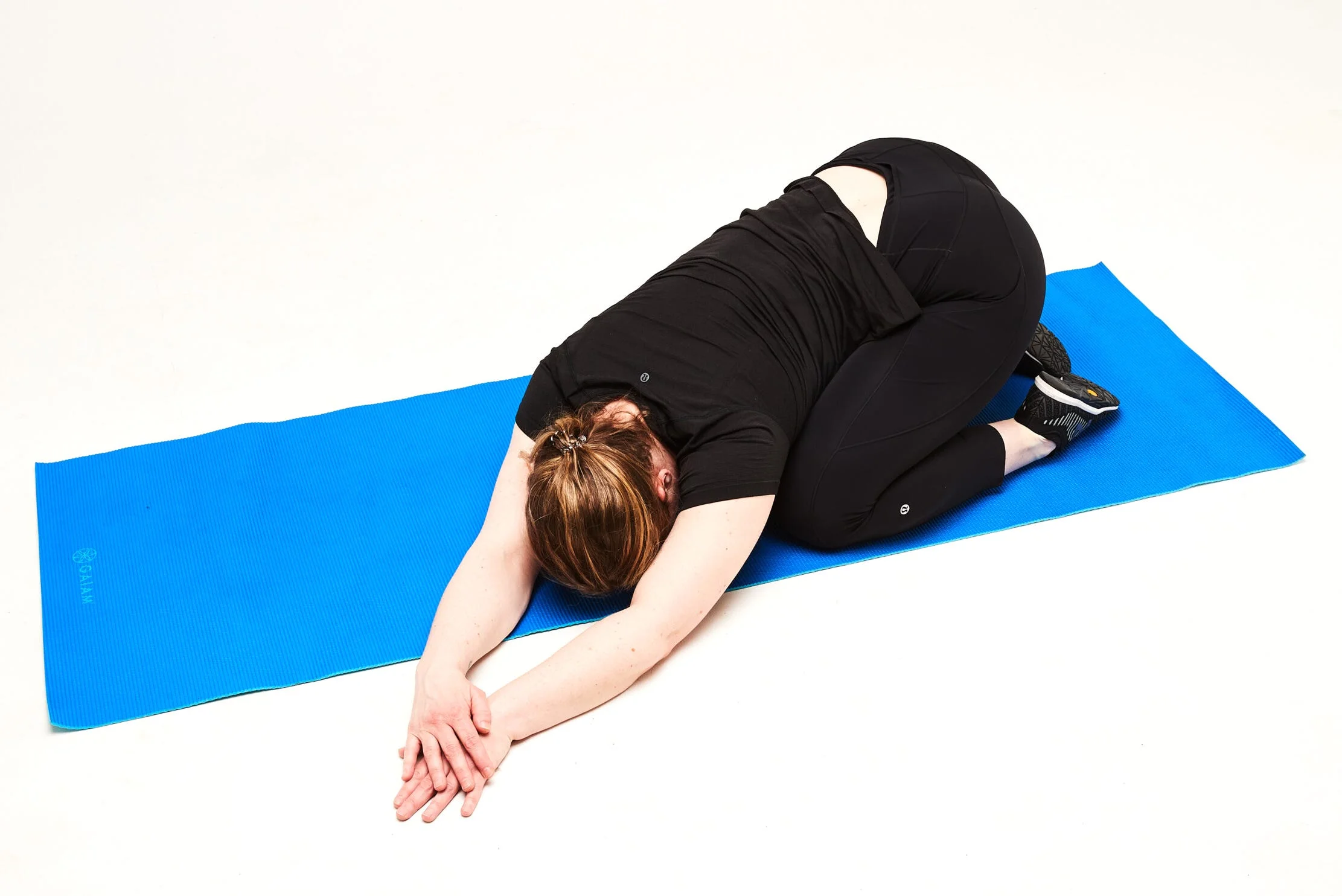
Dynamic Child’s Pose
Set up on all fours with shoulders over wrists, knees under hips, and feet together. Keeping your back flat, ease your hips toward your heels until you feel a stretch. Press your left hand into the floor and thread your right arm beneath your left armpit. Pause for several seconds, return to the starting position, and repeat until the right lower back feels looser. Switch arms to work the other side.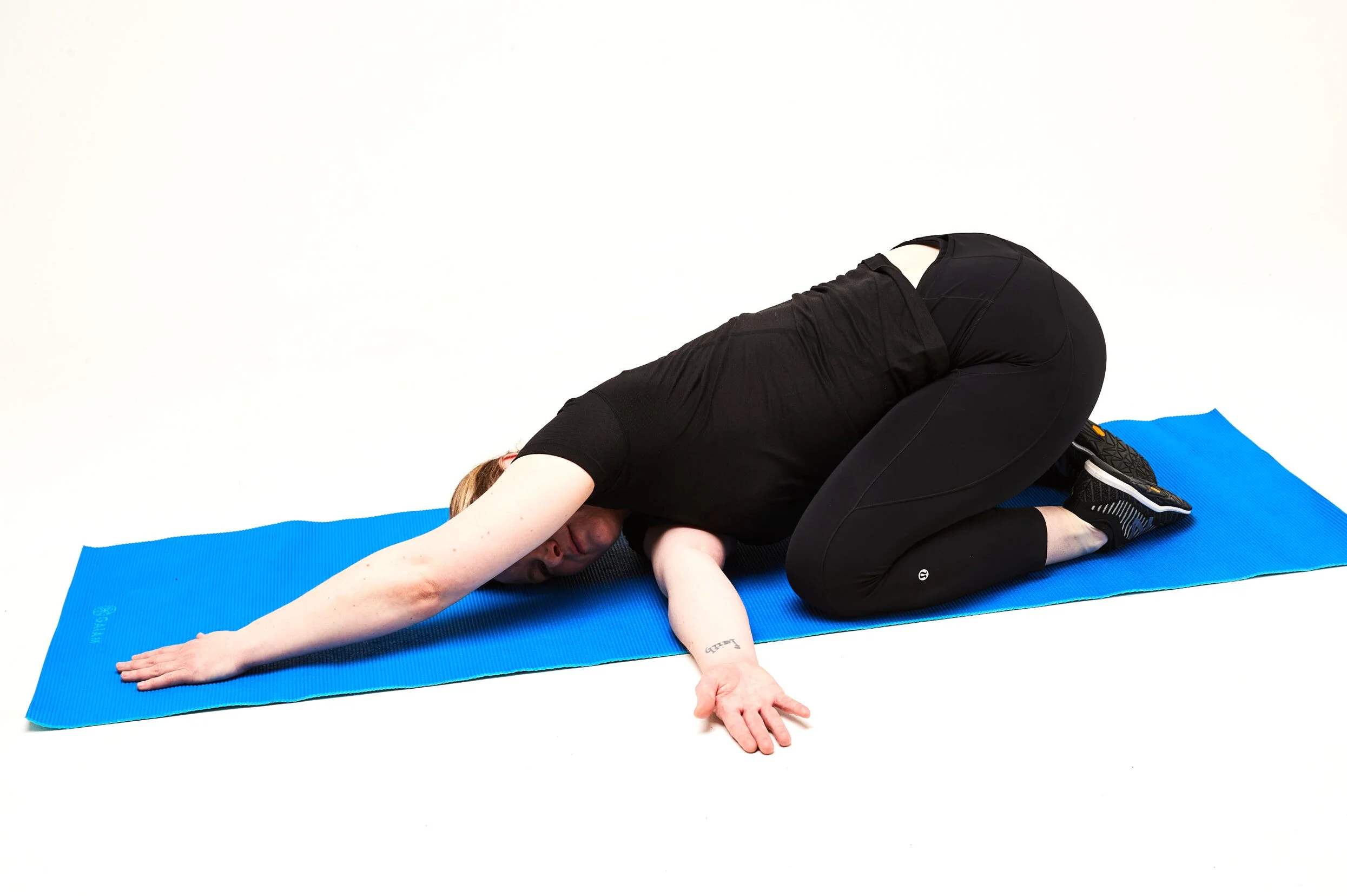
Dynamic QL Mobility + Hip 90/90
Sit with your knees bent and feet planted. Place your right shin in front of you and your left shin out to the side, keeping both knees bent at 90 degrees. Put your right hand on the floor in front of your right knee and your left hand on your left hip. Press through the right hand as you thread your left arm beneath your right armpit. Hold briefly, return to the start, and repeat until the left lower back feels looser. Switch sides and repeat.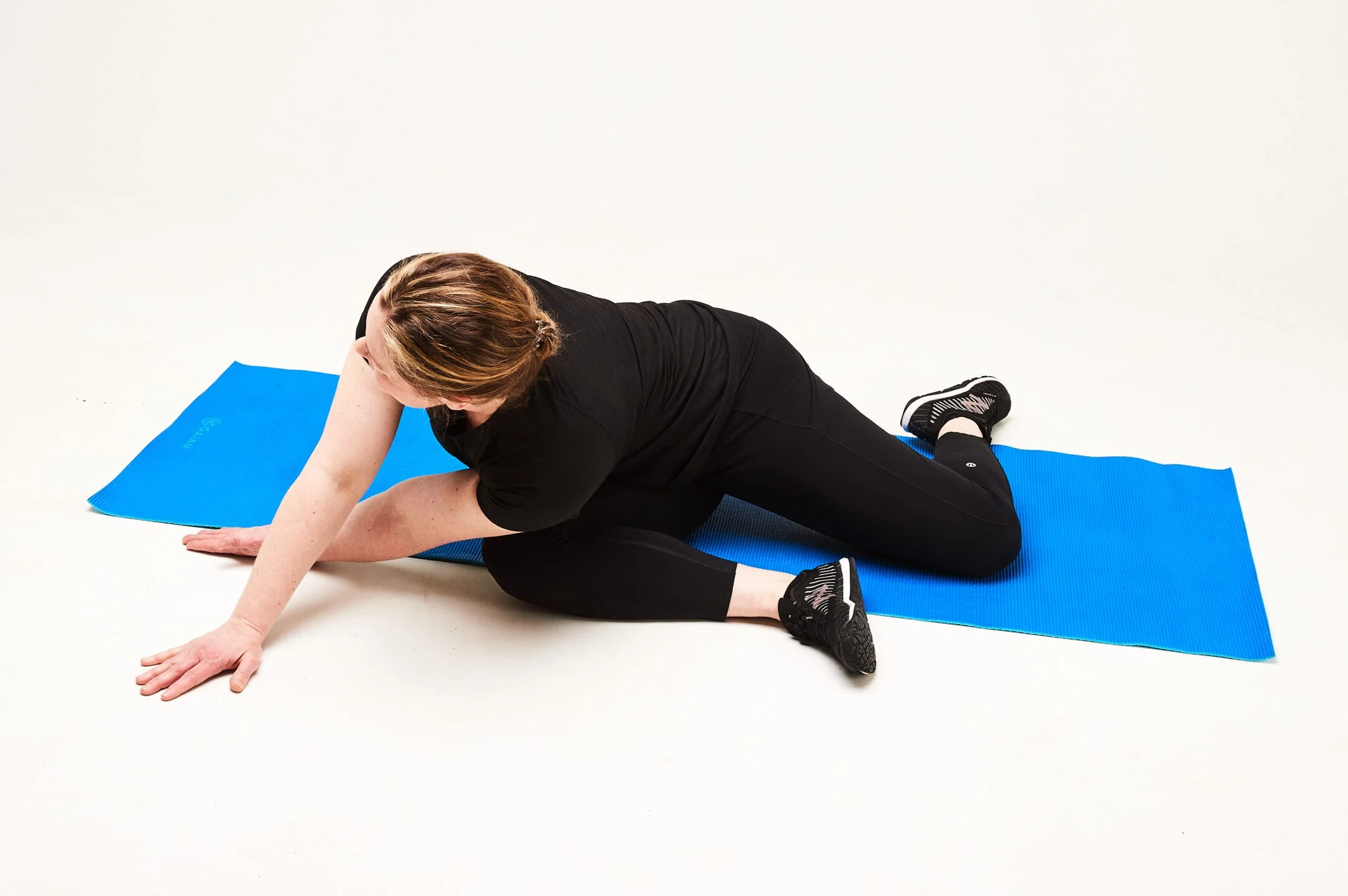
Build Hip and Core Control
The point of these two exercises is to help your glutes and trunk manage the forces of running, which may reduce strain on an irritated quadratus lumborum (QL). Start with one set each day so your body can practice the movement patterns. If you feel sore, take a day off. After roughly six weeks, shift to two or three sessions per week as part of your regular strength routine.Standing Clamshell
This standing variation trains the glutes while challenging pelvic control in a position that resembles running. That’s useful because weak glutes can leave the QL picking up extra work. **How to do it:** Stand with your back toward a wall, then step forward and balance on your left leg. Bend your right knee and rest that foot against the wall behind you. Lean slightly forward from the hips, keeping your back flat; use a chair or another stable object for balance if needed. Keep your weight over the standing leg instead of leaning into the wall. Open the raised leg outward like a clamshell, while keeping your hips level and the standing knee from collapsing inward. Do as many controlled repetitions as you can, aiming for at least six.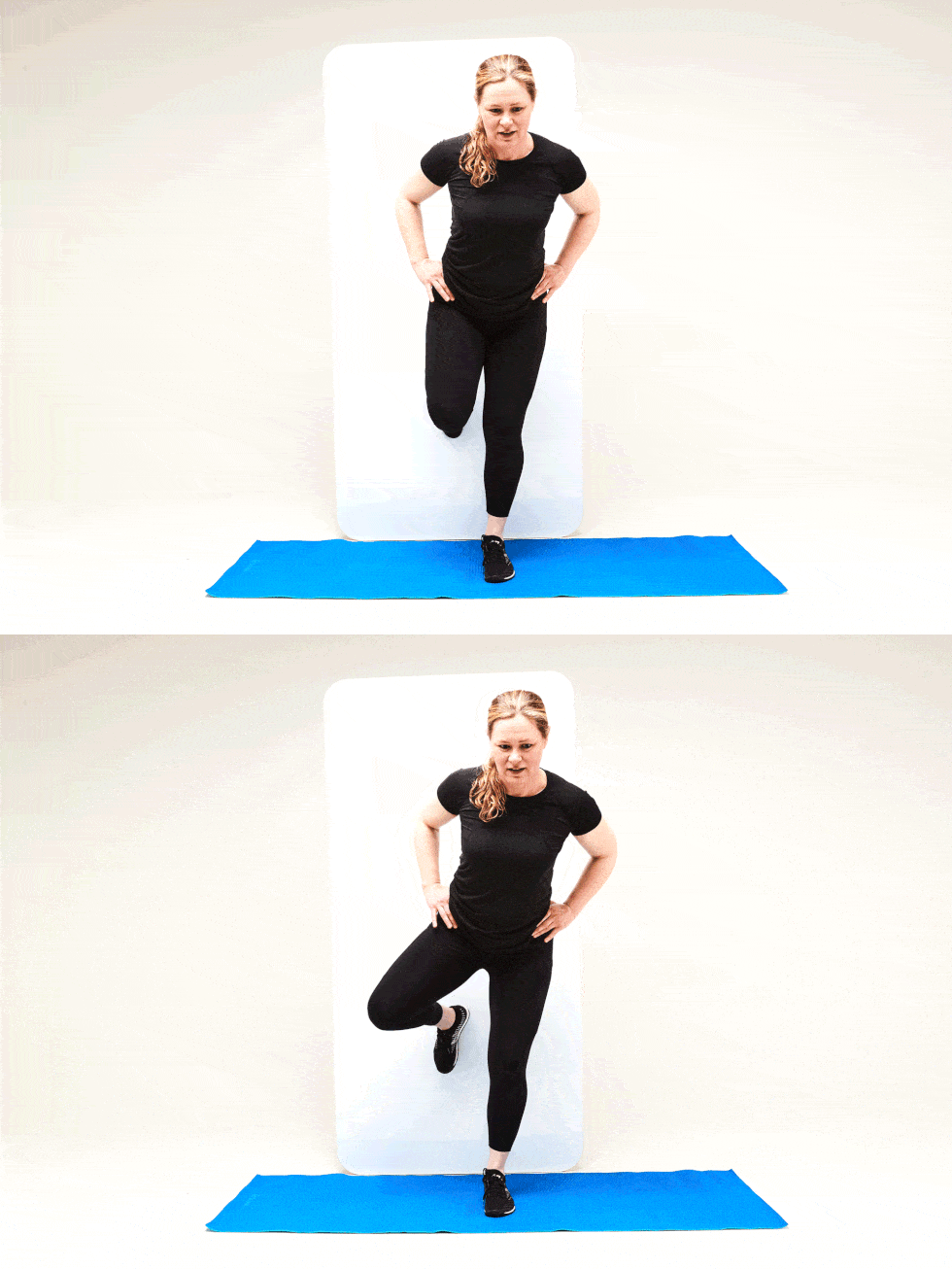
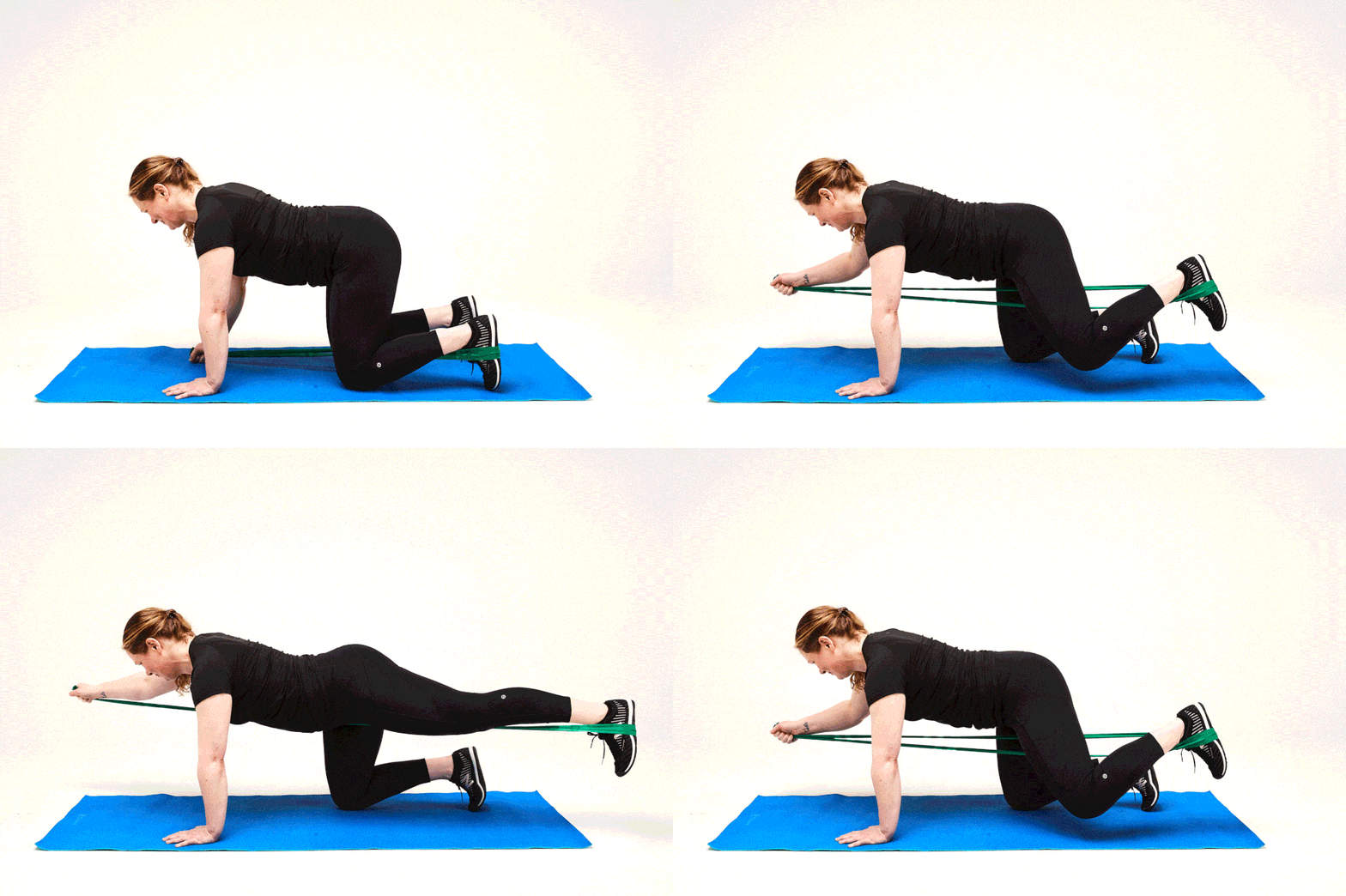
Banded Bird Dog
A band adds resistance to the bird dog, a core stability exercise that also works the glutes. Better control through the trunk and hips may support running mechanics and ease demand on the QL. You’ll need a long loop resistance band. **How to do it:** Start on all fours. Loop the band around your left foot and hold the other end in your right hand so it runs diagonally beneath your body. Keeping your back flat and your core engaged, reach your right arm forward as you extend your left leg behind you. Keep your hips and shoulders facing the floor, then return to all fours. Aim for at least six repetitions with good form, then switch sides.