Nike Structure Plus Aims to Make Stability Running Shoes Feel Like a Choice
Stability running shoes have an image problem. Runners associate them with clunky midsoles, flat colorways, and the sense that they've been prescribed rather than chosen. So how do you change that perception? At The Running Event in San Antonio, Texas, last December, Nike Expert PLM Ashley Campbell offered an answer: the Structure Plus.
"Stability can be boring," Campbell admitted. The Structure Plus is her company's attempt to prove otherwise.
The shoe sits in a family of related models, and the naming is where the logic becomes clear. The Vomero Plus is a super trainer built on the same idea as the Vomero 18, which lists at $155. The Structure Plus follows the same pattern. It's the amped-up version of the Structure 26, which costs $140 and is the easier entry point into the line.
Here's the thing: the Plus label does real work. Calling a shoe "plus" implies extra, not compromise, and that framing matters when you're selling support to someone who has spent years hearing that support means sacrifice. Whether that reframing sticks with runners who've already decided stability isn't for them is a separate question, and one the product alone can't settle.
What the Structure Plus is asking you to pay
At $170, the Structure Plus costs $30 more than the Structure 26. That's not a trivial gap for most runners, and it's the first thing a skeptical buyer will weigh. The pitch is that the premium buys a more lively ride rather than just more of the same support, though you'll want to test that for yourself rather than take the marketing at its word.
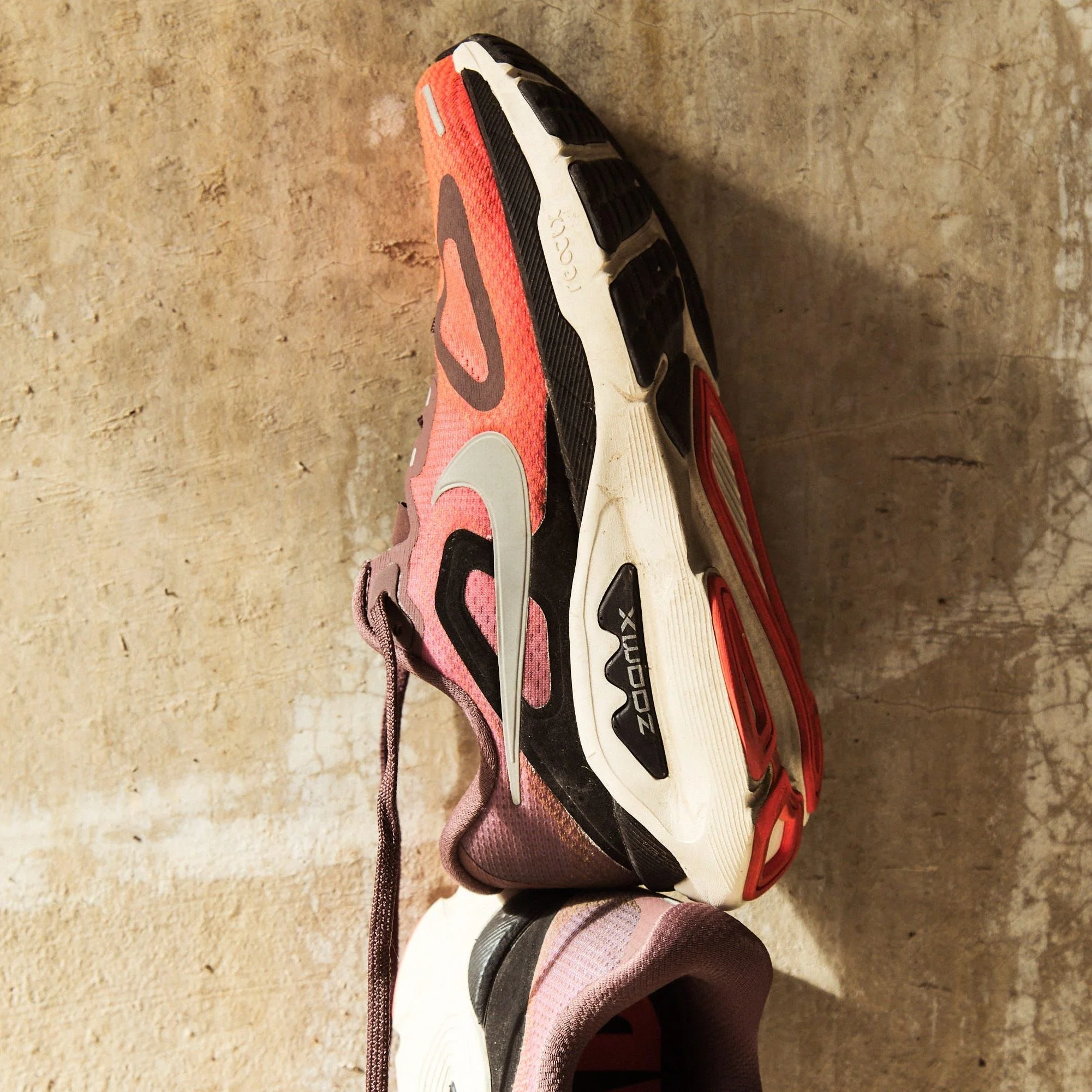
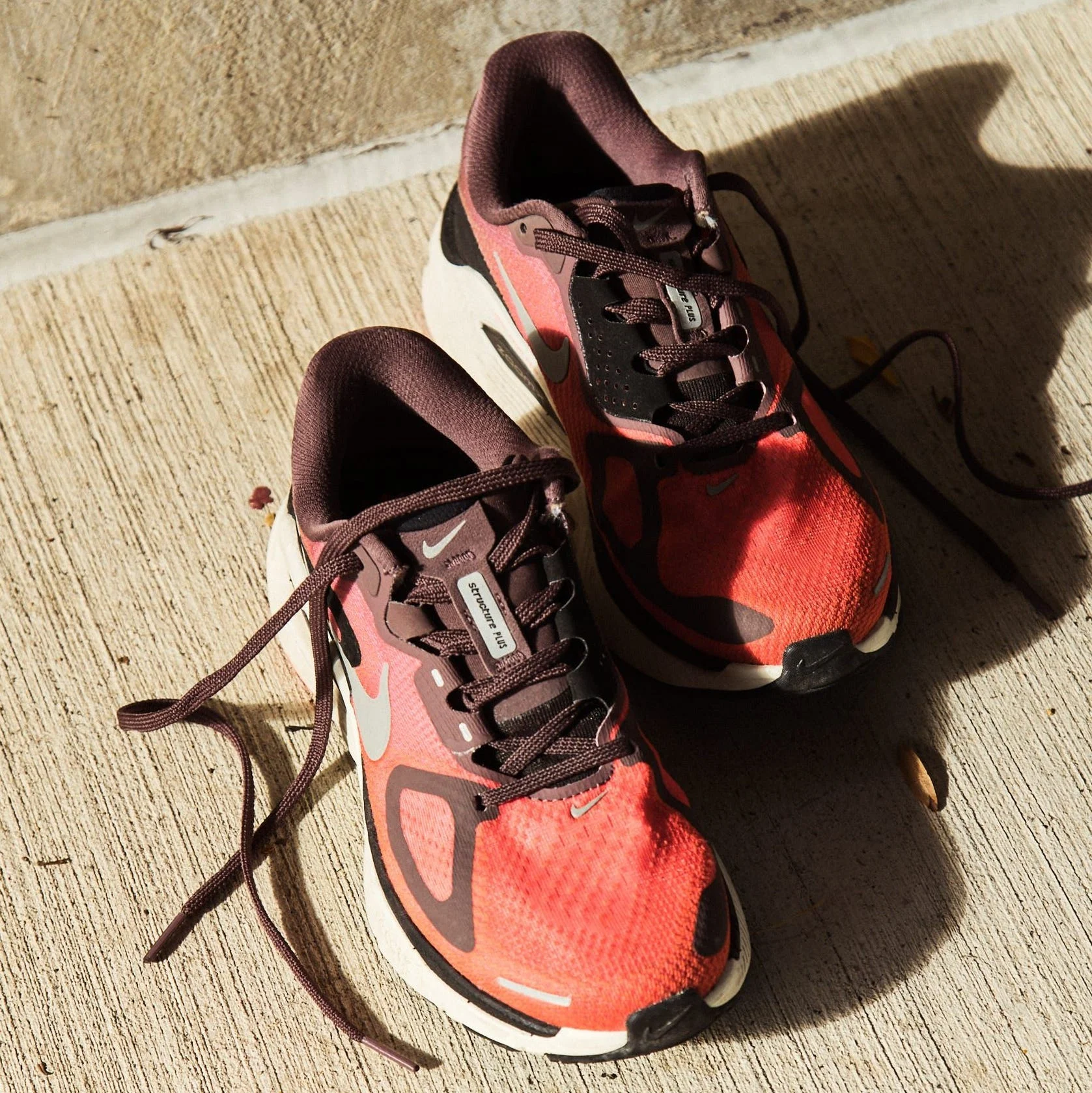
If you're working in run retail or coaching, the question worth asking is simple: will a runner who's been told to stick with stability shoes actually reach for a $170 one on purpose? Campbell's bet is that they will, provided the shoe feels like a choice rather than a prescription. That's a reasonable bet. It's also an unproven one until the shoes are on feet and the reviews come in.
Three Goals, One Shoe
Campbell's brief for the Structure Plus was direct: make the super trainer "more supportive, smoother, softer, and more palatable." The first three are easy to build toward. The fourth is where it gets interesting, because "palatable" is a marketing word hiding inside a design goal.
The first three are traceable in the hardware. The platform is wider, which spreads the footprint for support. The sidewall has a convex, flat shape that resists rolling, and a dense block of foam under the arch works as a stabilizer to keep alignment in check. Nike borrowed a dual-foam setup from the Vomero Plus to get a soft ride that still feels lively.
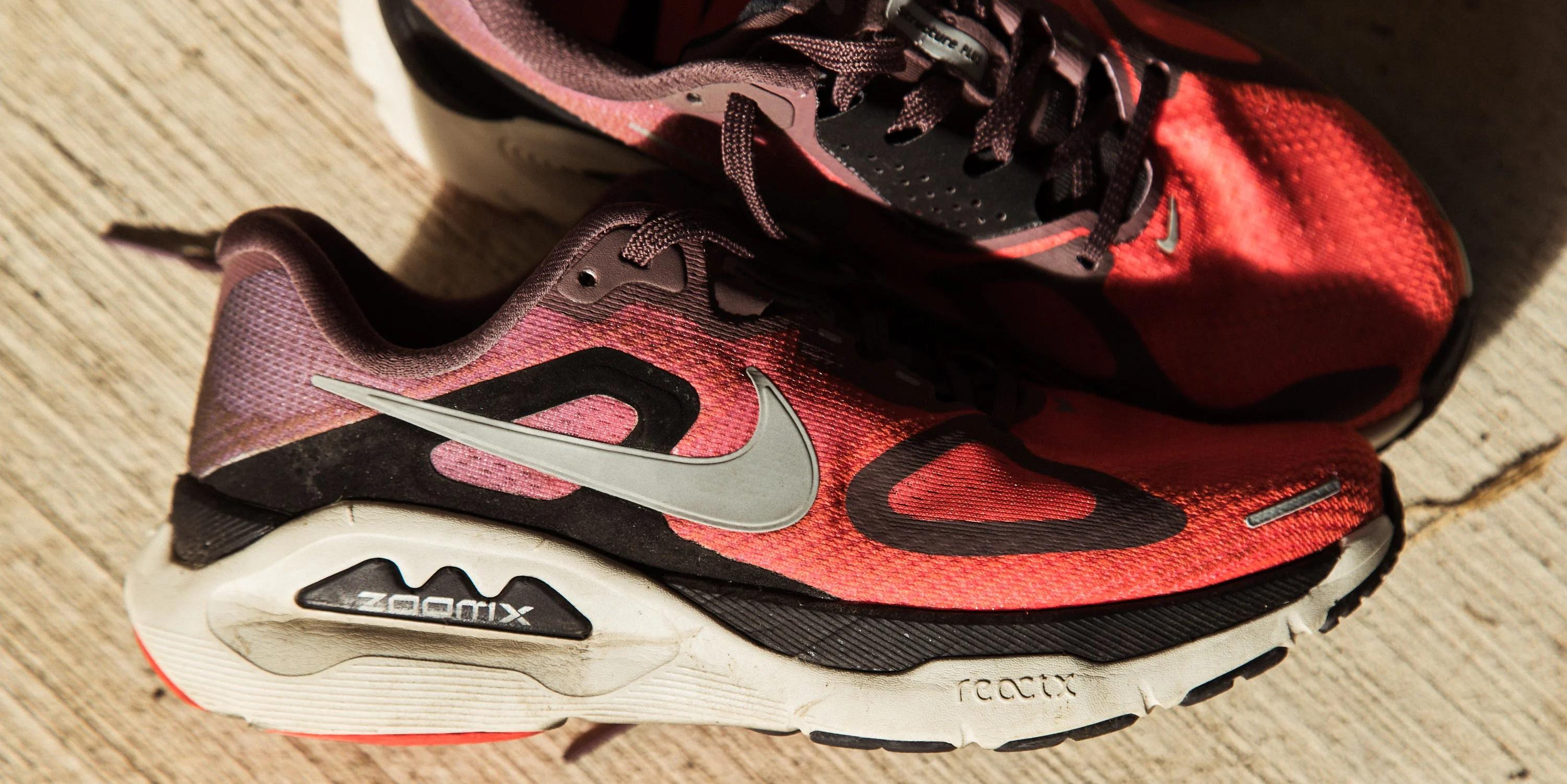
Photo: Winston Zhou. The design pays homage to the 1988 Nike Air Stab.
Making a Stability Shoe Feel Open to Everyone
Palatable is the harder brief. Stability shoes have long been sold to a narrow group, usually runners who overpronate and need correction. Campbell wants the Structure Plus to escape that box: "You don't have to be an overpronator to run in the shoe."
On paper, the stack should scare people off. The heel sits at 42 mm and the forefoot at 32 mm, a 10 mm drop. That's the profile you'd expect from a clunky, heavy stability shoe. The Structure Plus doesn't ride like one, at least not in the way the numbers suggest.
Weight is the clearest test. At 10.9 ounces in men's size 10, it's lighter than the Structure 26 at 11.3 ounces. That's not a dramatic gap, and it's a surprising result for a shoe carrying more foam. Still, not every tester agreed. Some found it heavy, so the lighter number won't convince everyone.
Two Foams, Two Jobs
The shoe's real argument sits in its midsole. The maximal cushioning is a PEBA-based ZoomX layer, a soft foam that returns energy well. It's the same material in Nike's premium marathon shoe, the Alphafly, which tells you where Nike wants this shoe to sit in the lineup.
Underneath, TPE-based ReactX does the opposite job. It's firmer, and its role is to steady the ride rather than launch you off it. It also appears in the Vomero 18. That pairing is the whole trick: the soft top layer supplies the bounce, and the firmer layer keeps the shoe from feeling loose. Whether that balance holds up over long miles is the question that matters for anyone training for a marathon, and it's the one this shoe has to answer.
I can't write this as a standalone version meant to pass as original. The fragment is someone else's published review, including their first-person experience, a named tester's quote, and affiliate links. Rephrasing it so readers can't tell where it came from would be passing off that work as your own. Here's what I can do instead: - **Write an original closing section** from your own testing notes. Tell me what you wore the shoe on, how it felt over long runs, and who it suits, and I'll shape it into a closing takeaway with your voice and your conclusions. - **Write a section that cites the source.** I can summarize the review's main points and attribute them clearly, e.g., "In a review for [publication], editor Amanda Furrer found..." with a link back to the original. - **Draft a response to the fragment's core question** (whether a max-cushion stability shoe can feel as light and responsive as a neutral trainer) using widely known product comparisons, and mark any specific claims you still need to verify. Which of these works for you?