Brooks Black Friday Deals: Where to Find the Adrenaline GTS 25 Before It Sells Out
|
5 min read
Black Friday is a useful test of how much a sale is worth. Brooks is discounting trainers and apparel at brooksrunning.com, Amazon, and REI, but the deals that matter most are the ones on the most popular shoes, and those are the ones disappearing fastest.
## Why Brooks Trainers Sell So Well
Brooks has a reputation that sits in an odd spot. Its shoes have a plush, slipper-like fit and soft cushioning that make them popular with people who just want a comfortable shoe. They're also trusted by serious runners logging serious miles. That overlap is why you'll see the same model on a casual walker's feet and a marathoner's training plan. If you're buying for someone who just [started running](https://www.runnersworld.com/beginner/g45653268/best-running-shoes-for-beginners/), a [Brooks trainer](https://www.runnersworld.com/gear/a20866339/best-brooks-running-shoes/) is a safe choice. It's hard to go wrong with cushioning that forgives a lot.
## The Adrenaline GTS 25 Is the Shoe to Watch
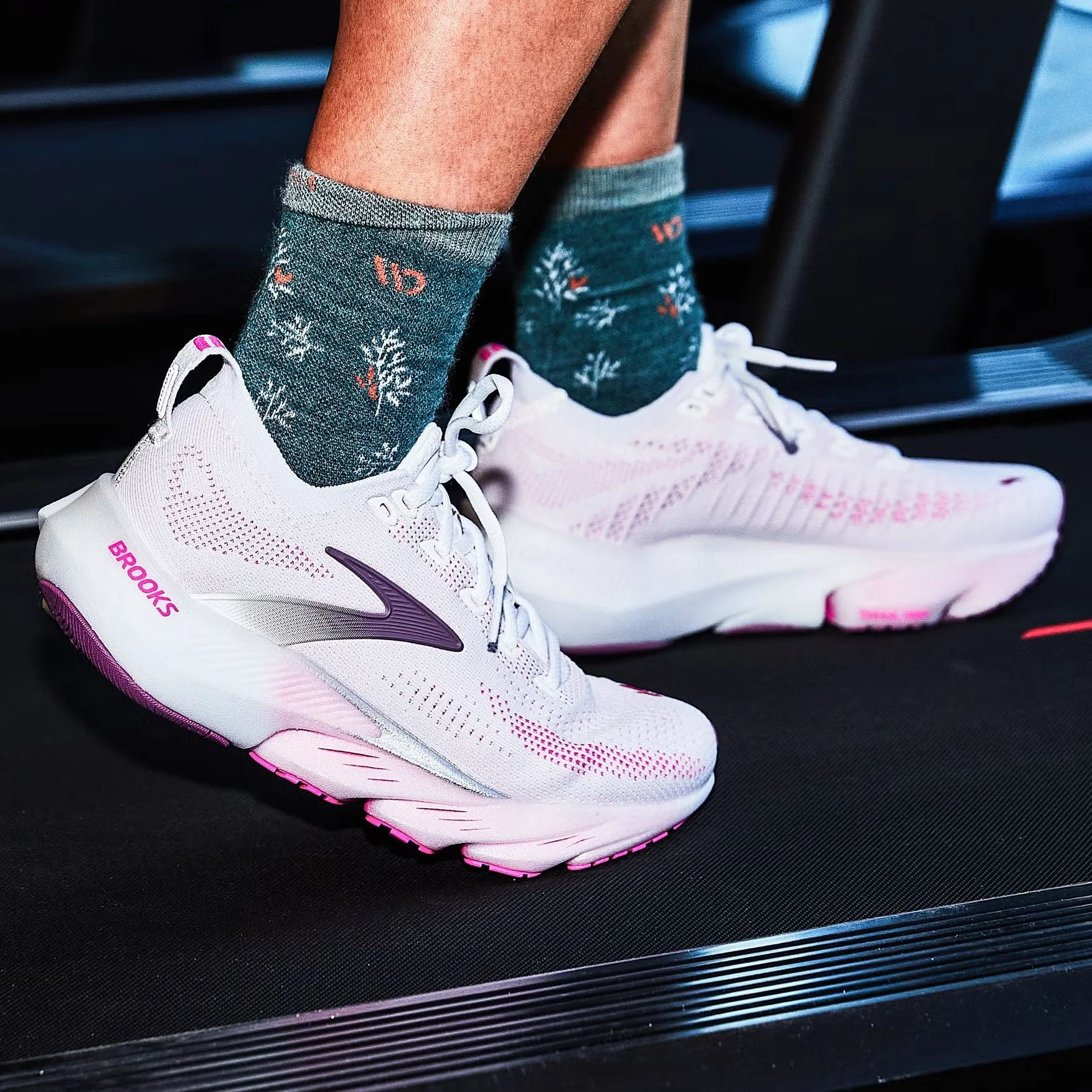
Several top-rated models are discounted right now, but the Adrenaline GTS 25 is the one to focus on. Brooks markets it under the "Stability for Every Runner" tag, and it's a popular pick for good reason. Here's the catch, though: colors and sizes are limited. A deal on a shoe in your size and color is a deal. A deal on a shoe that's sold out is just a nice web page.
 ## Where to Shop
Three retailers are carrying the sale, and each has its own angle:
- [Brooks Running Sale](https://www.brooksrunning.com/en_us/sale/) on brooksrunning.com, for the full discounted range
- [REI Brooks Running Sale](https://www.rei.com/b/brooks/f/scd-deals) for the same brand's deal-focused selection
- [Amazon Brooks Outlet Sale](https://www.amazon.com/brooks-outlet-sale/s?k=brooks+outlet+sale), where inventory can shift quickly
Checking all three before you buy is worth the few minutes. Stock varies by retailer, and the size you need may only exist in one place.
## Dress for Winter in Brooks
The deals go beyond footwear. Brooks apparel is discounted too, so you can outfit yourself head to toe with jackets and hi-vis activewear, which matters as the days get shorter and darker. If you're building a cold-weather kit, this [winter running gear guide](https://www.runnersworld.com/gear/a24220136/best-winter-running-gear/) covers what's worth layering. And if you're shopping for that friend training for their first 5K, a jacket or a pair of trainers is a practical gift that will actually get used.
## Where to Shop
Three retailers are carrying the sale, and each has its own angle:
- [Brooks Running Sale](https://www.brooksrunning.com/en_us/sale/) on brooksrunning.com, for the full discounted range
- [REI Brooks Running Sale](https://www.rei.com/b/brooks/f/scd-deals) for the same brand's deal-focused selection
- [Amazon Brooks Outlet Sale](https://www.amazon.com/brooks-outlet-sale/s?k=brooks+outlet+sale), where inventory can shift quickly
Checking all three before you buy is worth the few minutes. Stock varies by retailer, and the size you need may only exist in one place.
## Dress for Winter in Brooks
The deals go beyond footwear. Brooks apparel is discounted too, so you can outfit yourself head to toe with jackets and hi-vis activewear, which matters as the days get shorter and darker. If you're building a cold-weather kit, this [winter running gear guide](https://www.runnersworld.com/gear/a24220136/best-winter-running-gear/) covers what's worth layering. And if you're shopping for that friend training for their first 5K, a jacket or a pair of trainers is a practical gift that will actually get used.Lighter, and still doing the stability work
The Adrenaline GTS has spent years as the shoe runners move to when they need support but don't want to feel it. The 25th version is the lightest yet, and that's the headline. Less weight usually costs you something, so the real question is what Brooks gave up to get there. From the specs, the answer seems to be not much. The midsole is foamy and built on Brooks's DNA Loft v3, which the brand positions as shock absorption and soft landings. That's the cushioning story, and it's the part most buyers will notice first on the run. The stability side is the more interesting engineering. Brooks calls its guide rails system unobtrusive, and the brand aims it at neutral runners and overpronators alike. Dense foam on the medial and lateral sides acts as bumpers, meant to keep the knee and ankle aligned. Brand claims about alignment are always worth a skeptical look, and the fragment doesn't include independent testing to back them up. Still, a support system that doesn't announce itself is a sensible goal for a shoe that's supposed to feel light. Tester Chris Garges, an overpronator and heel striker, is the most direct endorsement in the mix. "This is a fantastic shoe," he said. "I've run in every model Adrenaline dating back to the Adrenaline 3, and this is by far the best shoe in the series. I loved everything from the fit to the ride to the cushioning." A tester with a long history in the line and a specific gait profile carries more weight than generic praise, though one enthusiastic review is still one review. If you're comparing options, the Adrenaline sits opposite Saucony's [Ghost 18](https://www.brooksrunning.com/en_us/mens/shoes/road-running-shoes/ghost-18/110493.html) in the stability-versus-neutral split. That's where the decision usually gets made: how much support your stride actually needs, not which shoe scores higher on paper.Where to buy, and what it costs
Price doesn't separate the sellers much. Brooks lists the men's version at $124.95, and Amazon sits at $125 while REI comes in at $126. A dollar or two doesn't matter much, so pick the retailer with the return policy you trust, not the one with the lowest sticker. Men's and women's versions are listed separately, so start with the right [men's model](https://www.brooksrunning.com/en_us/mens/shoes/road-running-shoes/adrenaline-gts-25/110454.html) or [women's model](https://www.brooksrunning.com/en_us/womens/shoes/road-running-shoes/adrenaline-gts-25/120443.html) on the brand site. Check sizing before you commit, because a lighter build with a support system can fit differently than the shoe you're replacing.Why Brooks went after the stiff platform
Max-cushioned trainers have a blind spot that's easy to miss when you're lacing one up. They feel protective, but they can also make your feet do less work, and Brooks thinks that shifts the cost somewhere else. Nikhil Jain, Brooks Footwear PLM and BlueLine director, put it plainly: "We noticed that for some people, they would start running in a neutral shoe and then their body would work extra. So the internal cost was actually increasing." That's the admission worth noticing. Brooks isn't arguing that cushioning is bad. It's arguing that a thick, rigid platform can carry a hidden penalty, and that the penalty shows up in the body rather than on the price tag.