A First NYC Marathon Tested One Runner’s Limits—and Changed How She Saw the City
The New York City Marathon didn’t make me want to run another marathon. It did something more personal: it showed me I could finish one, even when my body and confidence seemed to be failing. I crossed the line in 4:44, about 15 minutes behind my goal, and left with a new respect for what it takes to keep going.
New York and I have history. I was born at Lenox Hill Hospital on East 77th Street, and the city shaped much of my early life: growing up on the Upper East Side, visiting my grandmother in Stuyvesant Town, spending time at my father’s office in Washington Heights and going to my mother’s gallery openings in the Village. Later came Brooklyn and Alphabet City, where rent took most of my paycheck. After I moved away in my late 20s, I still returned for work a couple of times a month.
For all those memories, New York has never felt easy to me. Its prices, pace and prickly energy wore me down when I was starting out, so I traded city life for the quieter country. Even visiting can stir up stress. Signing up for the NYC Marathon meant returning to a place that had always challenged me—and adding 26.2 miles to the challenge.
The promise of the start
At 43, I was about to run my first marathon. The fitting symbolism wasn’t lost on me: I was born in the city, and now I was asking my lungs and legs to take on a distance I had never run before.
The emotion arrived before the race had really begun. Standing on the Verrazzano Bridge among runners who had come from around the world, I looked out over the water and toward the skyline. I felt connected to something far larger than my own race. Tears came before I had taken a single competitive step.
Brooklyn gave me room to settle in. I held my pace and reached halfway in reasonable shape. The crowds kept cheering, and I managed to smile at them, though smiling during a race has never come naturally to me. Even the generous welcome from Brooklyn’s spectators couldn’t quite produce a real grin.
When the miles turned
The 59th Street Bridge changed the mood. Long Island City’s warehouses offered little to look at, and the route’s gradual climb seemed to stretch on. The wind came off the East River. The crowd noise faded, leaving an unsettling quiet in which I started to unravel.
First Avenue brought a wall of spectators, but the noise didn’t restore my energy. By then, I was questioning the basic wisdom of choosing a run this long. The Bronx couldn’t have changed that feeling, even with confetti and a marching band waiting for me.
At the Willis Avenue Bridge, I wished I’d brought money or a MetroCard. I wanted a way out and a ride home. My feet, quads and knees all felt close to giving out. Then came the shivering, a whole-body chill that reminded me of lying sick in bed and waiting for medicine to work.
That was the point where grit stopped sounding like an abstract virtue. The question wasn’t whether I felt strong. I didn’t. It was whether I could keep moving while feeling terrible, one step at a time.
Harlem changed the race
At Mile 22, Harlem gave me a brief but vital lift. A gospel choir, Jamaican ska and salsa filled the course. Spectators reached out their hands and called, “You can do this” and “You look strong.” Their warmth helped against the chills, and their encouragement reached me when my own belief was running low.
One small moment stayed with me: someone let me pet a Bernese Mountain Dog. I had wanted to curl up on the sidewalk, and instead I found comfort in a wagging tail and a few seconds of contact. I cried, caught between homesickness, pride and self-pity. Then, for the first time that day, I smiled for real.
The boost didn’t make the remaining miles easy. It did give me something to hold on to. Friends later said I looked strong and was passing runners south of 110th Street. From inside my own effort, I didn’t feel strong; I felt tired and cold. Still, I kept going, and that smile from Harlem lasted.
That’s the complicated appeal of marathons. I never expected to sail down Fifth Avenue with my arms raised. But I hadn’t anticipated how much of the experience would depend on other people’s voices, gestures and small acts of care.
A finish measured in care
Central Park made the finish seem both close and impossibly far away. The loops blurred together, and I was ready to be done with New York. At last, I crossed the line in 4:44—roughly 15 minutes slower than I’d hoped.
Then the city met me with help. A volunteer named Kate, with the reassuring presence of a mother, held me while I cried, drooled and snotted. She guided me into a medical tent, where I collapsed, shivering. Ishmael, a medic with dreadlocks and kind eyes, covered me in wool blankets and put me beside a heater. He gave me hot soup, salt and Gatorade until I could stand again. After that, I hobbled back to my hotel, my family and the quieter life I’d chosen.
I don’t expect to run the NYC Marathon again. The race asked more of my body than I’d understood, and the day was hard in ways that went beyond ordinary fatigue. But finishing changed my idea of what I could do. New York has been a headache and a source of strain for much of my life; on the course, it also gave me a crowd that carried me through a bad stretch and strangers who helped me recover.
I went to the starting line unsure I could handle the distance. I left knowing I could finish something difficult without feeling strong every minute. That’s enough for one marathon—and a memory I’ll carry long after the soreness fades.
This article originally appeared in the Winter 2025 issue of Runner’s World.
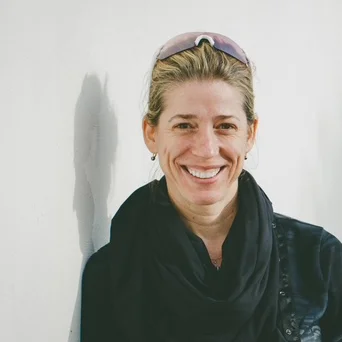
Leah has been editing longform narrative stories for more than 20 years and currently directs features for Bicycling, Runner’s World, and Popular Mechanics. She conceived of and edited “12 Minutes and a Life” by Mitchell S. Jackson for Runner’s World that won both the 2021 Pulitzer Prize and the National Magazine Award for Feature Writing. She lives in eastern Pennsylvania.