The 1972 New York City Marathon Protest That Advanced Women’s Running
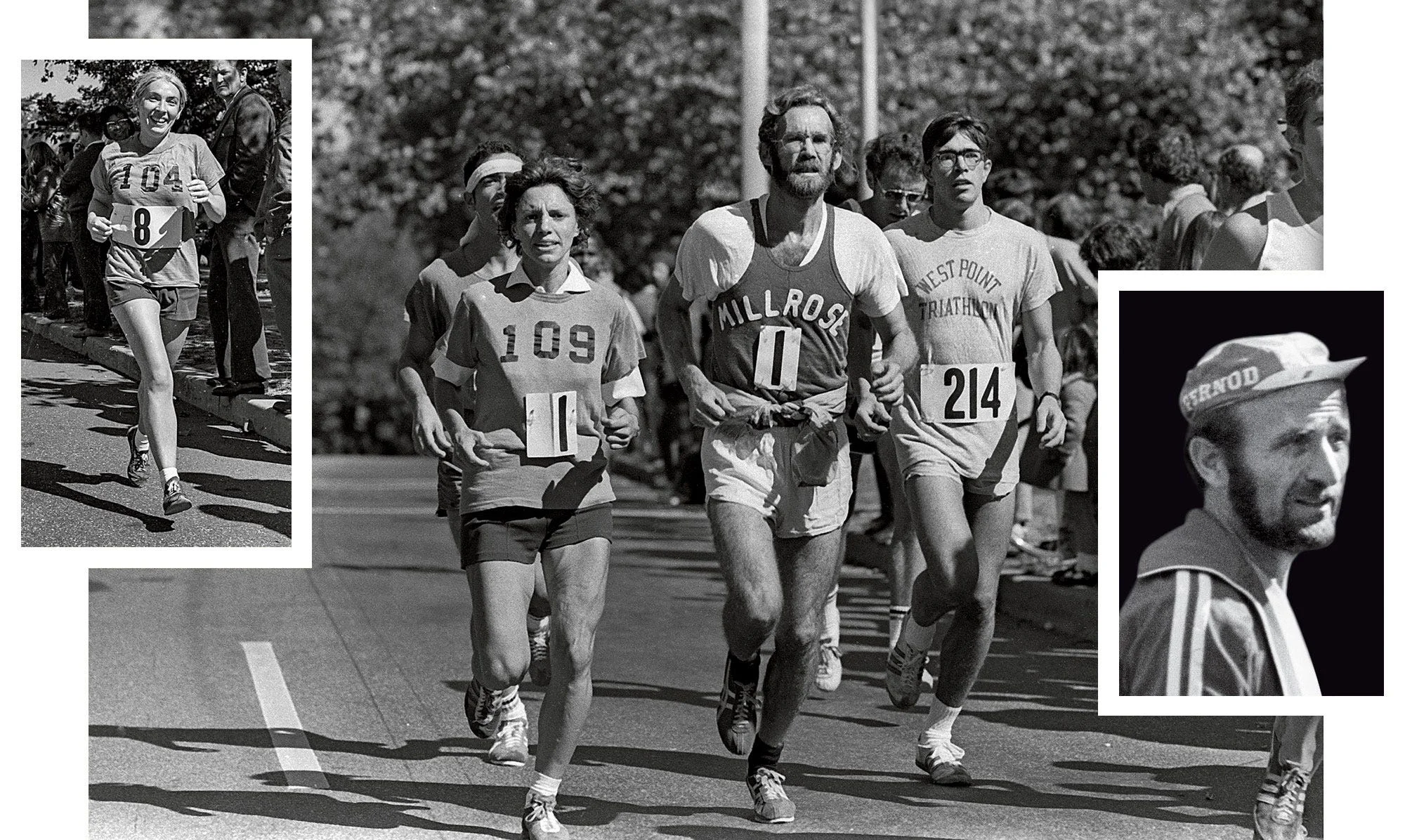
The defining image of the 1972 New York City Marathon came before anyone ran a mile: six women sat down at the start. That protest, and the photograph that carried it beyond Central Park, helped push women’s distance running toward equal treatment. The race was still small enough to fit entirely inside the park, but the dispute around who was allowed to run had national reach.
A marathon start turned into a protest
On the first Sunday in October, Central Park offered near-perfect running weather: fall sun, crisp 50-degree air, and brightening leaves near Tavern on the Green. The New York City Marathon had only 278 entrants. Each paid $1; today’s race, scheduled for November 4, had about 47,000 entrants and a $255 fee. Its 26.2 miles now cross all five boroughs, and Central Park is needed just to stage the start.
Fred Lebow, still known mainly within New York’s close-knit running community, had persuaded The New York Times and other newspapers to cover the event. He promised news. Reporter Gerald Eskenazi and longtime Times photographer Patrick Burns showed up to see what would happen.
The issue was the Amateur Athletic Union, then the governing body for track and field and distance running. The AAU had spent years barring women from marathon courses, citing dubious claims that long runs could cause infertility and enforcing rules that kept women out. The New York City organizers had welcomed women from the first race in 1970, despite those restrictions. After the 1971 marathon, the AAU softened its position: “certain women” could enter, but they had to start ten minutes before or after the men, or from a separate line. Runners saw the arrangement for what it was: another attempt to keep the women’s race apart.
Six women were entered in 1972. Five were from Manhattan or Long Island, mostly friends or acquaintances who trained in the park while their husbands or boyfriends raced. Their experience ranged widely: one had won Boston five months earlier, while another hardly ran. The sixth was a 17-year-old from the Jersey Shore, a new college student with little connection to the others.
Just before 11 a.m., the women took their places near 64th Street and Central Park Drive, facing south toward Columbus Circle. The 272 men waited for their ten-minute head start. The gun sounded. The women sat down.
Eskenazi later described them sitting “in the lotus position.” They raised signs mocking the AAU’s rules; the teenager from the Jersey Shore did not join in. Burns photographed the scene. His picture ran across four columns in Monday’s Times, spread to newspapers around the country, and enraged AAU officials. Forty years later, it still stood as an image of a running revolution beginning in plain view.
Nina Kuscsik and the cost of being kept out
That history lives in the papers Nina Kuscsik has kept for decades. She moves quickly around her basement, searching among folders, magazines, and a filing cabinet, despite aching knees and the fact that she no longer runs. At 114 pounds, she weighs about what she did in 1972, when she became the first woman to win the Boston Marathon officially.
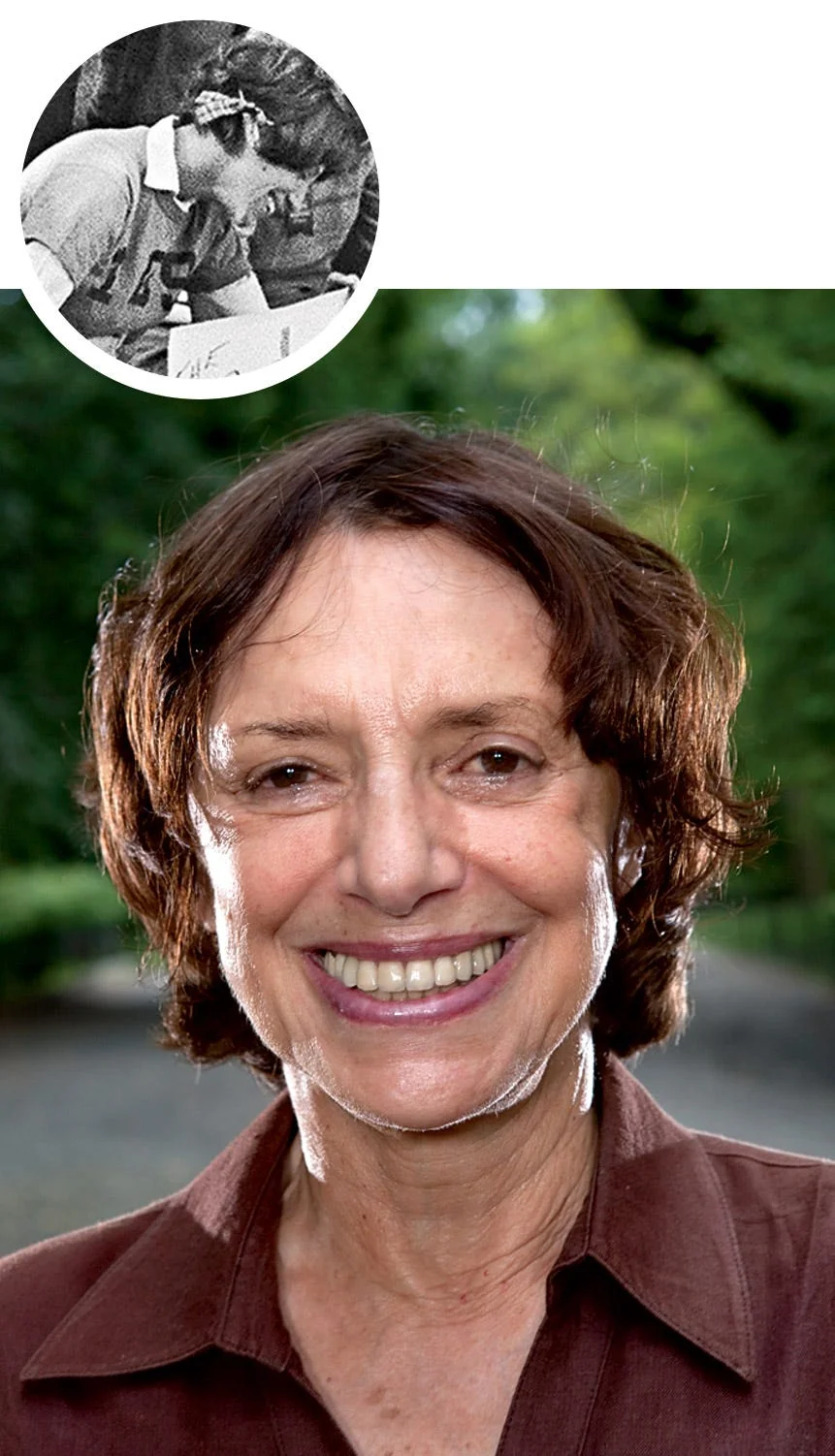
Among the clippings she finds is the front page of the April 18, 1972, Boston Record American. A half-page photograph shows Kuscsik beside the men’s winner, Olavi Suomalainen, both wearing laurel wreaths. The image offers a striking counterpoint to the famous 1967 Boston Marathon photograph of race director Jock Semple trying to tear the number from Kathrine Switzer’s shirt. Switzer had entered with a bib despite the ban on women and finished the race unofficially; her boyfriend blocked Semple from reaching her.
Kuscsik’s newspaper portrait is joyful. The headline above it is less so: “Reds Attack U.S. Ship in Tonkin Gulf.” The broader world was changing, and so was the place women could claim in public life.
In 1972, Gloria Steinem launched Ms. magazine, the Senate passed the Equal Rights Amendment, and Congress passed Title IX, which barred sex discrimination in federally funded education programs. The amendment ultimately failed to win ratification from enough states. Title IX, by contrast, would reshape school and college sports, where women’s cross-country and track programs were scarce. Helen Reddy’s “I Am Woman” topped the charts that year, too.
Even against that backdrop, the questions women runners faced could be blunt. In a 1972 interview, reporter Philip Nobile asked Kuscsik why she ran when long-distance running—with all its sweating and grunting—was supposedly not “womanly.” She pushed back: who decided that running or sweating was unfeminine? “Running is neither masculine or feminine,” she said. “It’s just healthy….”
The AAU’s resistance went beyond marathon entry rules. Its women’s track-and-field committee chair, Nell Jackson, said she wouldn’t permit women to run a marathon because it wasn’t in the national program’s interest and she worried about the effects of the distance. Sara Mae Berman, a three-time unofficial Boston winner, recalled the underlying belief: that hard training might harm women’s reproductive organs, and that strenuous competition could make girls “masculinated.” The claims were presented as protection. They also served to keep women from competing.
Kuscsik remembers another rule with particular irritation: women traveling to an AAU-sanctioned meet had to bring a female chaperone. When she received her AAU card in 1971, she had three children under six. A babysitter would have been more useful.
From neighborhood loops to Boston
Kuscsik still lives in the South Huntington, Long Island, ranch house she bought with her then-husband, Dick, in 1965. She raised their two sons and daughter there, largely on her own, and has no plans to leave. On a humid summer afternoon, she mentions she may install central air conditioning. From this modest home, she built a life around running and helped organize the fight for equality in the sport.
She had been a competitive cyclist and speed skater before taking up running in 1967, at 28. Bill Bowerman’s book Jogging gave her a target: if a high-school girl could run a seven-minute mile, it said, she was worth training. Kuscsik ran a 7:05 while pregnant with her third child, Timothy, and kept running until she was three or four months along. The paperback cost a dollar, she recalls. She still calls it a great book.
After Timothy was born, she ran when she could get a babysitter or after the children went to sleep, looping around the block six times to make a mile. On longer neighborhood runs in the late 1960s, police officers sometimes stopped her. As she put it, they thought she was running away from something.
In 1969, she and Dick drove to Boston. Kuscsik knew women were barred, but she wasn’t going to make a statement; she wanted to race. She joined the unofficial women who entered after the men started. She finished in 3:46, matching the time of a male runner who crossed with her. The 1,152 men in that race received official records. Kuscsik did not.
Until Boston, she says, she hadn’t thought of herself as discriminated against because she was a woman. She had worked as a nurse before becoming a mother, and she was content with family life and whatever time she could find for cycling, skating, or running. She had also competed alongside men for years, winning three New York State cycling titles in 1960 without being challenged for being a woman. She raced to meet her own goals, not to prove a point.
Then came the marathon ban. “Women aren’t allowed to run?!” she remembers thinking. The restrictions made no sense to her. “Something,” she decided, “had to be done.”
A Small Running World Takes Shape
In the early 1970s, New York’s running scene was built from small, close-knit groups. Back from Boston, Nina Kuscsik found runners—women and men—drawn by competition, friendship, exercise and a break from family life. They met at races in Yonkers and Van Cortlandt Park, and trained near the old Yankee Stadium. The city around them was in deep trouble: Columbia students had rioted, Attica’s inmates had seized control of the prison, graffiti covered the subway, and Frank Serpico was exposing police corruption. New York’s finances were heading toward the crisis that would bring it close to bankruptcy by the middle of the decade. Central Park, too, had become known more for crime than recreation. Running had yet to reach a mass audience; that surge would follow Frank Shorter’s marathon victory at the 1972 Munich Olympics. Still, dedicated runners were finding one another across the city and its suburbs. Ted Corbitt had been running ultramarathon distances since the late 1950s and became the sport’s best-known figure. Gary Muhrcke won local races between shifts as a New York City firefighter, then took the inaugural New York City Marathon in 1970 and went on to open running-shoe stores. Vince Chiappetta, a biology professor, trained in a mask. “I could tell you stuff about the air quality in New York at the time that no one else knew,” says Chiappetta, now 79 and still teaching and running. Chiappetta and Fred Lebow made an unlikely team when they helped stage that first marathon. Chiappetta was a Bronx academic, a cofounder of the Road Runners Club of America and an advocate for distance running whose work irritated the AAU. Lebow sold clothes in Manhattan, disliked procedure and had a gift for publicity. “Fred hated going to meetings,” Chiappetta says. “He took care of all the crazy publicity stuff. I didn’t have the time, and really, I couldn’t tell stories like he could, but it worked very nicely for us.” After Chiappetta left as codirector, Lebow became the public face of New York running. His flair and nerve helped turn a modest Central Park race into the world’s biggest. Women were part of this circle from the beginning, Chiappetta says. “We saw no reason women couldn’t or shouldn’t run.” Liz Franceschini, who moved from London to New York in 1963 and spent 37 years in sales at Tiffany’s, first watched her husband David run with friends in Van Cortlandt Park. She liked the “scruffy guys” enough to join them. By 1970, watching was no longer enough: “I said, ‘You know what? I’m into this,’ and I started training.”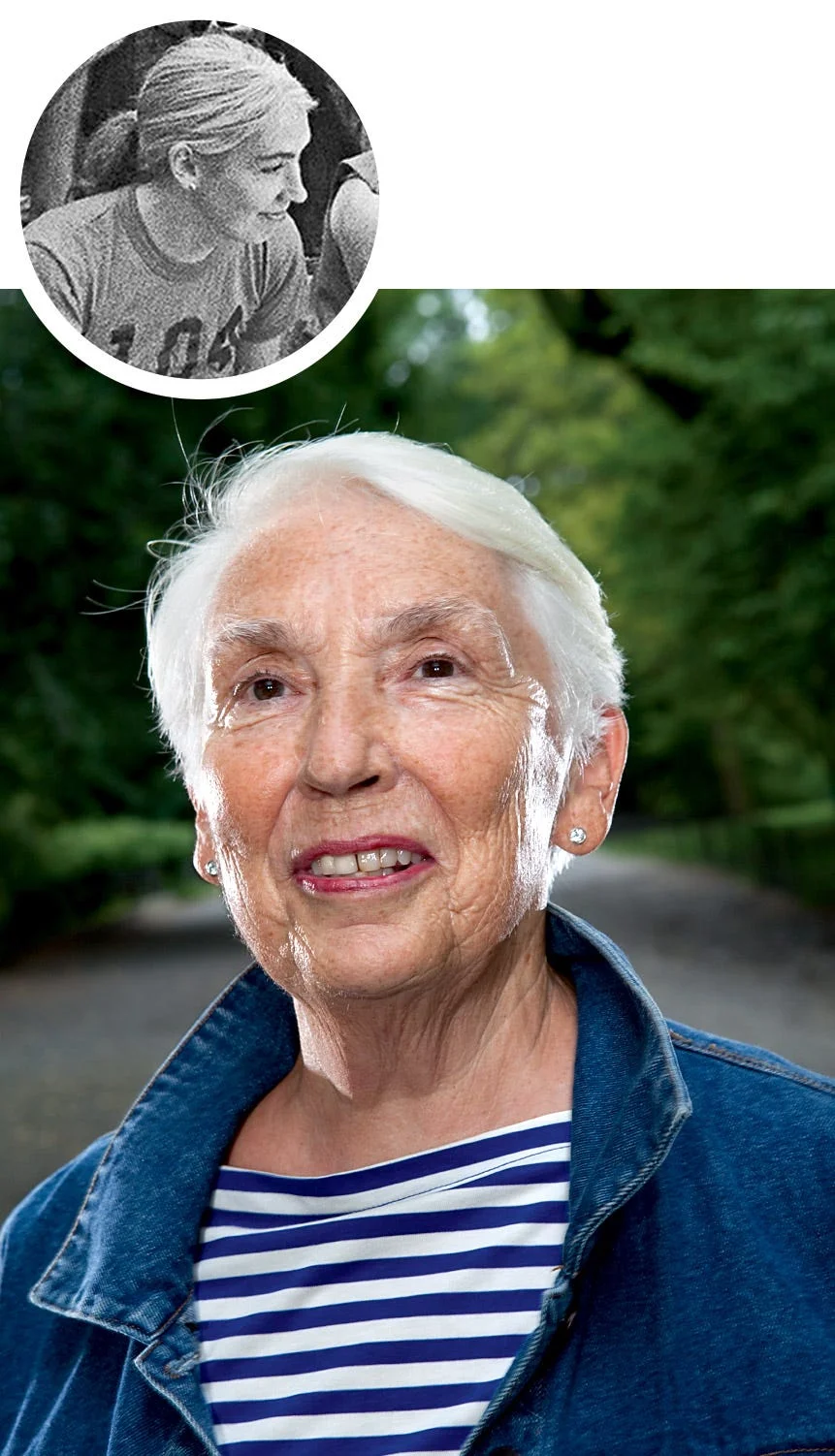 Franceschini still speaks with a light British accent, but her memories of those early races are rough around the edges. She recalls Sunday runs near Yankee Stadium with Kuscsik and others, and bottles thrown at them from tenement windows. The women used a men’s locker room that was little better than a public toilet. They’d ask the men to step outside, then get on with it. The men laughed; the women were already familiar faces. “It was a little clique of people.”
Lynn Blackstone started running around the same time, following her boyfriend Dave, a strong finisher in the early New York City Marathons. She often ran the Reservoir loop in Central Park, a mile and a half around. Before *Marathon Man* made the spot famous in 1976, she had already come to know Lebow there. “In those days, you actually knew every runner on the Reservoir by name,” she says. Lebow later recruited her to help organize Road Runners events, including the June 1972 Crazylegs Mini Marathon. He, Kuscsik and Kathrine Switzer had conceived it as the first all-women’s road race. Lebow then brought in Playboy Bunnies to run the opening stretch of the 10K, creating an image that stuck to the event—and to him. Blackstone ran in that first Mini. “Fred was a real visionary. And savvy.”
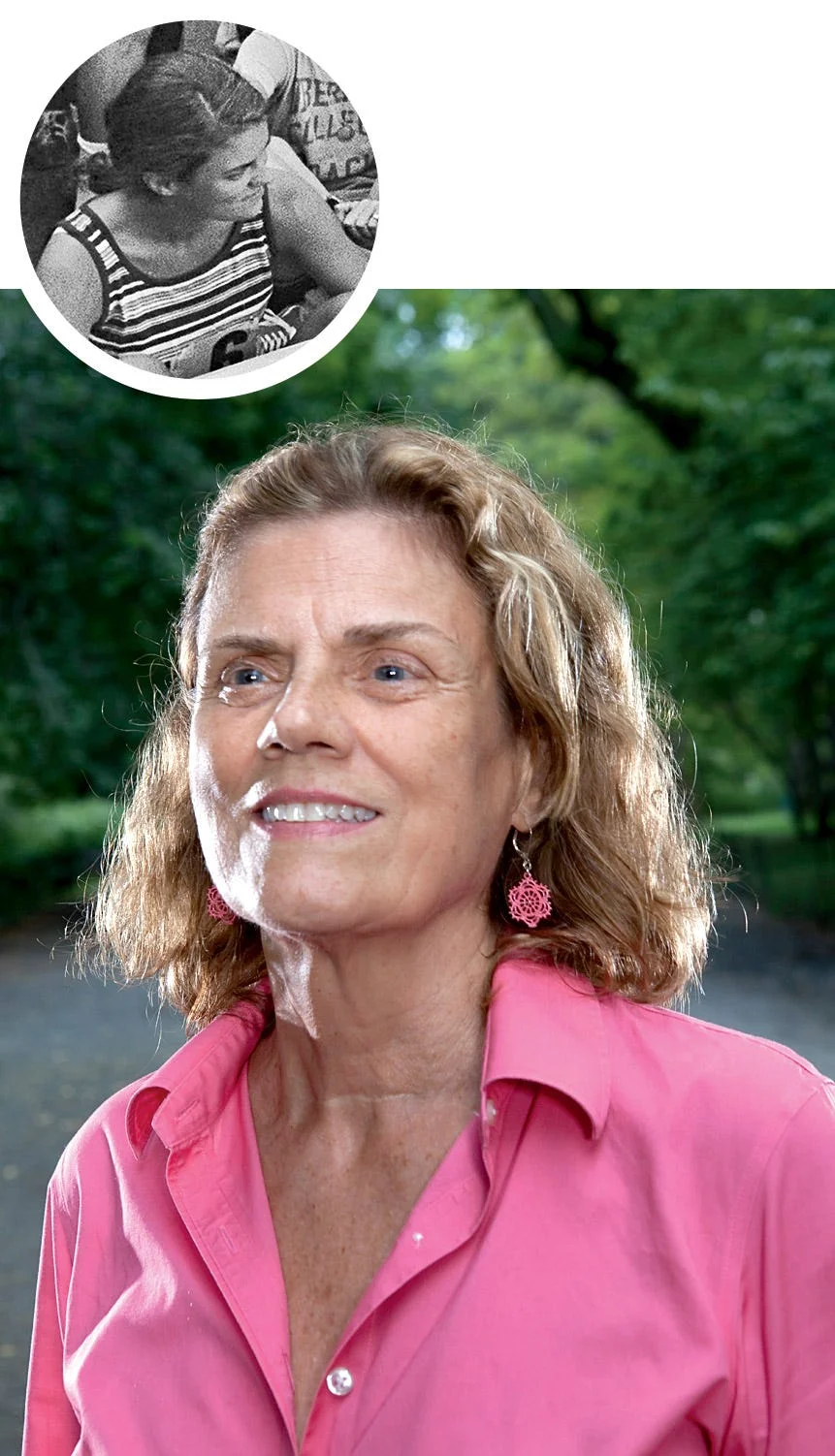 Jane Muhrcke, wife of marathon winner Gary, also ran the Mini, though running never became her own habit. A mother of three, she tried each spring and stopped again. The friendships lasted. She, Kuscsik, Franceschini and Blackstone met at races; Muhrcke sometimes watched Kuscsik’s children while Nina competed. They eventually shared a summer rental, with Lebow among the guests for a time. In 1972, they watched Shorter win in Munich from Muhrcke’s Long Island living room. “It was almost like there was a race every weekend,” she says. “Everybody knew everyone at the races. It was a lot of family time. It was quite a small world.”
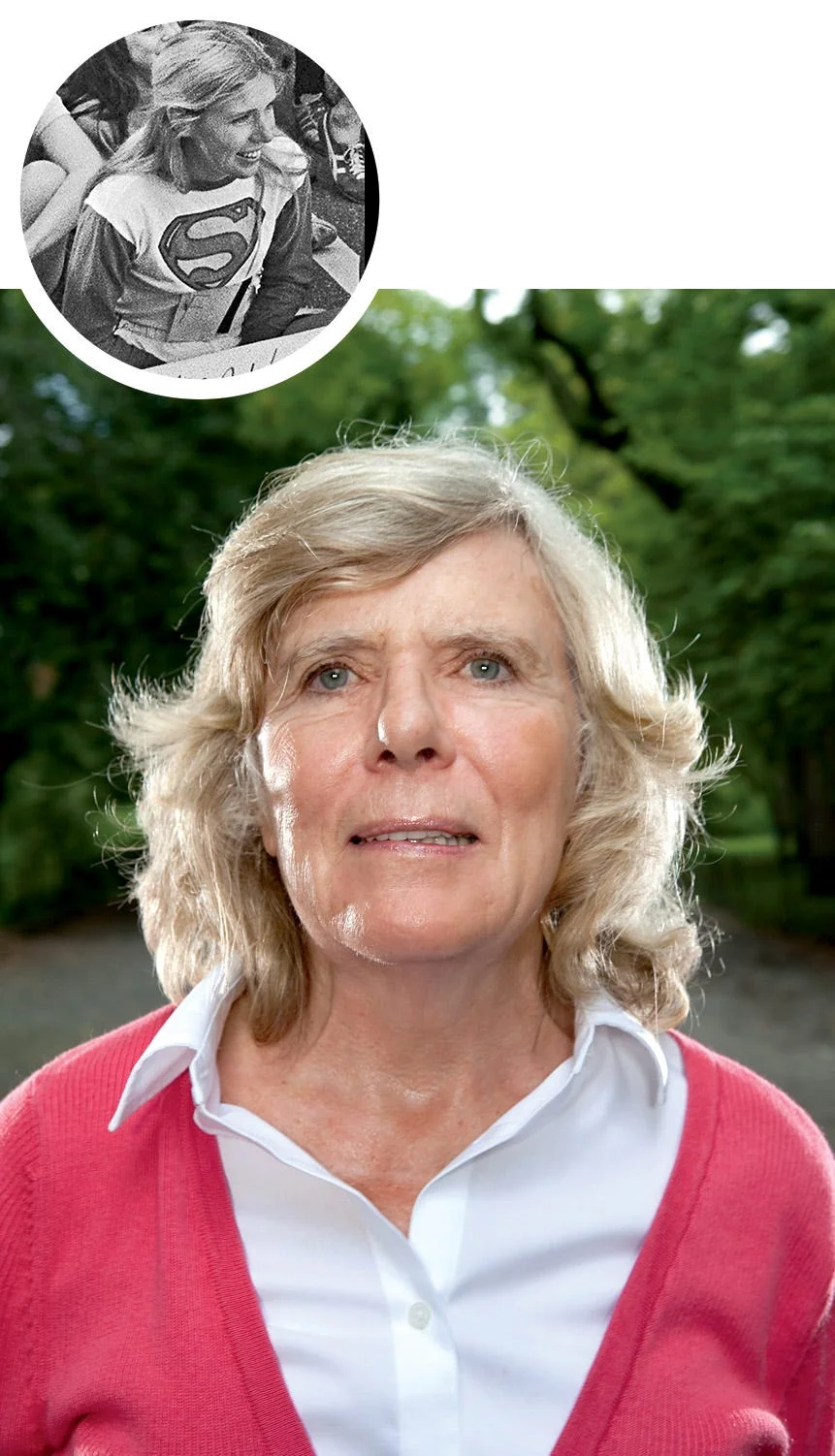 That small circle—four women, with help from Lebow, Chiappetta and other male runners—would soon take on the rules that kept women out of marathons.
The Rules, and the Protest They Set Up
Reconstructing what happened at the third New York City Marathon, on October 1, 1972, is difficult. Four decades had passed; memories blurred, records were hard to find, and some witnesses were gone. Interviews with people who were in Central Park that morning offer a version, but even the participants disagree about who first proposed the plan. Kuscsik, Blackstone, Franceschini and Muhrcke arrived intending to embarrass the AAU with a sit-in. Franceschini thinks Kuscsik deserves credit for the idea, given how active she was. Kuscsik points to Lebow: “I’m sure it was all Fred’s idea.” He died of cancer in 1994 and never claimed authorship. His role, however, is clear: he understood that handmade protest signs—“Hey AAU. This is 1972. Wake Up!” and “The AAU is Unfair”—would draw attention to his young race, and he coordinated the staging with Kuscsik. For Kuscsik, the fight had started in Boston. She ran there in 1969, then returned in 1970 and 1971, frustrated that women were excluded from the official results. She blamed the AAU, not Boston’s organizers, who followed the governing body’s rules. New York officials, Chiappetta says, simply ignored the AAU. “People who were supposed to do something for us weren’t doing anything,” Kuscsik recalls. Chiappetta and Aldo Scandurra, a longtime New York competitor and AAU representative, advised Kuscsik on how to change the rules. They could work the bureaucracy, they told her, but women had to lead the public campaign. “That way,” Chiappetta says he told her, “nobody can blame us evil men for forcing you to do things.” Kuscsik brought her case to the AAU’s national convention in Lake Placid in fall 1971. Her proposal sought to end the ban on women in AAU-sanctioned marathons such as Boston. She argued that no reputable medical research showed marathon running harmed women, and that women were running faster without ill effects. Just weeks earlier, she had become the second American woman to run a marathon in under three hours. Patricia Rico, the AAU’s national women’s chairman and a former athlete, rejected the argument. She held to the organization’s medical rationale and worried that women might gain an unfair pacing advantage by running alongside men. Chiappetta dismissed that concern: “Our races weren’t that big back then. If we saw a good man slowing down to help a woman, we would have pulled him off the course.” The convention ended with a compromise. The AAU expanded the maximum distance for sanctioned women’s races from five miles to 10, and allowed “certain women” to run marathons. The phrase remained vague. “I still don’t really know,” Kuscsik says. “Essentially we took it to mean any woman who had shown they could run that far.” The AAU also required women to start separately from men, or 10 minutes before or after them. Kuscsik saw little cause for celebration: “It was still discriminatory. They were setting up two sets of rules.”
The protest was small; the point wasn’t
Boston’s 1972 race marked a historic change: after 74 years, women could officially enter. Nina Kuscsik ran 3:10:26, becoming the first woman to win the race officially. Pat Barrett, a 17-year-old from Spring Lake, New Jersey, finished about 30 minutes later. She’d trained with boys’ cross-country and track teams for much of high school; her Catholic school didn’t start a girls’ track team until her junior year. A month before Boston, she ran 3:24, faster than the 3:30 qualifying standard then applied to both men and women. Kuscsik had urged Barrett to go. “Nina said, ‘If you don’t go to Boston, I’ll break your legs,’” Barrett recalls, now 57. It was a joke, but Kuscsik wanted her to understand the stakes. Barrett says she was too young to grasp them fully. Her principal excused her from school, and the nuns were thrilled. The women were still assigned a start line a few feet from the men’s. That separation rankled Kuscsik’s circle. Franceschini, who came to support her but didn’t run Boston, remembers the feeling: “It was the age of women wanting to be equal. We didn’t think we should be singled out. That’s why we got upset.” The women ran well. Then they decided to make the grievance visible.A sit-in at the starting line
Later that summer, Kuscsik convinced Blackstone, Muhrcke, and Franceschini to enter the New York City Marathon. None had run anything close to marathon distance. Finishing wasn’t the plan; showing up for a protest organized by Kuscsik and Fred Lebow was. Muhrcke applied for her AAU membership card just a week before the race so she could enter. “I wanted to support Nina,” she says. Lebow, she recalls, was seeking more women to help make a public statement. Two other women entered without knowing a protest was planned. Cathy Miller, then dating regular city runner Paul Fetscher, loved attending races but wasn’t a serious runner, he says. He later lost touch with her; she couldn’t be located for this story. Barrett, by then a college freshman, drove up from the Jersey Shore with friends expecting an ordinary race. “Everything kind of caught me by surprise,” she says. About half an hour before the start, Kuscsik, Muhrcke, and Fetscher gathered near a bench and scrawled anti-AAU messages on poster board. The signs were rushed enough to include misspellings: “The AAU is Archiac” and “The AAU is Midevil.” Meanwhile, a petition went around among male entrants, supporting women’s right to run in the same race and start at the same gun, whether or not they were scored separately. At least 60 men signed. Muhrcke gave Chiappetta, who didn’t know what was coming, a deliberately vague heads-up. He was content to let the women act. When the gun went off, they sat down and raised their signs. Roughly 500 spectators and the press watched as the crowd shouted both “Chauvinist pigs!” and “Right on!” The women stayed seated for 10 minutes, then joined the race.