Adidas Adizero Adios Pro 5 Review: A Lighter, Faster Racing Shoe
Editor’s Note: At the annual RW Shoe Summit in New York City, held during the week before the NYC Marathon, Adidas addressed reports of early wear on the exposed forefoot foam. The issue affected a small share of runners. Adidas said it will extend the outsole to cover and protect that area across all pairs.
The Adizero Adios Pro Evo 3 has already made its case on the biggest stage: Sabastian Sawe wore the shoe when he became the first runner to break two hours in an official marathon race. At $500, it’s a remarkably light, fast racing shoe—and one that’s difficult to buy.
Adidas’s newly announced Adizero Adios Pro 5 aims to bring some of that top-end thinking to the brand’s flagship racing shoe. It draws on lessons from the more expensive Pro Evo 3, weighs less than its predecessor, and swaps the earlier rods for a new carbon rim configuration. That’s the headline. The more useful question is how those changes feel once the pace picks up.
We tested the shoe before its announcement, putting it through several fast workouts. The Pro Evo 3’s record-setting moment sets a high bar, but the Pro 5 has a different job: deliver race-day speed in a model more runners can actually consider. It costs $275.
Adidas Adizero Adios Pro 5
$275 at Adidas
Small revisions make sense when the original already works
The Adios Pro 5 looks like a careful update to a strong racer, and that’s probably the right call. Adidas didn’t need to reinvent the Pro 4; it made smaller changes to the upper and midsole while keeping the shoe’s carbon rim. The rim feels stable and quick underfoot, and the midsole is firmer than before but still soft enough for long efforts. That approach has a recent parallel in the Nike Alphafly 4. Some online commenters dismissed it as little more than an Alphafly 3.1, but modest changes can still improve a proven design. The same logic applies here: a new version doesn’t need a dramatic overhaul to be worthwhile.Fit remains the main question
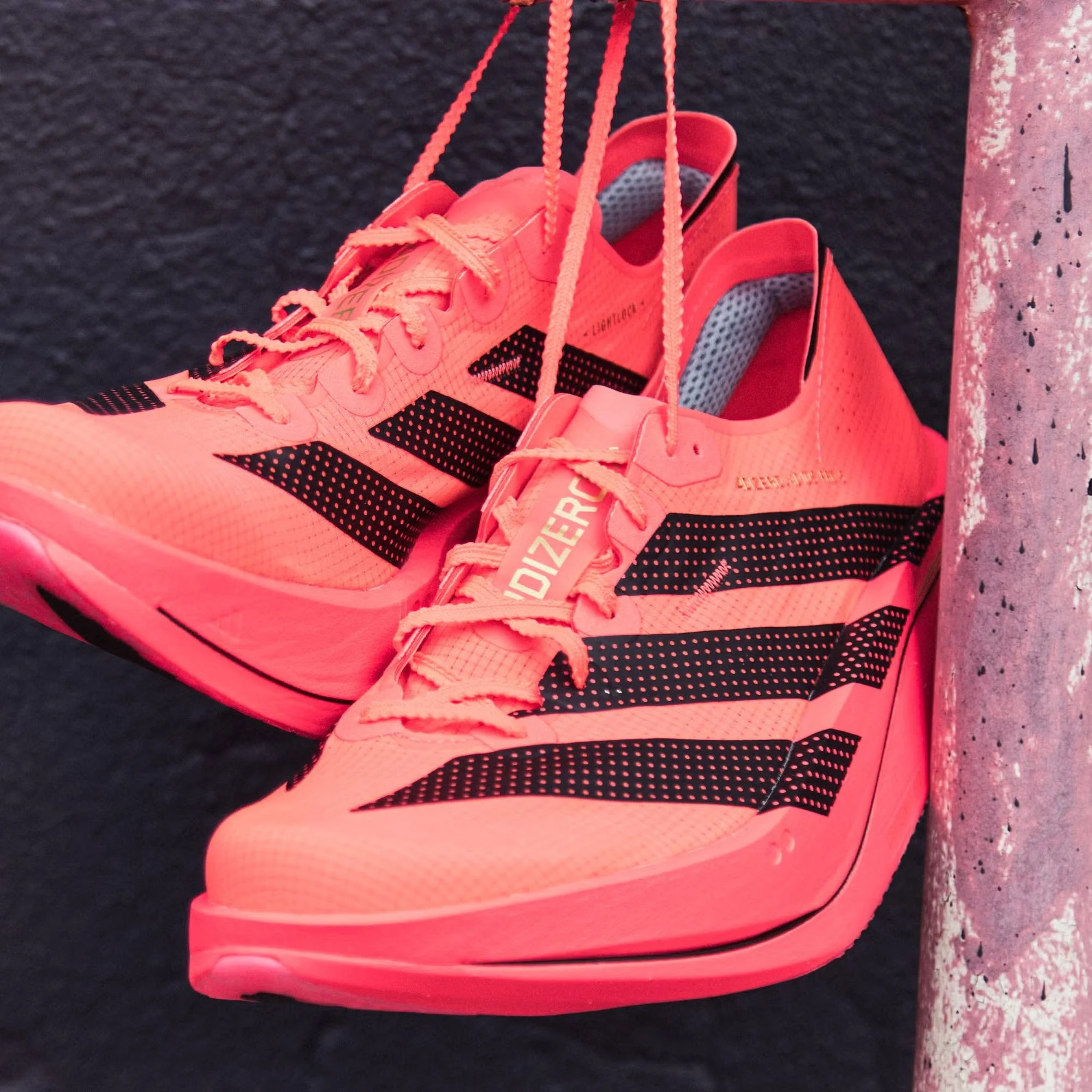
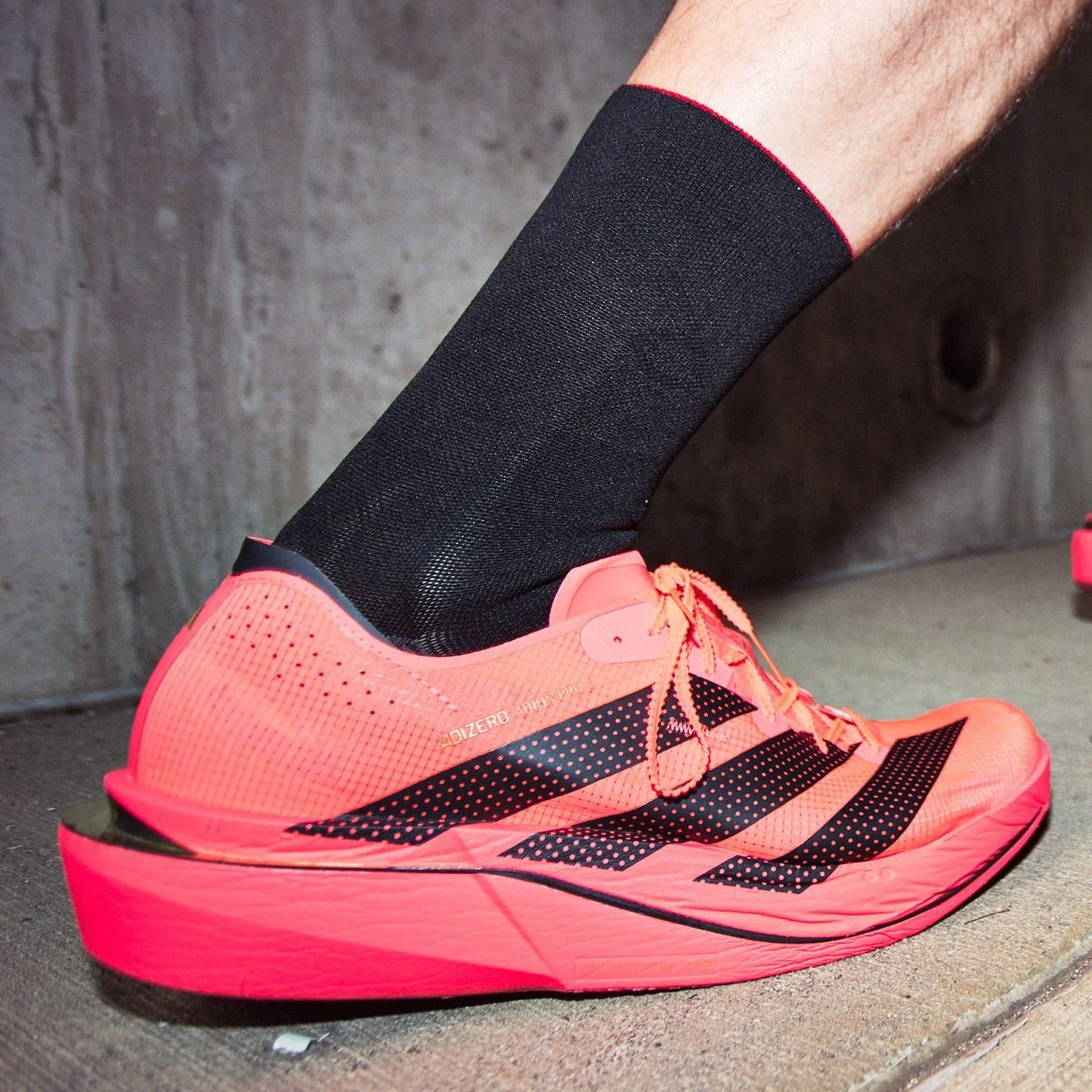
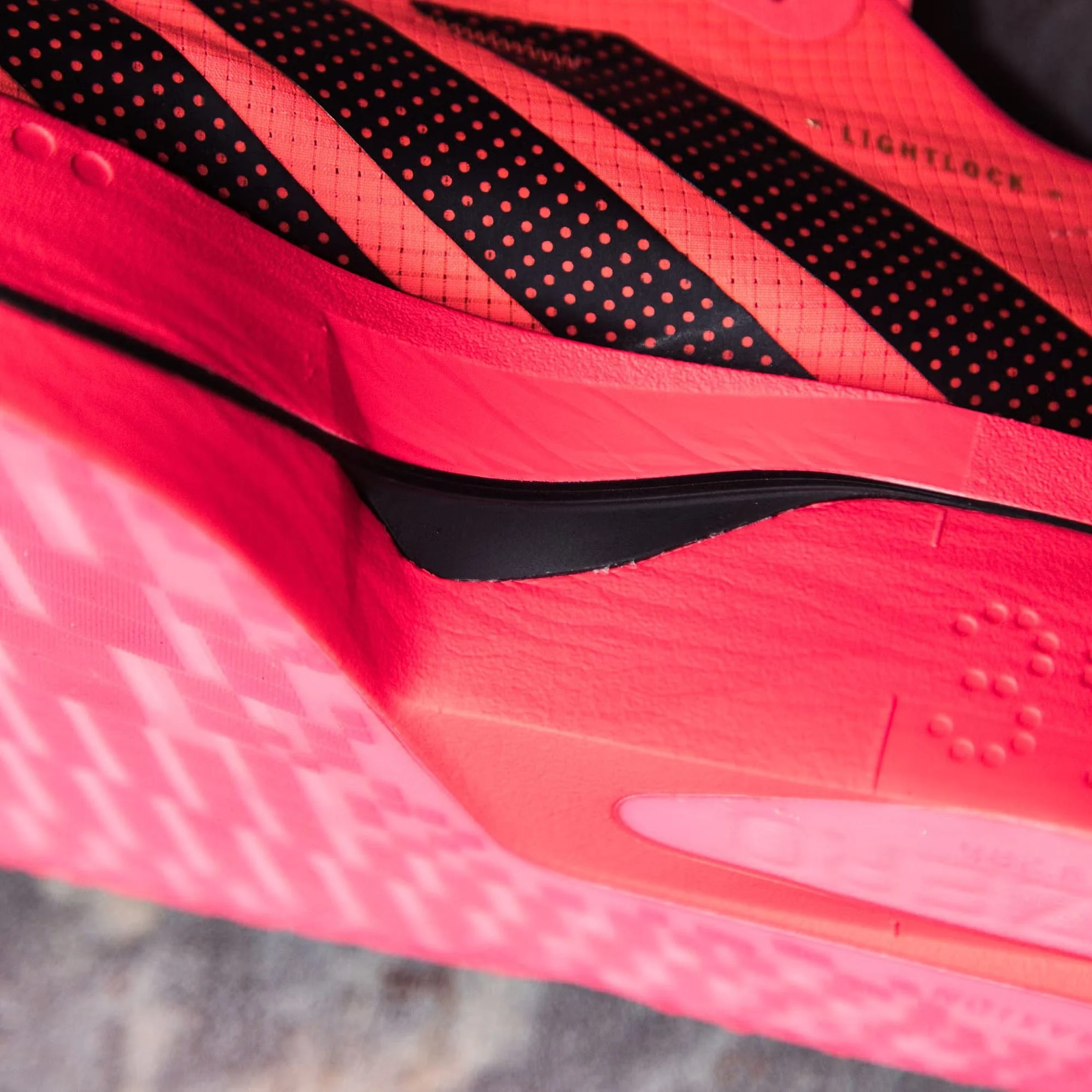
Adidas has adjusted the upper in ways that may help runners who found the Pro 4 too small. That’s a welcome possibility, though it doesn’t solve every fit concern. The arch still feels quite narrow and could cause blisters for runners with wider feet. At $275, the Adizero Adios Pro 5 is a high-priced racing shoe, so fit matters as much as its fast, stable ride. It weighs 6.1 ounces in a men’s size 9 and 5.3 ounces in a women’s size 7, with a 4-millimeter drop and a 39-millimeter heel stack.Adidas Adizero Adios Pro 5 — $275 at Adidas
Race-shoe weight, with enough cushion for the miles
The Adios Pro 5’s biggest gain is simple: it’s lighter. My size 12 pair weighs 7.3 ounces, an ounce less than the Pro 4; that model had already shed an ounce from its predecessor. The result puts Adidas in the same weight class as the Puma Fast-R 3, the Asics MetaSpeed Sky/Edge, and the Nike Vaporfly 4. It still has enough substance underfoot for long-run comfort and durability. That balance matters more than shaving weight alone.
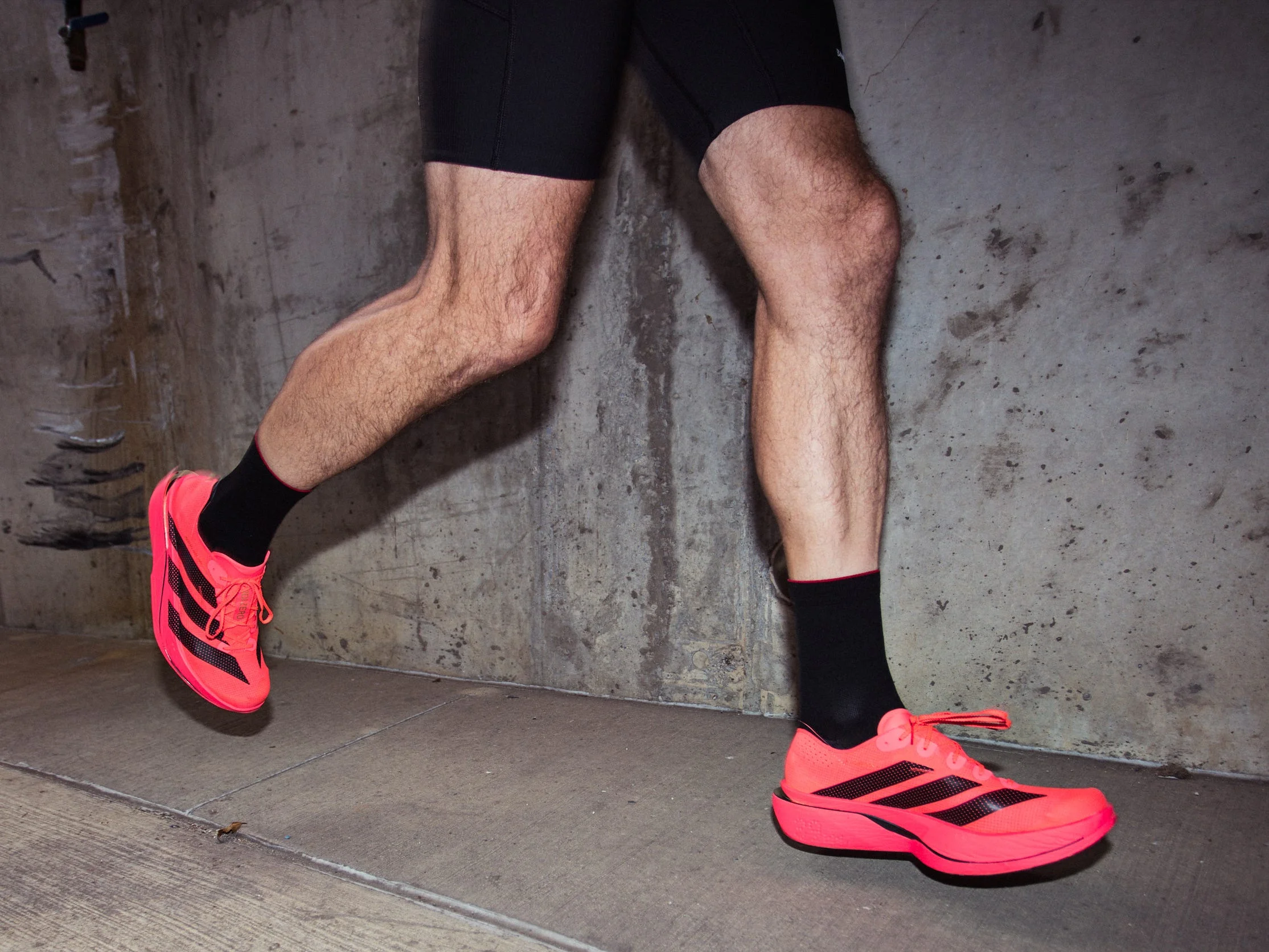
Lightstrike Pro feels a touch firmer once you’re running, but the shoe keeps the Pro 4’s unusual range: comfortable enough for an easy 20-miler, yet capable of handling marathon pace. The Pro 5 adds a little more snap. I took it out for a nine-mile jog straight from the box, then ran intervals the next morning: five one-mile repeats at 5:45 pace, with quarter-mile recoveries. The foam compressed under each landing and returned a lively push at toe-off. My legs gave out before the shoes did.

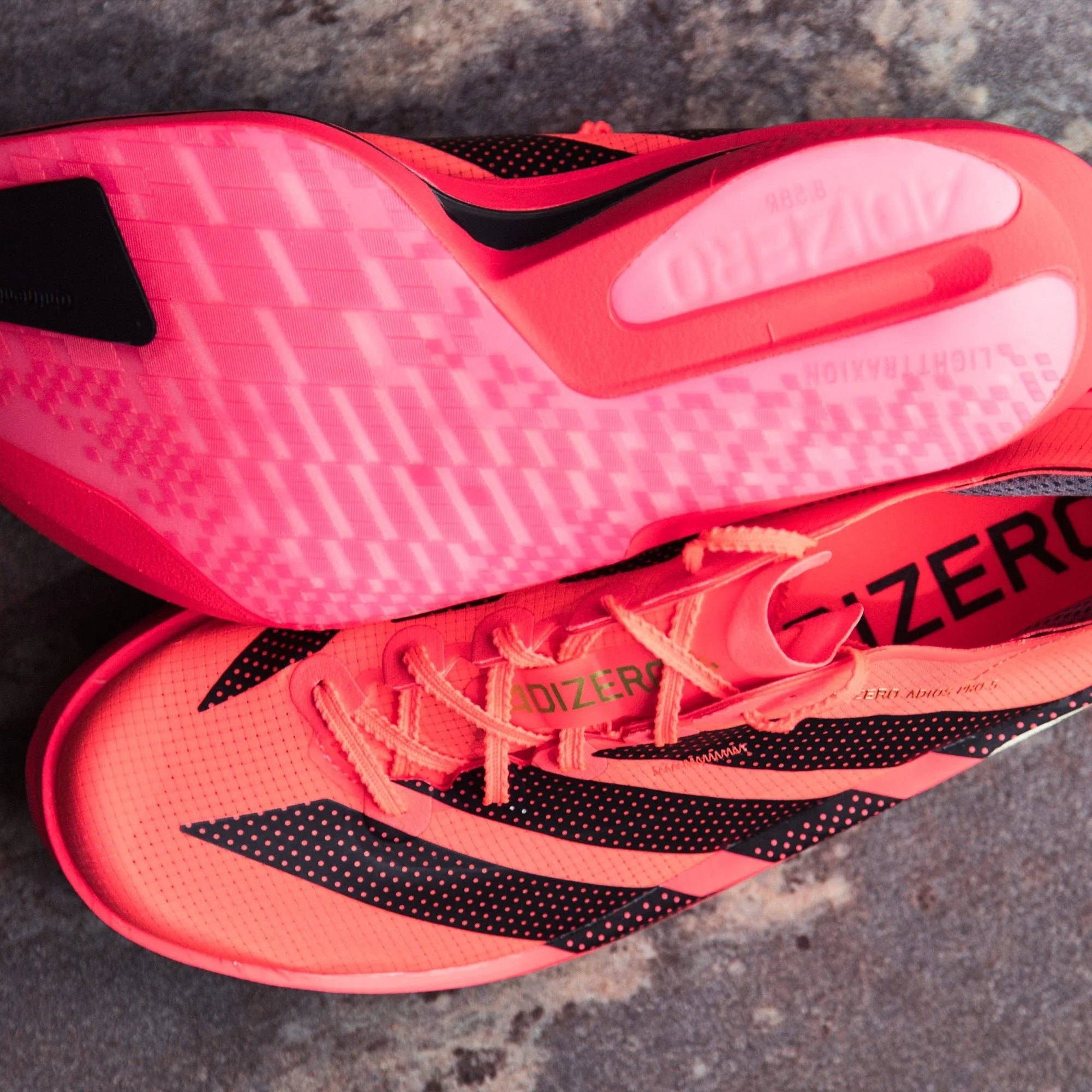
That planted feel may come from a structural change. Adidas has filled the channel beneath the arch and rear of the shoe, replacing the exposed carbon rods with foam that meets the road. The added contact seems to reduce the mid-stride wobble I noticed before.
Carbon rods give way to a perimeter rim
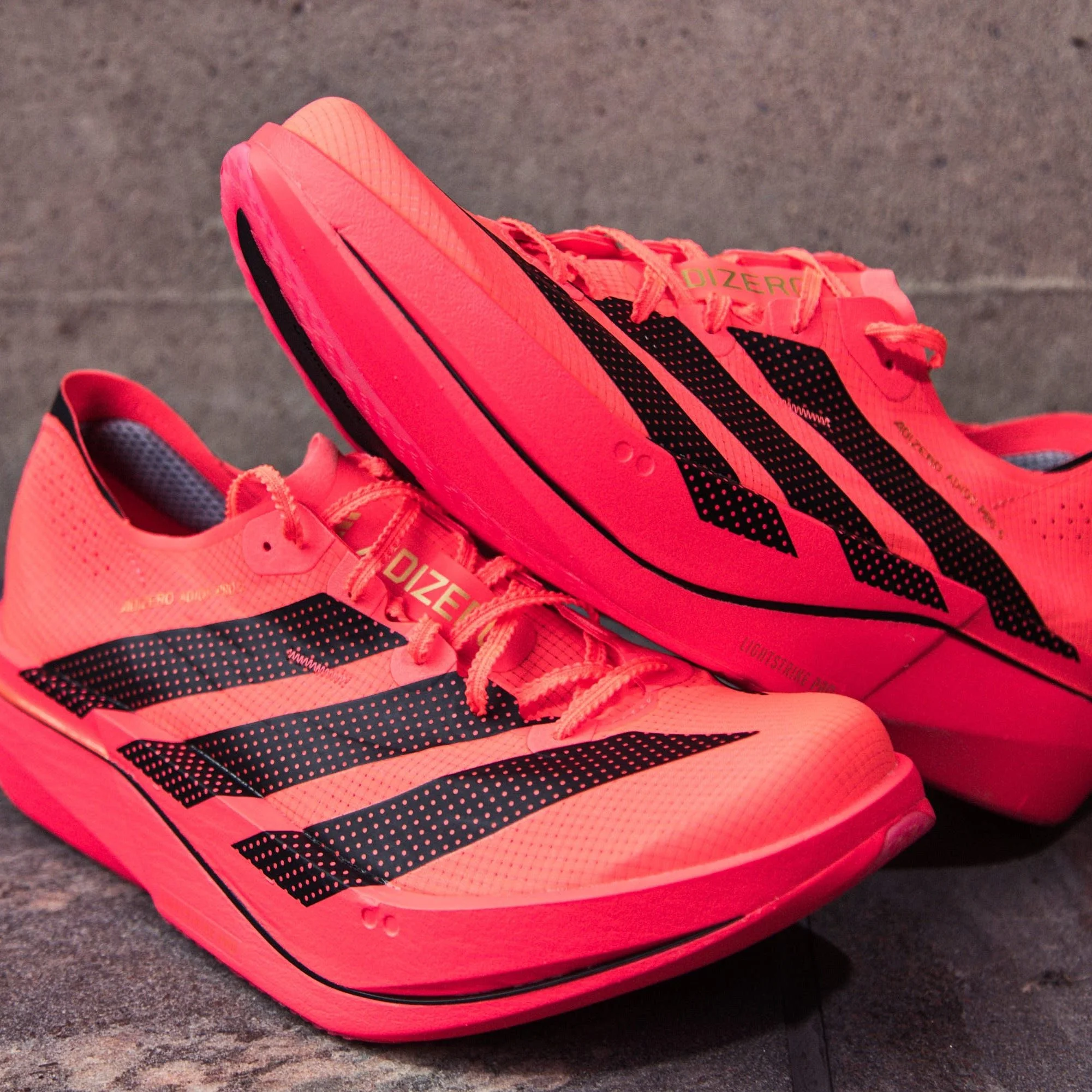
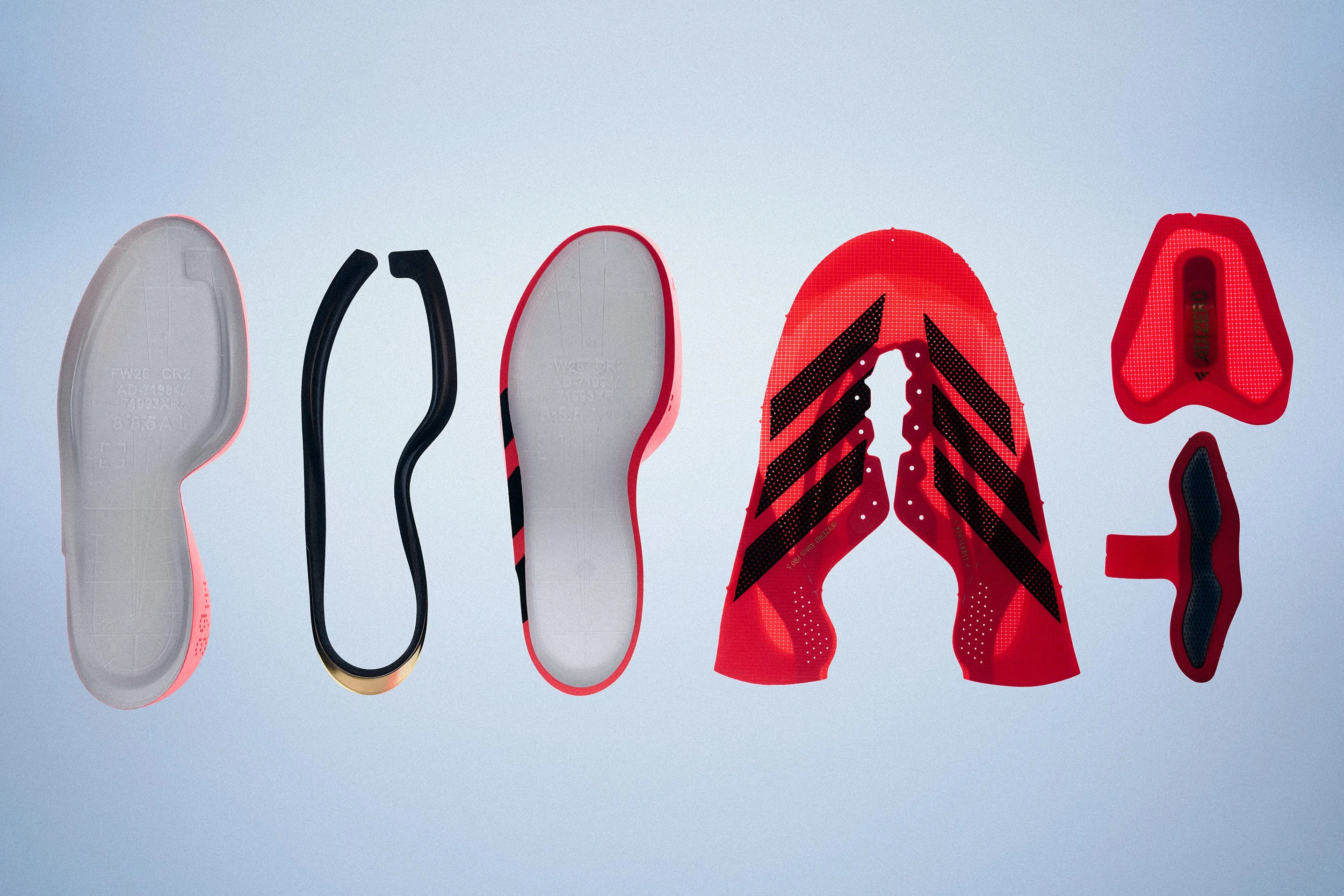
The Pro 5 borrows a design idea from Adidas’s $500 racer: a carbon ring around the shoe’s perimeter. It stiffens the edges while leaving bouncy foam directly underfoot; Adidas makes the rim thicker along the arch to help keep the shoe stable. The company says the combination of a 12.5 percent weight reduction, foam changes, and the carbon rim delivers 9 percent more energy return than the Pro 4. That’s a sizable claim, though the figures alone don’t tell you how much difference every runner will feel.
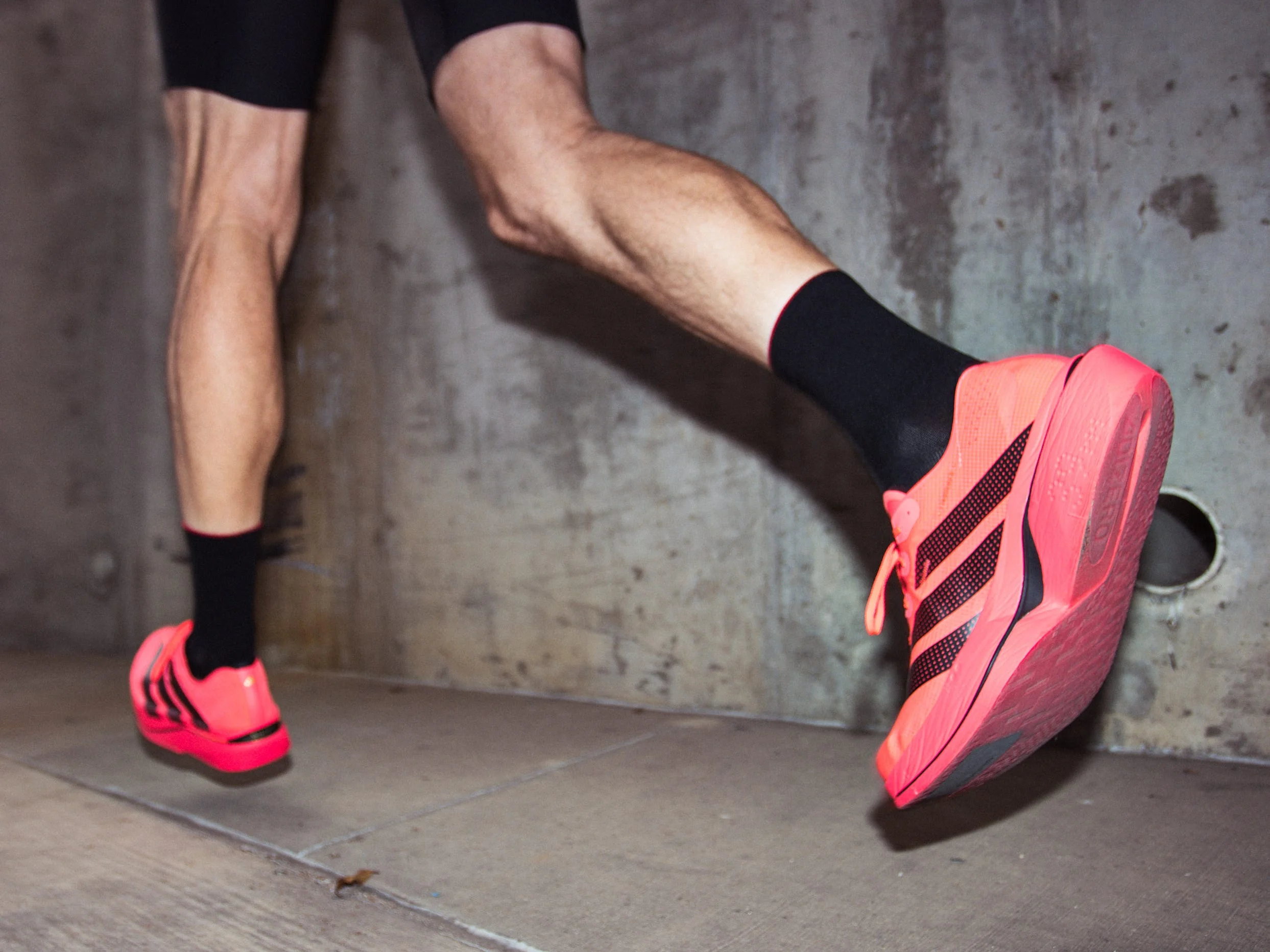
There’s one familiar downside to a stiff edge that reaches the inside of the shoe: kick your ankle and you’ll feel it. My form could use work, but that doesn’t make the impact any less painful.
The fit is better, but the narrow arch remains
The upper’s close, race-ready shape hasn’t changed much. Length is a little more forgiving than on the Pro 4, which ran short enough that I lost a toenail after a hard 23-mile run. The Pro 5 feels true to size in my usual size, though it still leaves little extra room.
News editor Theo Kahler, who wore the Pro 4 when he placed 40th at last year’s NYC Marathon, also found the new shoe true to size. After a 20-mile run that included four two-mile pickups at 5:10 pace, he said, “The Pro 5 felt great when I got up to speed, and my legs had more pop toward the later miles than I would have expected.”
But the arch shape could still rule out some runners. Theo had to switch into the Nike Vomero for the final four easy miles after a hot spot developed under his arch. The Pro 5’s narrow waist is the clear trade-off here: if your foot is broad through the middle or your arch is low, blisters are a real possibility.