Nike After Dark Tour Shoes: Vomero 18, Vomero Plus and Pegasus Picks
Nike’s After Dark Tour is selling a look as much as a race: its fall events pair nighttime running with a bright pink merchandise line. The Nike After Dark Tour returns with races in major cities around the world, putting the event’s visual identity front and center. In the U.S., the Los Angeles half marathon starts at 5 p.m. on October 24, and it’s already sold out. You can still shop the hyper pink collection at nike.com.
The race and the merchandise serve different purposes. A sold-out event says something about demand for the experience, but it doesn’t tell you whether a shoe is comfortable over a training week or suited to your pace. That’s the more useful test for the footwear: can it earn a place in a regular rotation after the event branding stops doing the selling?
💖 After Dark Hyper Pink Shoes
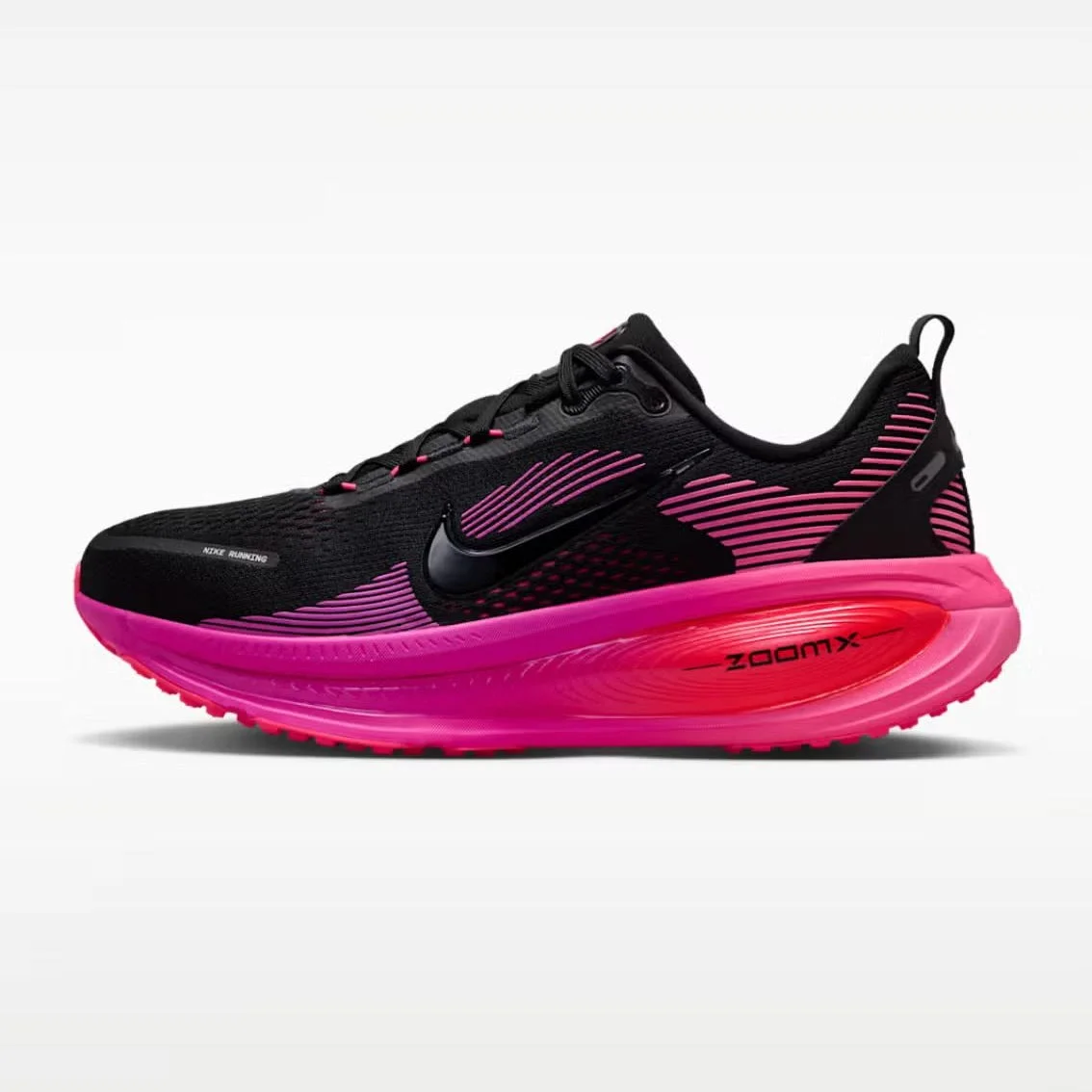
The Vomero 18’s women-informed design addresses two common fit complaints: it gives wide feet more room and holds the heel more securely than earlier Vomeros. Nike combines ReactX and ZoomX foam for cushioning that’s soft without feeling dead. That mix makes it a plausible daily trainer for easy miles, base building, and longer runs, where comfort over time can matter more than a lively first impression.
Fit claims are especially consequential in a daily shoe. A roomy forefoot can make a difference for runners who feel cramped in narrower models, while a secure heel may help the shoe feel settled as the pace or terrain changes. Those benefits still depend on individual foot shape, socks, and personal preference. If you’re working in this space, you’ll know that a promising spec sheet can narrow the shortlist, but it can’t replace trying a shoe on.
Its 44 mm stack height sounds like a recipe for a wobbly ride, but Runner’s World editor Kristine Kearns found it stable. On a 12-mile run, she valued the support and how readily the shoe handled potholes. That’s useful real-world evidence because it speaks to how the shoe behaves beyond a brief shop-floor test. Still, one run can’t settle the question for every stride or foot shape. A tall, cushioned shoe can feel reassuring to one runner and cumbersome to another.
The Vomero 18 is the straightforward option in this pairing: its description points toward comfort and versatility, with a fit update and cushioning aimed at regular training. That’s a practical proposition. The trade-off is that “daily trainer” covers a wide range of needs, and the details here don’t establish how it will suit a runner who prefers a firmer, lower-to-the-ground feel.
Nike Vomero Plus
Smooth and Speed Super Trainer · $180 at Nike
The Vomero Plus is the more cushioned, more energetic take on Nike’s Vomero 18. It uses ZoomX foam throughout and comes in slightly lighter than the original; testers also found it noticeably springier. That’s a meaningful shift in feel, though the available description gives no weight figures or test details to show how large the difference is. “More energetic” can sound persuasive, but it’s a subjective quality that matters most when matched to the runner and the kind of run.
The $180 price also makes the distinction between the two Vomeros relevant. The Plus is positioned as the more performance-minded option, while the Vomero 18 is described as a versatile daily trainer. That framing gives shoppers a starting point, not a verdict: cushioning preferences vary, and a springier sensation won’t automatically make a shoe better for every training plan. Here’s the thing: a premium label only helps if the ride suits the miles you actually run.
Nike Vomero Plus — $180 at Nike
A different kind of Pegasus Plus
Nike labels the Pegasus Plus 2 a “Propulsive Speedwork Shoe,” pointing it toward faster training sessions. The supplied product listing doesn’t include a price, and there’s no performance description here to explain what makes it propulsive. That leaves a gap between the label and the evidence: runners can see the intended use, but they’ll need the review and their own fit experience to judge whether it earns that role.
Speedwork shoes occupy a useful middle ground in many training rotations. They’re generally meant to feel more responsive than a relaxed daily trainer, while still being used for workouts rather than reserved for race day. That general category context can help make sense of Nike’s positioning, but it doesn’t tell us how this particular shoe compares with other models or how it handles different workouts.
A daily trainer with a quicker feel
The Pegasus Plus 2 makes a case for Air as a tool for pace and cushioning, rather than a signal that a shoe is built purely for speed. Nike says it returns 18 percent more energy than the prior version. Runner-in-Chief Jeff Dengate found it responsive and fast underfoot, though it weighs more than its predecessor. That extra weight is a trade-off worth considering, not a dealbreaker by itself. A quicker ride may appeal to runners who want one shoe to cover a mix of training, but the weight difference could matter to someone prioritizing a lighter feel.
Numbers in product claims need context. Nike’s energy-return figure describes a comparison with the previous version, but it doesn’t tell a reader how that difference will feel on a run or whether it changes performance in a meaningful way. Dengate’s assessment adds a more direct account of the ride, while the weight caveat keeps the picture from becoming a simple upgrade story. And yet, “responsive” remains a personal judgment; it’s most useful when read as a description of feel, not a promise of faster times.
Read the Nike Pegasus Plus 2 review.
Nike Pegasus 42 — “Responsive Workhorse”
$145 at Nike
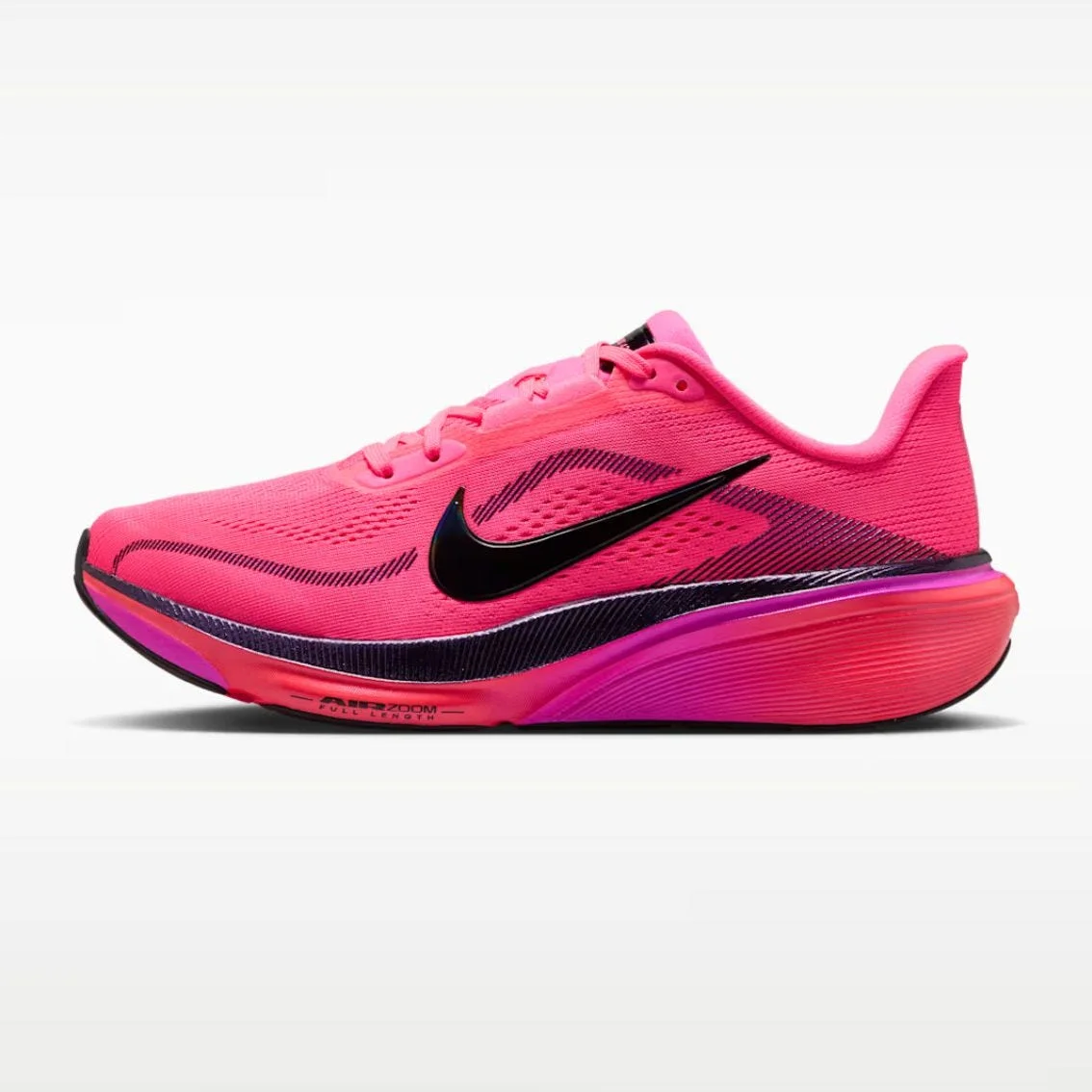
At 37 mm, the Pegasus 42 aims for a middle ground: enough cushioning for comfort, with more ground feel and nimbleness than the thick-soled trainers that dominate many runners’ rotations. Its curved Air unit sits inside a ReactX midsole and is designed to work like a carbon plate, helping give the shoe a lively roll. The result, according to the review, is a quick-feeling option for everyday miles.
That combination puts the Pegasus 42 in a different position from a shoe marketed chiefly around maximum cushioning. A moderate stack and a lively roll suggest a more connected ride, though the figures and design description can’t predict how it will feel under an individual runner. The $145 price is also lower than the Vomero Plus listing, but price alone doesn’t determine which shoe is the better fit. The useful comparison is purpose: comfort-focused daily running, a springier training feel, or a more nimble option for everyday miles.
Read the Nike Pegasus 42 review.
What the collection means beyond race night
The After Dark line gives Nike a clear way to connect apparel, shoes, and a live event around one visual theme. That can make a running event feel more like a shared occasion, especially when the race itself is already sold out. But the color story doesn’t answer the basic buying questions: how a shoe fits, how its cushioning feels, and whether it matches the runs you do most often. (And this is the part most people overlook.)
For shoppers, the product descriptions offer useful starting points rather than a universal ranking. The Vomero 18 is framed around daily comfort and fit; the Vomero Plus emphasizes cushioning and spring; the Pegasus Plus 2 is aimed at faster sessions; and the Pegasus 42 is presented as a nimble everyday option. Those roles overlap, as running shoes often do, and the supplied reviews provide more grounded impressions than the campaign language alone.
Good branding can get a runner to look. It can’t make a shoe work for a particular foot or training routine. Worth a try.