Vikki Robertshaw Took Up Running in Her 40s—and Cut Her Marathon Time to 3:13
Vikki Robertshaw’s progress offers a useful counterpoint to the idea that distance-running ambitions belong chiefly to younger athletes. She started running in her 40s, without a training routine or even a clear goal. Four years later, at 47, she had completed two marathons and improved her time from 3:17:20 to 3:13:08. The numbers matter, but the more telling change was how she got there: a modest structure built around work and family, rather than a life organized entirely around running.
Her daughters made running feel possible
Robertshaw, who lives in Barrowford, Lancashire, had been a competitive swimmer as a teenager, but running was new to her. Her daughters’ participation in cross-country and track brought her to races nearly every weekend. Watching them take on the starting line gave her an unexpected nudge.
She admired their willingness to show up, even when they were hard on themselves or focused on beating other competitors. Robertshaw wanted them to see a different measure of success: trying, regardless of the result. “It doesn’t matter how you do; it’s just about giving it a go,” she said. She also hoped to demonstrate that taking on something difficult wasn’t reserved for a particular age or stage of life.
For years, though, her own fitness came second. As a full-time working mother, she made time to take her daughters to clubs and races but didn’t prioritize exercise for herself. Once the girls were teenagers and could be left at home, she began running in small doses. There was no big plan. “I just wanted to do something for myself, really,” she said.
From unstructured runs to a first marathon
At first, Robertshaw gradually extended her runs and entered a few half marathons. Racing, she discovered, was something she loved. Her training, however, had little structure. She ran according to feel, without a consistent program or a particular method.
Joining a running club and entering her first marathon changed that. Through the club, she began working with coach George Woodburn. Before then, she had one pair of trainers for every run and was unfamiliar with tempo sessions, intervals and track workouts.
Woodburn helped her turn a distant ambition into a plan that could fit around the rest of her life. Robertshaw valued having a coach who understood that running was important to her but wasn’t her only responsibility. Rather than pushing her to measure herself against other runners, he helped set goals that felt achievable within her circumstances.
The plan was simple: keep up easy runs, add a weekend long run and include one weekly track workout to develop speed. Robertshaw followed that pattern for the four months before her first marathon. “Because I started to get more of a structure, that goal became achievable,” she said.
A fast first marathon—and another step forward
At the 2024 MBNA Chester Marathon, Robertshaw set herself a target of 3:30. The excitement of her first race over the distance led her to start faster than planned, and she began to fade in the closing miles. Then she met her friend Katie, who was running the metric marathon, a 26.2-kilometer event. The two courses came together, and Katie helped pull Robertshaw toward the finish.
“She kind of almost dragged me to the end,” Robertshaw recalled. She picked up her pace over the final miles, though she wasn’t sure she would have done so without her friend’s help. The finish brought a rush of satisfaction before she even knew her time: 3:17:20, well inside her original goal.
That result qualified her for the 2026 London Marathon. For the next race, she became more deliberate about preparation, looking into nutrition and adding strength work to support her overall fitness and recovery. She also wrote her planned splits on her arm, giving herself a pacing reference in case her GPS failed. She finished in 3:13:08.
The improvement came not from a single trick but from adding practical elements to her routine. A coach helped make training more specific; strength work and nutrition became part of preparation; and writing down splits gave her a simple alternative to relying solely on technology during the race.
Progress without a fixed age ceiling
Robertshaw still has more ambitious goals, but she sometimes wonders whether she can keep getting faster. Messages about women maintaining their speed—or slowing down—in their 40s can make that question harder to ignore. Her own experience is still relatively new: she began running in 2022, and says the process remains exciting and fun.
Seeing women her age and older achieve fast times gives her reason to stay hopeful. She isn’t claiming that every goal is within reach; she simply wants to keep testing what she can do. “Whether it’s realistic for me, I don’t know, but I’m enjoying trying,” she said. “And I feel like I’ve got a bit more left.”
What Robertshaw has learned
Her advice starts with making the first step manageable. Rather than signing up for a marathon immediately, she suggests beginning with 30 minutes of running, three times a week, and building consistency. The point isn’t to predict how far that routine will lead. It’s to find out by starting.
Strength training has also moved from an afterthought to a regular part of her plans. She aims to do a couple of strength sessions each week, with injury prevention in mind. Alongside that, she emphasizes fueling, rest and recovery. “There is no one key thing, but it is always about getting enough sleep,” she said.
Just as important, Robertshaw cautions against waiting for ideal conditions or buying specialist gear before beginning. Her own start was deliberately small, and she didn’t need to have everything figured out. “You literally just go out there and put one foot in front of the other.”
That approach is the clearest lesson in her story: begin at a scale that fits, then build a routine that can last. Robertshaw’s marathon times show what became possible once she added structure, but her first step was simply making room for something of her own.
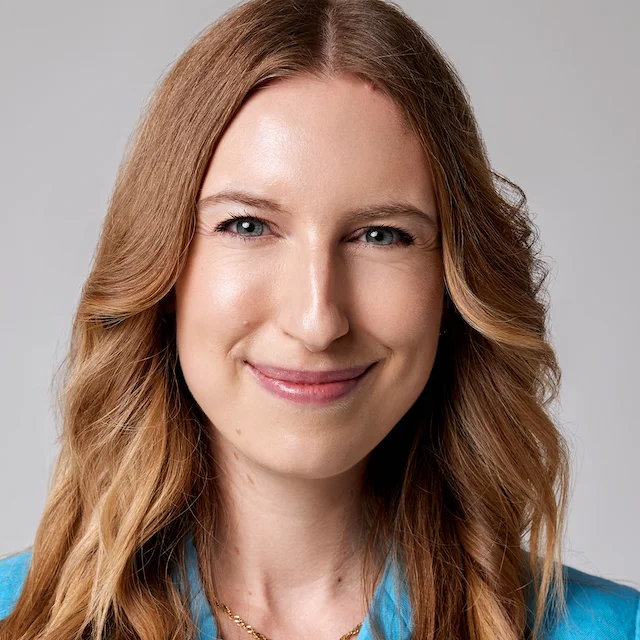
Kristine Thomason is a writer and editor with over a decade of experience creating content for print and digital publications. Previously, she was the health and fitness director at mindbodygreen, and the fitness and wellness editor at Women’s Health. Kristine's work has appeared in Men's Health, Travel + Leisure, Health, and Refinery29, among others. She holds a journalism degree from New York University, and is certified in personal training by the National Academy of Sports Medicine (NASM).