The 9 Best Stability Shoes for Every Type of Runner
Some shoes do not have a sexy reputation. Say “stability shoe” to a certain kind of runner and they’ll look like you just suggested they run their next marathon in Crocs. Stability shoes have a reputation problem, and it’s not entirely undeserved. The stability shoes of the early 2000s were clunky, rigid bricks that treated pronation like a disease to be cured with a slab of hard plastic (looking at you, Saucony Grid Azuras). If you ran through that era, I get why you might have a negative, visceral reaction to the type.
But here’s the thing: Stability shoes got better. Today’s versions are lighter, softer, and not for anything? Cuter. And they are some of the best shoes you can lace up—not just for overpronators, but for anyone whose form gets sloppy when the miles pile up. I’ve known runners who white-knuckle their way through marathon blocks in neutral racers when a little guidance would have saved their knees, their IT bands, and frankly, their sourpusses. Needing support isn’t taking an L. It’s biomechanics.
Best Stability Shoes
- Best Overall: Brooks Adrenaline GTS 25 (Men’s/Women’s)
- Best Value: Mizuno Wave Inspire 22 (Men’s/Women’s)
- Best Supertrainer: Nike Structure Plus (Men’s/Women’s)
- Best for Long Runs: Asics Gel-Kayano 33 (Men’s/Women’s)
- Best Multiuse Trainer: Saucony Guide 19 (Men’s/Women’s)
- Best Daily Trainer: Puma ForeverRun Nitro 2 (Men’s/Women’s)
What Actually Makes a Shoe a “Stability” Shoe?
At its simplest, a stability shoe is designed to limit excess inward rolling of the foot (overpronation) after your foot strikes the ground. A little pronation is normal and even beneficial; it helps distribute the shock of the impact. But when your ankle collapses too far inward with every step, that torque travels up the chain to your shins, knees, and hips, and over hundreds of miles it can screw up not just your stride, but your long-term health.
Neutral shoes let your foot do whatever it wants. Stability shoes help guide your foot into a more correct placement keeping your body more aligned.
How We Selected
From pounding the pavement to scrutinizing performance in our Shoe Lab, the Runner’s World test editors and wear-testers rigorously tested all of our selections. Our process includes exhaustive market research, analysis of user feedback, and consultations with industry experts. This article was written jointly between our editors Amanda Furrer and Cat Bowen. Bowen tends to pronate, especially when she is tired or in a long training block. She has run in all the shoes on this list with the exception of the Nike Structure Plus.
Full Reviews

Pros
- Soft without "sinking" feeling
- Supportive guardrails don't bite into feet
- Not prone to overheating
- Solid grip, even on wet pavement/boards

Cons
- Some testers felt heel collar was too high
- Lacing system could be improved

Key Specs
| Weight | 10.6 oz (M10), 9.5 oz (W8) |
| Drop | 10 mm |
| Stack Height (Heel) | 37 mm |
The Brooks Adrenaline GTS 25 is one of the most consistent stability shoes on the market, and the silver anniversary update makes a strong case for why this franchise has lasted 25 years. The big news is in the stack: Brooks added 3mm to the forefoot and 1 mm to the heel, bringing it to 37 mm and 27 mm respectively, and dropped the heel-to-toe offset from 12 mm down to 10 mm for the first time in the shoe’s history.
The new heel bevel is the smoothest the Adrenaline has ever had in the opinion of Bowen, who has put serious miles on this shoe. She also feels as though it’s the most balanced this shoe has ever been, and the most balanced on this list.
“Some stability shoes can be so aggressive that the rails can begin to pinch the lateral sides of the foot during long runs,” she says. “The Adrenaline GTS 25 doesn’t do that, and they still have the cushion and push to power your runs.”
DNA Loft v3 foam carries over from the 24, but the extra volume makes the ride noticeably softer underfoot, especially at heel strike. Guide rails are still doing their thing on the medial and lateral edges—reactive, not prescriptive, engaging only when your stride asks for it. The upper is a breathable engineered mesh that has the benefit of preventing overheating and swamp foot with a stretch knit heel collar that locks down without overcrowding.
Though it should be noted that some testers, including Courtney Kazmierczak, feel as though the collar is a hair too high in the back, which requires some trial-and-error for sock choice.
At 10.6 ounces, it’s not light, but it’s not trying to be. This is a daily trainer for runners who want structure and protection. It’s a shoe that simply does not pinch or bite.
Shop Men’s at brooksrunning.com | Shop Women’s at brooksrunning.com
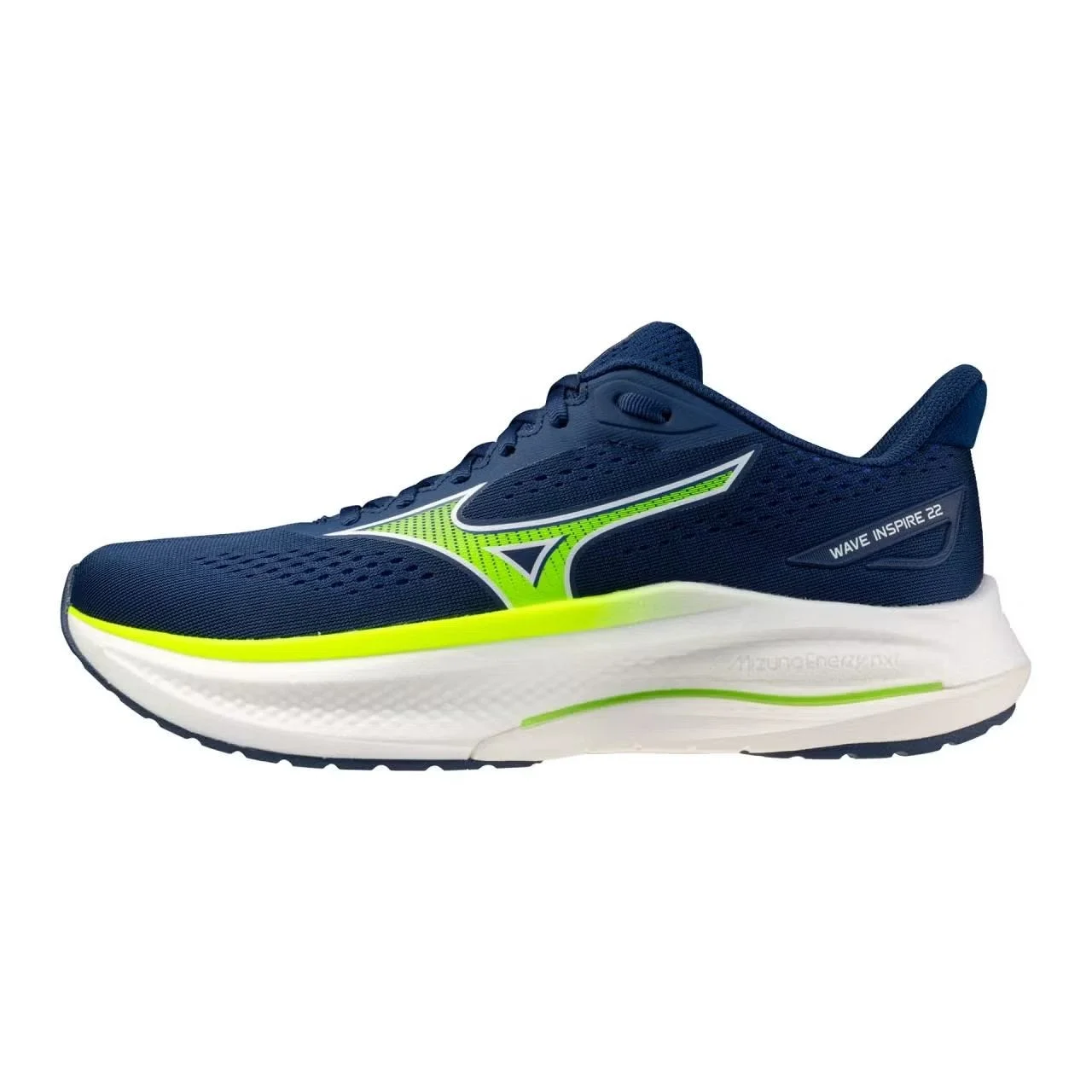
Mizuno Wave Inspire 22 Running Shoes
Pros
- Easy guidance
- Durable
- Great grip
Cons
- Heel collar can be hit or miss
Key Specs
| Weight | 10.4 oz (M9), 8.8 oz (W8) |
| Drop | 10 mm |
| Stack Height (Heel) | 39 mm |
These may be our best value pick, but they’re also some of the most durable daily stability trainers on this list. “I like the durability and stability of these shoes and the fact that they are lighter than previous models,” said shoe tester Lauren Woodall. “I am able to put more miles on these shoes before they need to be replaced than other running shoes.”
The thing is, even though it’s heavier, and the durability is noticeable, they’re not bricks. They are your easy run shoes, your throw-on-and-go trainers. They’re not the fastest, but they’re not meant to be. When your body is tired, and you need the assistance of that wave plate and the heft of the Enerzy NXT foam, it’s there for you like an old friend holding out a hand. The guardrails on this shoe aren’t superpowered corrections like they were on earlier models, but the gentle effectiveness of them cannot be overstated. Simply put, these shoes just feel really good on your run.
One note about fit: a few of our testers found that you can get a bit of heel slippage in these. However, Mizuno gives you that extra eyelet for a heel lock, and that can absolutely change the fit of the shoe once you lace up. It’s a point worth remembering.
Shop Men’s at usa.mizuno.com | Shop Women’s at usa.mizuno.com

Pros
- Comfortable enough for all day wear
- Solid feel underfoot
- Very orthotic friendly
Cons
- A bit on the heavy side
- Not super responsive
Key Specs
| Weight | 10.8 oz (M10), 8.7 oz (W8) |
| Drop | 10 mm |
| Stack Height (Heel) | 42 mm |
There’s something about the Nike Structure Plus that demands attention. In the words of Furrer, “I have a soft spot for this shoe, it’s just so good on long runs.” And that right there is spot on. For the days where you know you have a long run on the calendar, but that long run is full of mixed tempos, hill climbs, potential obstacles, and rough surfaces that you’ll start to feel underfoot after six miles, this is going to be the shoe you reach for. That’s what Nike designed it to handle when it combined the ReactX and ZoomX foams with a dual-zone rubber outsole. It gives you cushion where you need it, flexibility where it matters most, and a nimble feel when you’re dodging pavement cracks.
Arguably the most stylish shoe on this list, Nike really leveled up its stability line with the Structure. It’s also very orthotic-friendly. The collar and the lacing system can handle a lot of pulling, allowing you to get those insoles in correctly. Beyond that, it’s remarkably comfortable as a shoe just to take out and live in. It’s a solid walking shoe, and we love it as a versatile, more cushioned alternative to wear with dressier outfits.
That’s not to say it’s flawless. It’s a bit on the heavier side, and if you’re someone who prefers a shoe that has a lot of responsiveness or bounce, you won’t find it in this shoe. It’s also just a hair on the “runs smaller” side front to back. But other than those small quibbles, it’s a great pair.
Shop Men’s at nike.com | Shop Women’s at nike.com
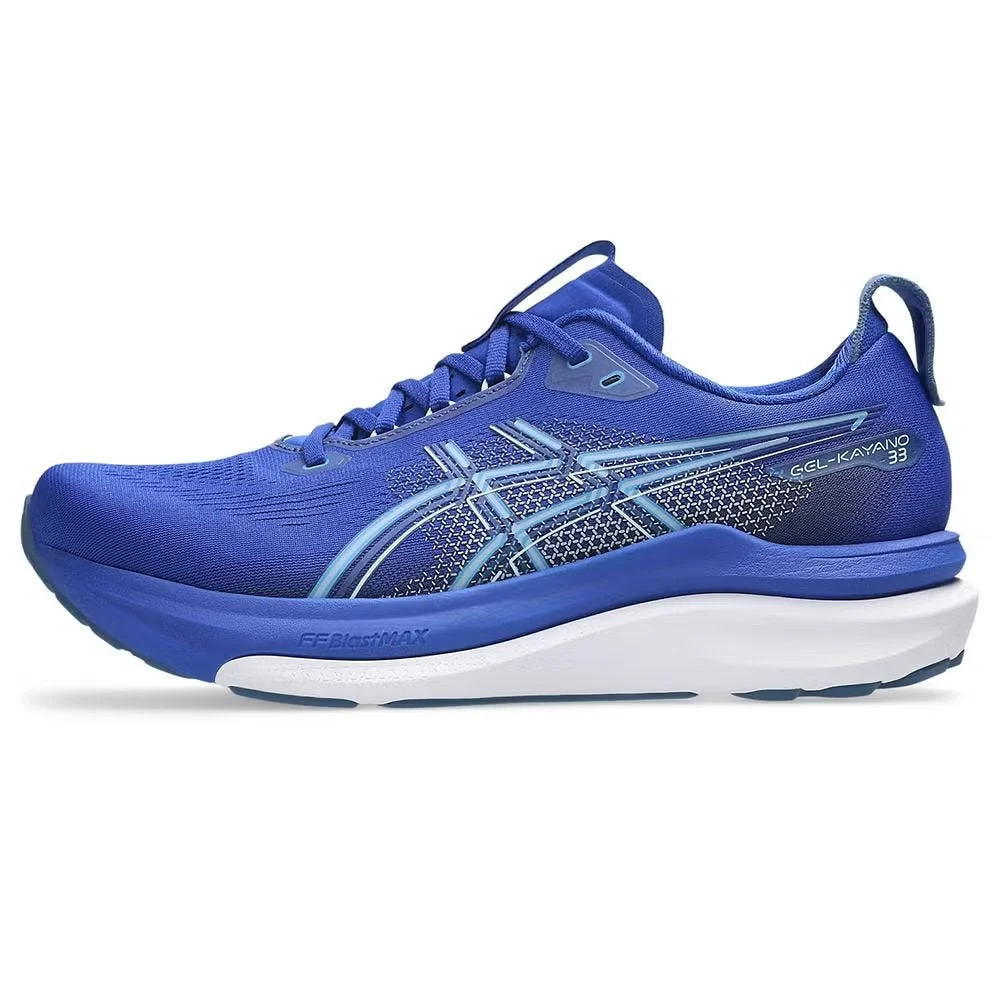
Asics Gel-Kayano 33
Pros
- Innovative stability structure
- Upgraded foam
- Super soft
Cons
- On the heavier side
Key Specs
| Weight | 10.5 oz (M9), 9.1 oz (W8) |
| Drop | 8 mm |
| Stack Height (Heel) | 40 mm |
The differences between the Gel-Kayano 32 and the 33 are important, but not massive. They retooled the design of the support system, employing their FluidSupport tech, which is a bit more malleable than previous iterations, working more with the body’s movements and mechanics. They’ve also softened the foam, updated the fit throughout, and for many runners, it should feel and ride more comfortably.
That being said, it still has all the Asics features you expect and love: a breathable upper, geometry that works to move you forward, and a grippy sole that keeps you upright on wet pavement. It is on the heavier side, but nothing out of the ordinary for a stability shoe, and the collar could have a hair more cushion. However, we love the well-placed heel tab, especially when our hands are sweaty.
The cushion is going to be the biggest win on long run days. You may not get a ton of energy return, but what you are getting is that added comfort with the guidance that will help you maintain your form and keep you from hating yourself after the run when you’re inevitably lying on the floor propped up on your hands.
Shop Men’s at asics.com |Shop Women’s at asics.com
Saucony Guide 19

Pros
- Comfy right out of the box
- Gentle guidance
- Foam is sturdy, but soft
Cons
- Runs just a tad long
Key Specs
| Weight | 9.7 oz (M10) 8.9 oz (W8) |
| Drop | 6 mm |
| Stack Height (Heel) | 35 mm |
The Saucony Guide 19 is a stability shoe that actually earns the word “versatile,” which stability shoes rarely do. Most of them feel like you’re being guided rather than running, but the Guide 19 threads the needle between structured support and genuine responsiveness.
The foundation is Pwrrun foam, which delivers a cushioned but not marshmallow-soft ride. It’s lively enough to handle tempo work without feeling like you’re fighting the shoe, and cushioned enough that you’re not destroyed after 18 miles. The medial TPU guidance frame offers mild overpronation correction without the brick-like rigidity you get from old-school posts. It’s more a gentle steer rather than having the shoe take the reins and navigate your feet for you.
For long runs, the 8mm drop and 32mm stack height in the heel keep things comfortable for time-on-feet without creating that spongy instability that kills your form late in a run. For daily training, it’s durable and consistent and a shoe you can lace up without thinking too hard about what’s on your schedule.
And it’s just plain comfortable. At least according to our wear-tester Dave Block, who “can’t remember a shoe that’s felt this great.” And even for tempo days on the track, the fit on this shoe just gets it right. It fits snugly enough that at faster paces it doesn’t feel sloppy.
It won’t replace a racing flat, but for runners who want one shoe that handles most of their weekly mileage without drama, the Guide 19 makes a strong case.
Shop Men’s at saucony.com |Shop Women’s at saucony.com
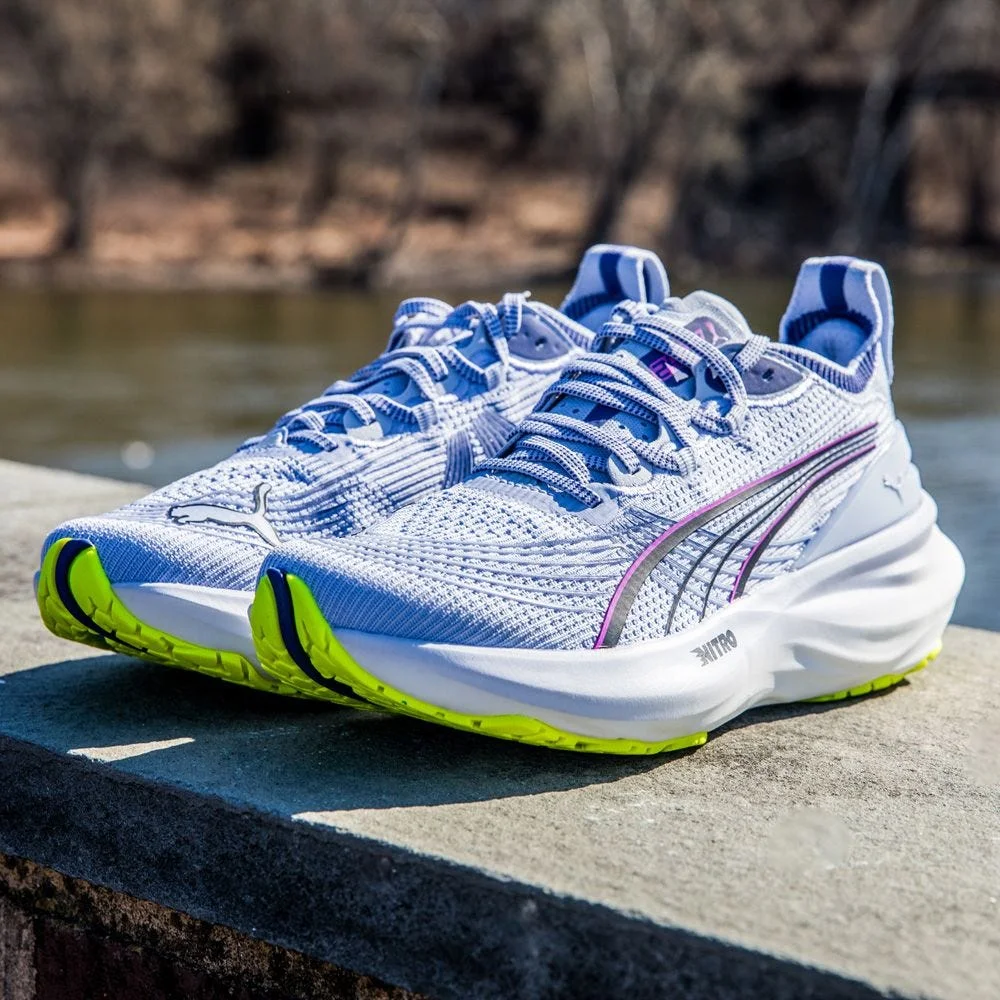
Puma ForeverRun Nitro 2
Pros
- Highly cushioned
- Bouncy midsole
Cons
- Heavy upper
Key Specs
| Weight | 11 oz (M9), 8.9 oz (W8) |
| Drop | 10 mm |
| Stack Height (Heel) | 38 mm |
If you’re logging daily miles, a reliable daily workhorse is essential. You need a shoe that can handle the grind of distance runs while keeping your feet comfortable mile after mile. Enter the all-new Puma ForeverRun Nitro 2: a well-cushioned stability shoe that blends support with a smooth, comfortable ride.
On a run, the Nitro 2 feels more like a cushioned neutral trainer than a stability shoe. Puma’s nitrogen-infused foam midsole, which combines a softer inner core and a firmer outer rim frame, feels about as lively as possible for a cushioned stability shoe.
“The cushioning provided a good balance between softness and responsiveness,” pointed out one tester, adding, “It allowed me to maintain comfort without feeling fatigued.” A heel clip and strategically placed overlays on the upper provide additional support.
The Nitro 2 doesn’t have the most lightweight upper we’ve tested, but it’s comfortable. Heavy padding sewn into the heel cushions the back of your foot, providing extra comfort against the firm yet supportive heel counter. Plush padding all over has its drawbacks, though: “My feet were getting very hot and sweaty after 3 to 4 miles in these shoes,” says the same tester, noting that it might be a “tough wear in the summer.”
Despite its plush padding and supportive build, the ForeverRun Nitro 2 maintains a surprisingly springy ride. It may not be the lightest option, but the cushioned midsole and smooth transition make up for it, generating a stable yet surprisingly peppy experience.
Shop Men’s at us.puma.com|Shop Women’s at us.puma.com
Pros
- Soft midsole
- Wide toebox
- Flexible
Cons
- Wide on narrow feet
Key Specs
| Weight | 9.8 oz (M9), 7.7 oz (W8) |
| Drop | 8 mm |
| Stack Height (Heel) | 39 mm |
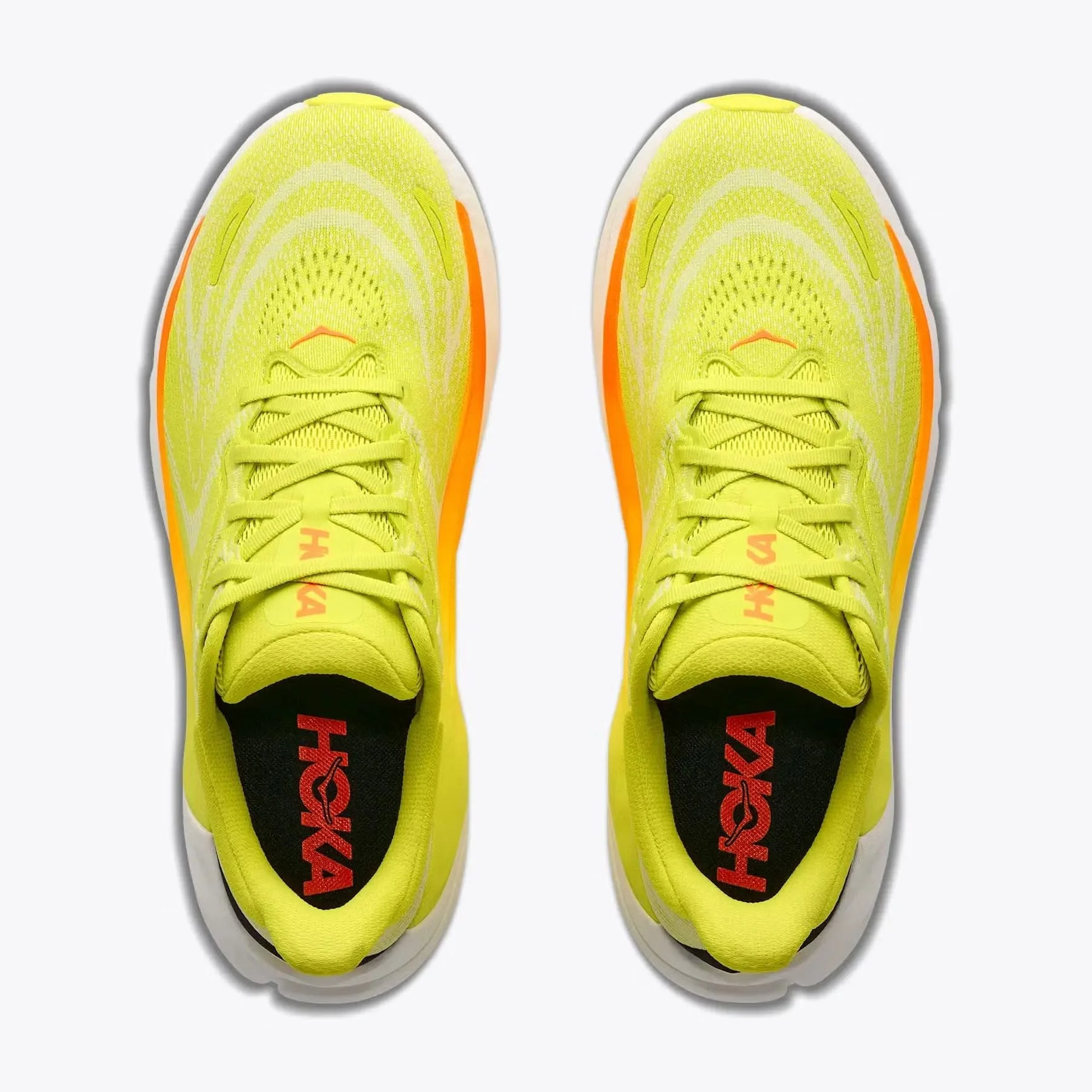
The Arahi 8 is Hoka-soft, but not max-cush beefy. A smidge lighter than its predecessor, this versatile model does double duty as an everyday trainer or tempo shoe. The brand tweaked the compression-molded EVA foam, making it softer without becoming mushy. The outcome: a supportive ride for daily miles or high rebound fartlek workout.
You forget the Arahi 8 is a stability shoe because of how streamlined the design looks: it’s sleek and a compliment magnet. (Furrer wore it at a housewarming party and runners—and nonrunners—asked what she was wearing.) Hoka modified the midfoot and toebox, making the shoe feel less tight, resolving an issue testers had with the Arahi 7. Still, some narrow-footed runners felt the fit was a little too wide. But wide-footed runners, including Furrer, appreciated the accommodating new width.
New and invisible to the eye is the H-Frame system replacing the Arahi 7’s J-Frame. Hoka’s J-frame is featured in some of its stability shoes; dense foam in the midsole wraps around the heel and runs along the medial side, like the letter J, to lend support for light overpronation. The H-Frame, on the other hand, is a dense piece of foam in the midsole that’s H-shaped. The result is surprising; you’d think the H-Frame would make the Arahi rigid and heavy, but instead the shoe is lightweight and the ride is smooth. Running in it, Furrer felt like she was gliding.
Shop Men’s at hoka.com | Shop Women’s at hoka.com

Pros
- New sticky rubber outsole provides better traction
- Broader platform helps with stability
Cons
- Not as aggressive as other racing shoes
Key Specs
| Weight | 8 oz (M10, unisex) |
| Drop | 7 mm |
| Stack Height (Heel) | 40 mm |
What separates the Hoka Rocket X 3 from other super shoes is its broader base and accommodating fit. The shoe has a winged carbon plate to help with propulsion and a dual-density PEBA midsole to provide high energy return and supportive cushioning. An important update: a sticky rubber outsole to prevent slipping and sliding when the race forecast predicts rain or snow.
“These shoes were very stable, which is different for a racing shoe,” says tester Shane Houghton, an overpronator. “Most super shoes feel kind wobbly but I felt lower to the ground and never felt in danger of rolling an ankle. When I stand in the shoes I feel flat on my feet and I don’t feel any lateral-rocking. I had no anxiety wearing these during loopy intervals or running around curves. The lacing is tight and like the texture of the ribbed laces. It keeps them from coming undone or loosening while running.”

Pros
- Great grip underfoot
- Breathable without being cold
- Well cushioned
Cons
- Bit of an odd split in heel of outsole
Key Specs
| Weight | 11.9 0z (M10), 9.6 oz (W8) |
| Drop | 4 mm |
| Stack Height (Heel) | 37 mm |
Sometimes, shoes that are very much stabilizing or stability-adjacent shirk that term for optics. I can’t prove it, but I believe the Nike ACG Zegamas fit that description.
I’ve spent weeks running in these, and as someone who pronates frequently, I can tell you they deliver the structure and support of a true stability shoe wrapped in the rugged outsole of a trail runner. It comes down to that revised last. The Zegama cups the outer rim of your foot so thoroughly that it holds you locked in place, correcting the roll before it starts.
The support straps built into the upper wrap all the way around your foot, the padded tongue and lacing lock your midfoot down, and the heel keeps you planted without any slip. It doesn’t feel neutral, but it doesn’t steer you, either. Instead, it almost feels like it’s anticipatory rather than corrective.
Pair that underfoot security with a grippy Vibram outsole and aggressive lugs that bite into mud and wet rock, and you get the best of both worlds—the stable, planted feel of a stability shoe with the traction to handle whatever the trail throws at you.
Shop Men’s at nike.com | Shop Women’s at nike.com
What to Consider
Stability Running Shoe FAQ
Become a Stronger Runner With These Exclusive Training Programs






Cat Bowen, senior editor of commerce; reviews, is a seasoned runner with more than 20 years of distance running experience, including dozens of marathons, half marathons, and even a few ultra marathons. For over a decade, she has tested parenting, fitness, home, and running gear and written in-depth guides to help readers with their next purchase. Holding multiple advanced degrees and currently studying kinesiology, Cat Bowen brings research-backed insight to all of her guides. Passionate about women’s health and neurodivergent inclusion, she advocates for closing research gaps and helping others—especially AudHD people—find joy in running and fitness.

Amanda Furrer, Editor, Running Reviews, studied journalism at NYU and writing at Emerson College. She has reviewed gear and covered other topics in the running space for almost 10 years. Since 2013, she has consecutively run the Boston Marathon. She also has a master’s degree in gastronomy from Boston University and was formerly a professional baker for two years before hanging up her apron.