How to Get Rid of Smelly Shoes—and the Best Deodorizers That Actually Work
Why Shoe Funk Is So Stubborn
There is a big difference between running shoes that merely smell “a little used” and shoes that have survived double sessions on the track, bus rides home, and an 18‑year‑old who wears the same pair to school, work, practice, and everywhere in between. Sweat, heat, and friction create a warm, moist microclimate inside the sneaker, which is perfect for odor‑producing bacteria to thrive. Once those bacteria have colonized the foam and lining, the smell does not wash out easily, and it can come roaring back within a single hard workout.
The fix is a combination of removing moisture, cleaning away odor-causing buildup, and preventing your shoes from staying damp between runs.
How to Get Rid of Smelly Shoes
1. Remove the insoles and let shoes dry completely.
Pulling out the insoles helps trapped moisture evaporate faster, especially after sweaty or wet runs.
2. Sprinkle baking soda inside overnight for lingering odor.
Add a light layer, leave it overnight, then shake or vacuum out the excess before wearing.
3. Use a shoe deodorizer for persistent smells.
Sprays, powders, charcoal bags, and other deodorizers can help when drying and cleaning alone aren’t enough.
4. Wash your running shoes according to their care instructions.
If the manufacturer allows it (most, save for carbon-plated shoes, do), clean the uppers and insoles to remove sweat, dirt, and odor-causing buildup as needed. Trail shoes require more in-depth cleaning.
5. Rotate running shoes so each pair has time to dry.
Giving shoes a full day or more between runs helps prevent moisture from building up.
6. Wear moisture-wicking socks and address sweaty feet.
Reducing the amount of moisture that reaches your shoes can help stop odor from coming back in the first place. Good socks can do that.
The Best Shoe Deodorizers
| Product | Best For | Type | Amazon |
|---|---|---|---|
| HEX Performance Deodorizing Spray | Best Overall | Spray | Shop Hex @ Amazon |
| Arm & Hammer Shoe Refresher Spray | Best Budget | Aerosol spray | Shop A&H Spray @ Amazon |
| Elite Shoe Deodorizer and Foot Spray | For Most Stubborn Stink | Pump spray | Shop Elite @ Amazon |
| Sole-Pourri Shoe + Foot Spray | Best Scented | Spray | Shop Sole-Pourri @ Amazon |
| Sof Sole Sneaker Balls | Easiest to Use | Deodorizer balls | Shop Sof Sole @ Amazon |
| Marsheepy Absorber Bags | Easy and Effective | Charcoal inserts | Shop Marsheepy @ Amazon |
| SmellWell Shoe Deodorizer | Strong and Easy | Fabric inserts | Shop SmellWell @ Amazon |
| Boot Bananas Original Shoe Deodorizer | Long-Term Reliability | Deodorizer inserts | Shop Boot Bananas @ Amazon |
| Sidas Cedar Wood Dry Bags | Durable and Long Lasting | Cedar inserts | Shop Sidas @ Amazon |
| Arm & Hammer Pure Baking Soda Shaker | Great Multiuse | Powder | Shop A&H Powder @ Amazon |
| Odor-Eaters Foot Powder | Foot and Shoe Odor | Powder | Shop Odor-Eaters @ Amazon |
How We Tested
In earlier testing, it was funny and very controlled to benchmark shoe deodorizers against the uniform, pungent smell of cheese. Cheese is great for consistency, but no one actually runs 400‑meter sprint repeats with a wedge of cheddar in their shoe. For this round, the metric was real‑world funk: the well‑seasoned trainers of my 17‑year‑old track athlete who lives in his sneakers, plus a panel of testers from my local run club.
That group ranges from teenagers who run for the hell of it to twentysomething single guys who rack up weekly marathon-training mileage and bar nights in the same shoes, to perimenopausal women dealing with hormone‑related temperature swings that can make feet sweatier than usual (a.k.a., me). In other words, these deodorizers had to face the full spectrum of actual athletic and day‑to‑day stench, not just “lab funk.”
Because the test pool for this article skewed heavily toward actual runners and heavy sneaker wearers, “best” was defined less by spa‑day fragrance and more by three practical questions: Did this make it possible to sit in a car with those shoes after practice? Could the shoes reasonably be worn indoors around other people without guilt? And did the fix still work when the next tempo run, hill session, or long day on your feet was over?
Full Reviews
Sprays
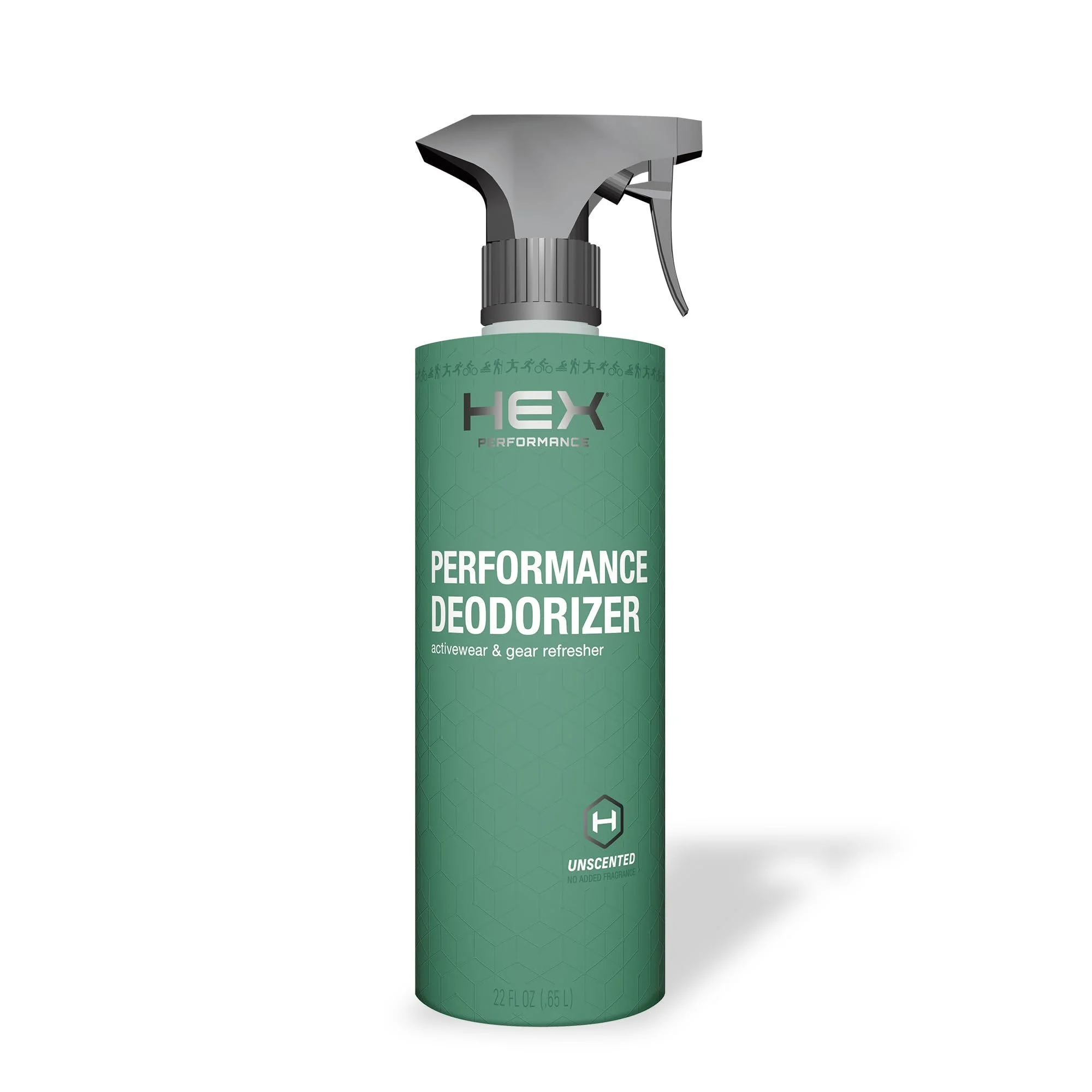
HEX Performance Performance Deodorizing Spray
Pros
- Deep‑penetrating odor control
- Works fast

Cons
- Needs drying time before wear

Testing notes: Tested on daily trainers and workout bags, this spray was great for all-around use on multiple surfaces. A single, liberal application to a pair of teenage running shoes completely eliminated the trapped mildew-like odor. The scent is genuinely light—it smells clean, not floral or chemical—and fades quickly once dry. The trigger-spray mechanism provides a wide, even mist, making it easy to cover large areas quickly.
This water-based athletic gear spray is specifically formulated to neutralize tough odors deeply embedded in running shoes and performance fabrics, preventing the buildup of unwanted smells. It comes in a large, easy-to-use trigger-spray bottle and features a light, fresh scent, but doesn’t leave behind any residue or heavy perfumes. It is safe for use on the majority of materials when applied according to the directions, including synthetics, mesh, and even leather.
Pros
- Neutral smell
- Easy spray mechanism
Cons
- Needs a while to work
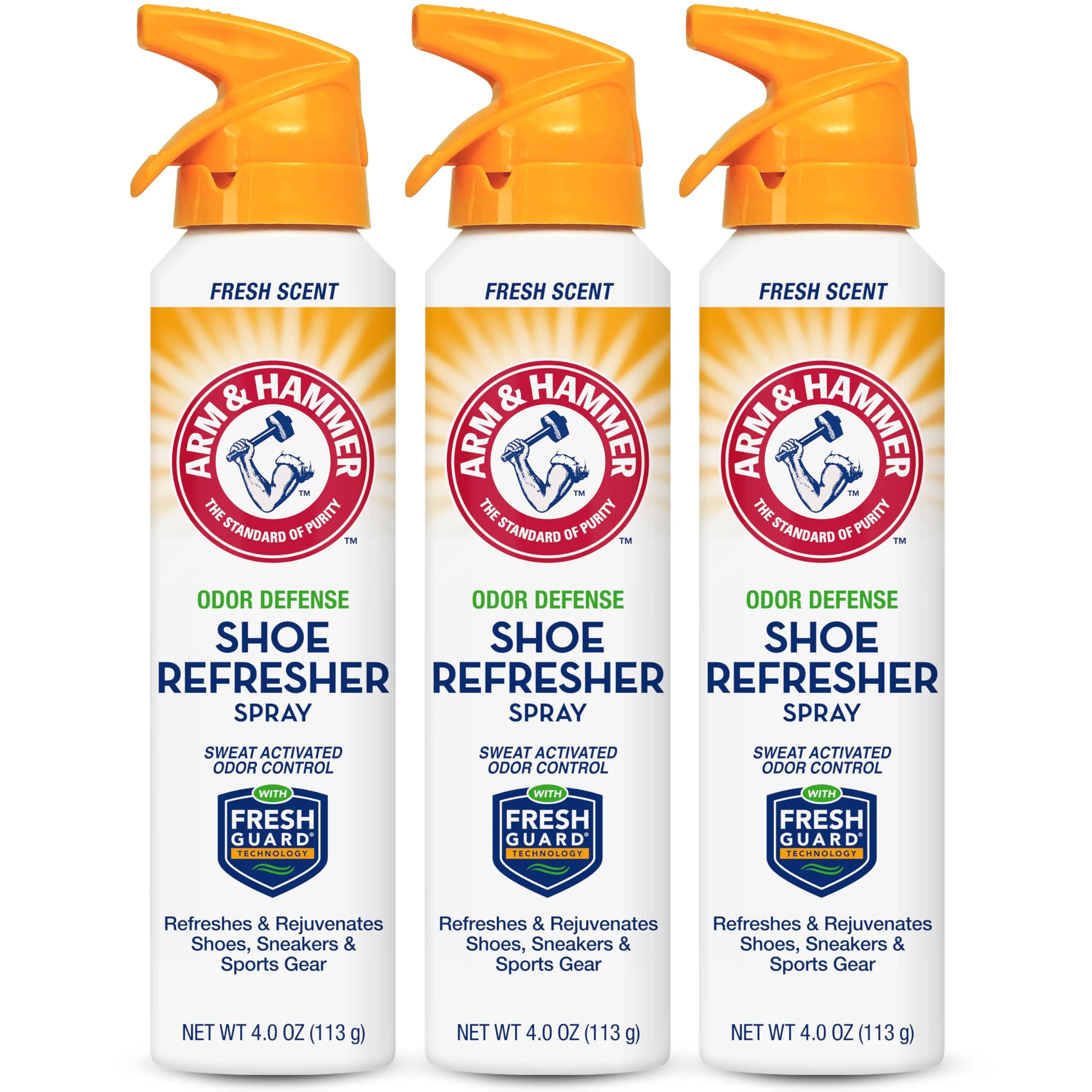
Testing notes: Tested by a 25-year-old male runner who runs around 30 miles per week between two pairs. “I use this stuff daily after my long runs. The nozzle is key—it actually gets right to the end of my shoe, which is where the stink seems to live. It dries almost instantly, and the scent isn’t overpowering; it just kills the gross smell. A can last me about a month.”
It’s an aerosol shoe spray that leverages Arm & Hammer’s powerful baking soda odor-neutralizing technology. It’s a compact can (about 7 fl oz) with a pivoting nozzle made to reach deep into the toebox and provide a comprehensive blast of freshness.
Elite Sportz Equipment Shoe Deodorizer and Foot Spray
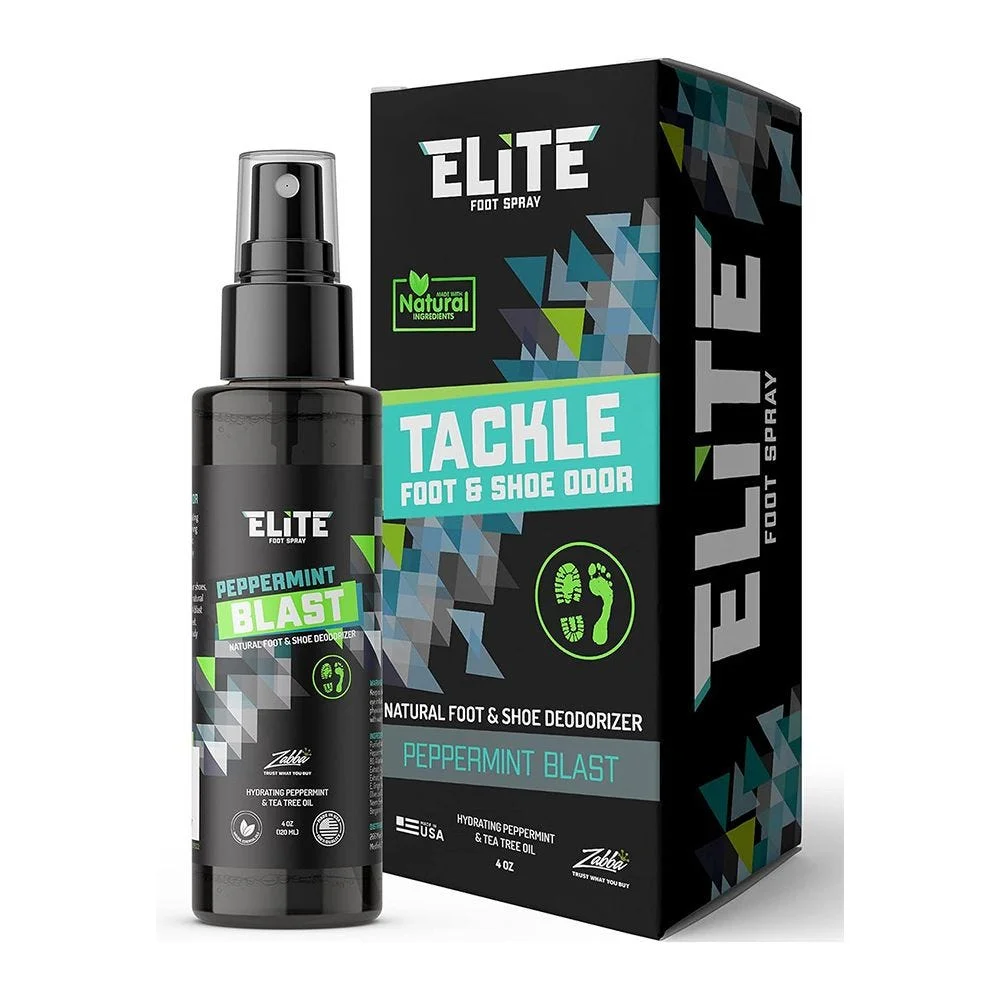
Elite Sportz Equipment Shoe Deodorizer and Foot Spray
Pros
- Works on stubborn smells
- Light scent
Cons
- Pricey per ounce compared to others
Testing notes: Tested by me, a perimenopausal distance runner who runs more than 80 miles per week across multiple pairs of shoes. I put this through some serious testing. After a 10-mile run, my feet were damp and definitely not pleasant, but a few quick spritzes into my shoes and directly onto my feet before putting on socks made a noticeable difference. It absorbed quickly and kept the funk at bay all day.
This pump spray is made for use on both shoes and feet. It uses a combo blend of natural essential oils and odor-fighting ingredients like vitamin E to freshen and lightly moisturize. It’s not for people sensitive to tea tree oil, though.
Pros
- Strong scent is pleasant
- Works fast
Cons
- May be too scented for some
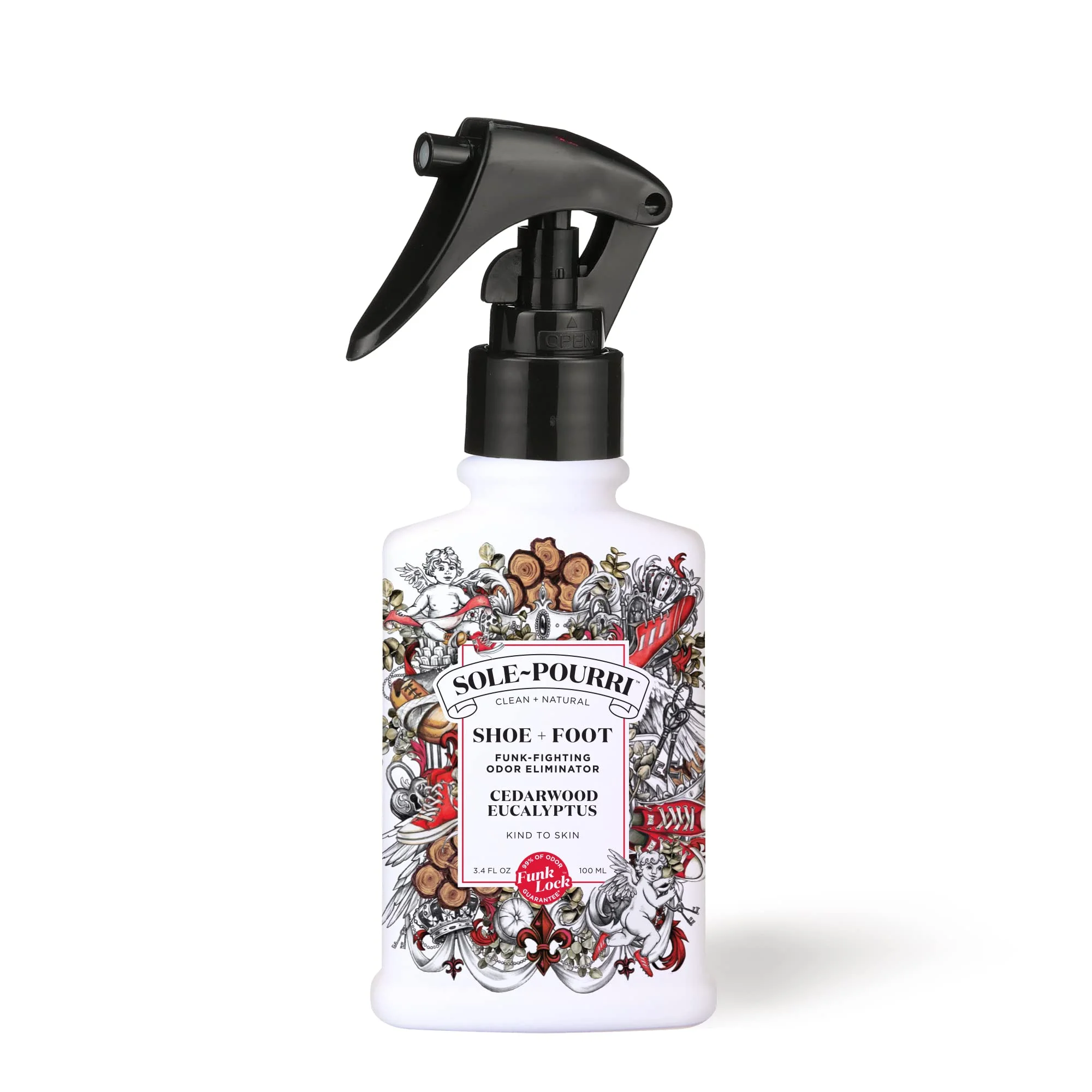
Testing notes: Tested on the running shoes of my 18-year-old son who run/walks over 50 miles per week, usually in a pair of shoes he wears until they die, which have a horrifying funk all their own. A few spritzes inside each shoe worked darn well. The initial citrusy scent is strong, but it quickly mellows, leaving behind a subtle aroma that successfully masked most of the teen boy funk smell without being overpowering or clashing with the synthetic materials of the shoes. I found I only needed to reapply every few days to keep the situation under control. It now lives in our entryway where we store our shoes.
This citrus-forward “funk-fighting” spray for shoes borrows from the brand’s original bathroom-spray approach, packaging odor-blocking and fragrance ingredients into a portable bottle (around 4 fl oz). Like the original, the idea is to create a barrier to neutralize odors before they start, or in this case, cover up existing ones with a nice, natural-ish scent.
Inserts
Pros
- Throw and Go
- Works for a long time
Cons
- Need to buy many of them if you have a big shoe collection
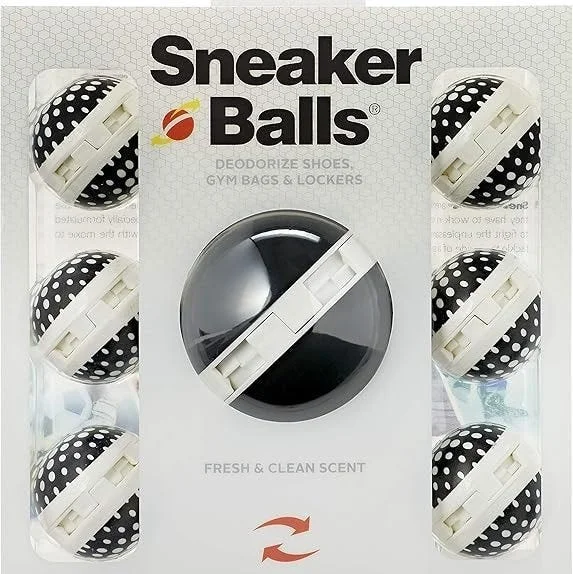
Testing notes: Tested by a run club member friend who runs more than 50 miles per week between two pairs of shoes. They reported that these balls were a “game-changer” for their post-run gear. They like the small size, noting that they could easily be left in their shoes or zipped into their gym bag pockets. They say that the Sneaker Balls effectively reduced the strong odor from sweaty running shoes, making their gear much more tolerable to transport and store between uses.
Sneaker Balls are compact, twist-to-open plastic balls designed to combat odor in hard-to-reach spaces. They can be placed directly into shoes, gym bags, or lockers, where they use a combination of fragrance and deodorizing agents to neutralize smells and last for a few months.
Marsheepy 6 Pack Activated Charcoal Odor Absorber Bags
Marsheepy 6 Pack Activated Charcoal Odor Absorber Bags
Pros
- Throw in and forget
- Gets out deep funk
Cons
- Used up in 6 months
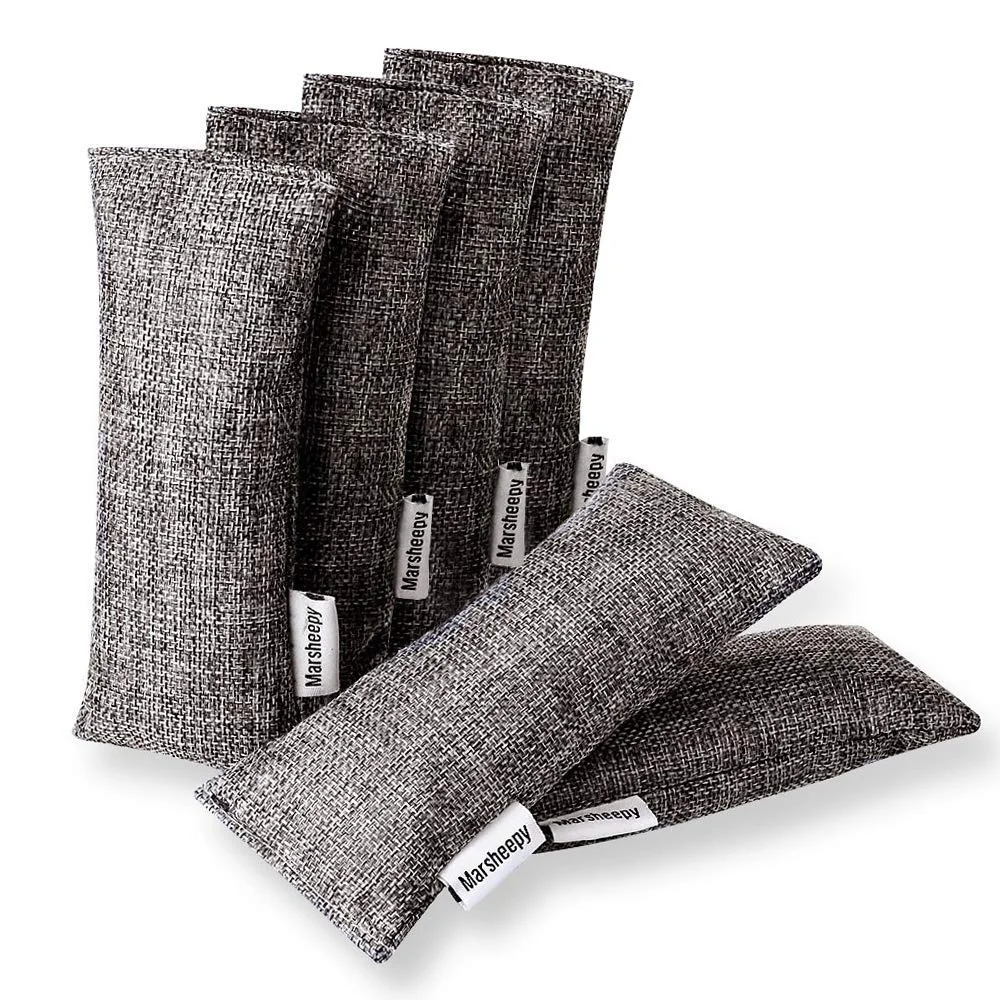
Testing notes: Tested by a high school gym teacher who runs daily and frequently wears the same pair for teaching. Those sneakers take a serious beating—and they smell like it. (Can confirm, he’s my cousin, and he’s also the butt of many a family joke because of his feet.) He now routinely tosses a pair of these Marsheepy pouches into his running shoes after sweaty runs, and the difference by the next morning is, according to his wife, noticeable. They don’t just mask the odor; they eliminate that deep, sour gym-shoe smell.
These are soft fabric bags filled with activated bamboo charcoal. These deodorizers are designed to absorb moisture and eliminate odors from footwear. A key benefit is their reusability, as each pouch can be “recharged” by simply placing it in direct sunlight and then used again for many months.
Pros
- Subtle, fun scent
- Easy to use
Cons
- You need to use them every day
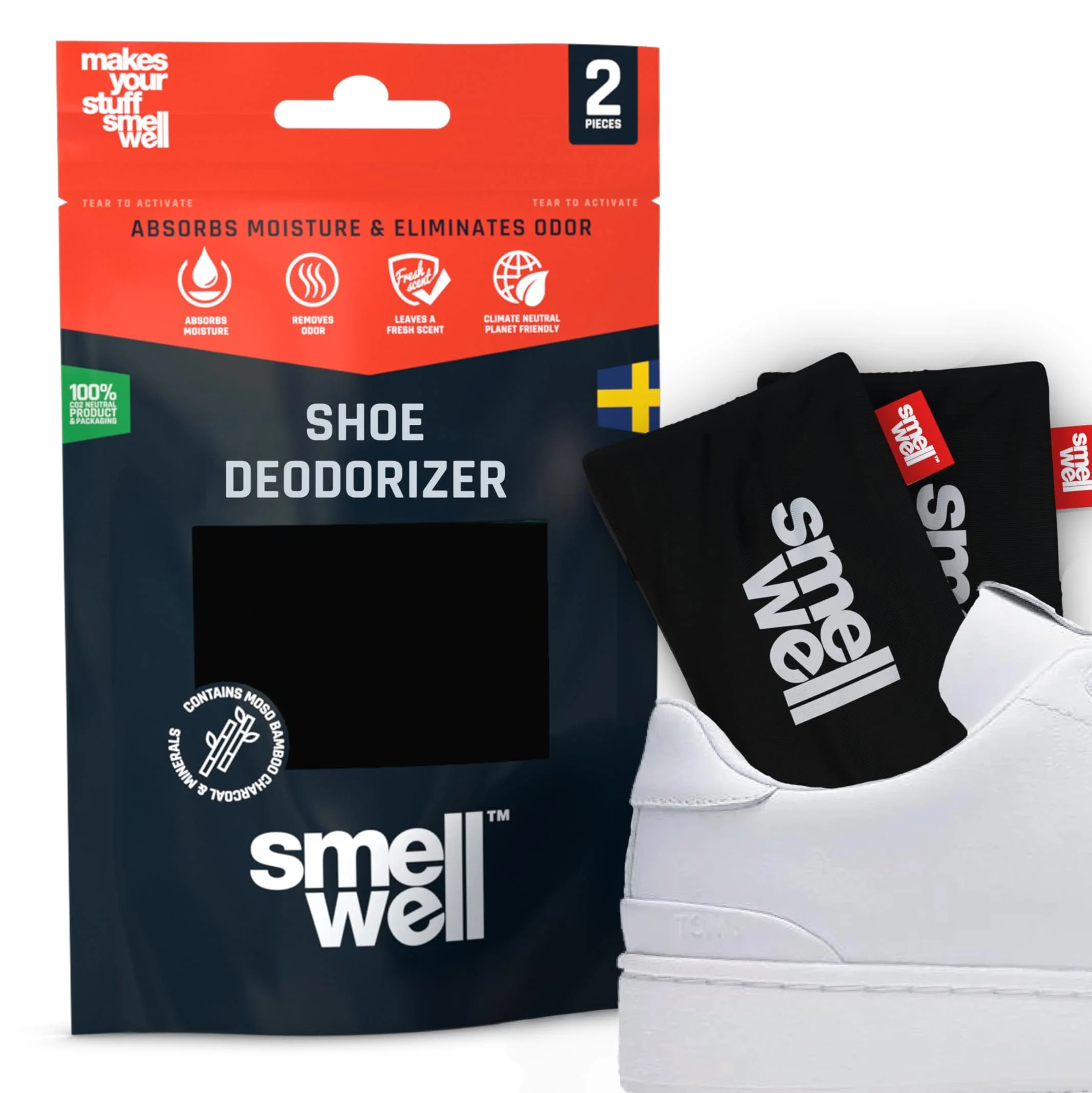
Testing notes: Tested by me, a perimenopausal distance runner during an ultra training season. I tested these in my ultra training trail shoes for about three weeks, and I was happy with the results. I’ve also used them in my most-worn work shoes to test side by side, and again, I was happy with them. They feel a bit like beanbags and are easy to slide in and out. Most importantly, they actually work. My shoes, which previously had a noticeable, stale odor after long runs along with the scent of Off, now just have a very faint, clean smell. The fragrance is noticeable when you pull them out of the bag but is very subtle once they are in the shoe.
These are colorful fabric pouches that combine a powerful moisture-absorbing, fine-grind-activated Moso bamboo charcoal and minerals developed by Swedish scientists, and they have a light, pleasant fragrance. The inserts are sized to slip into most types of footwear, including sneakers and cleats, and they last for months.
Boot Bananas Original Shoe Deodorizer
Boot Bananas Original Shoe Deodorizer
Pros
- Can use for up to a year
- They are connected so you won’t lose them
Cons
- A bit bulky for racing flats
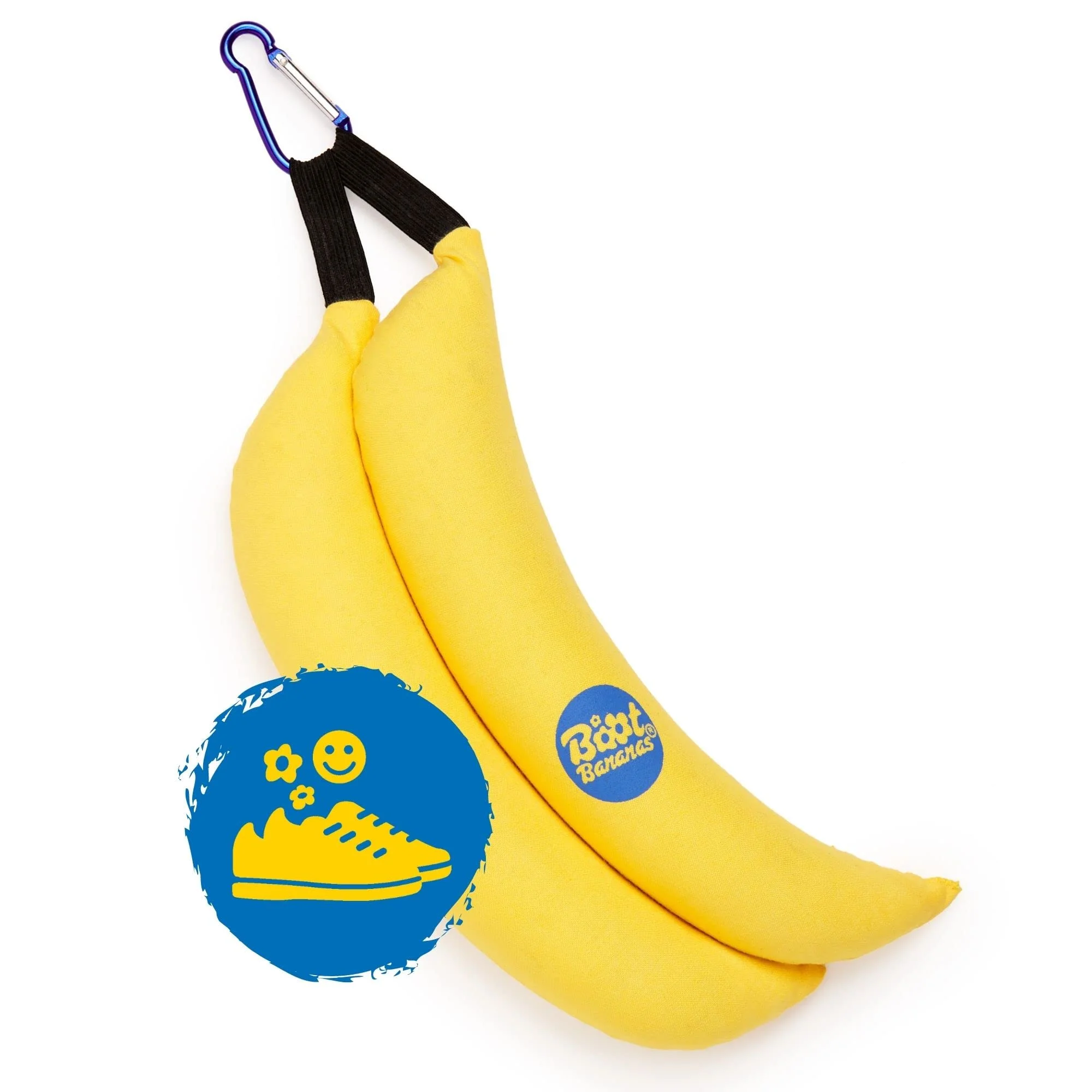
Testing notes: Tested by previous members of staff at RW, all distance runners, for a period of three weeks. These innovative freshers were a hit during previous testing, consistently proving their effectiveness against foot odor and dampness. Many runners I spoke with swear by Boot Bananas because they are simple, easy to use, and, most importantly, they truly work to keep running shoes fresh and dry between runs.
Boot Bananas Shoe Freshers are banana-shaped fabric inserts filled with a blend that includes activated charcoal and other desiccant materials. These freshers work to absorb moisture and neutralize odor.
Sidas Unisex Dry Bag Cedar Wood

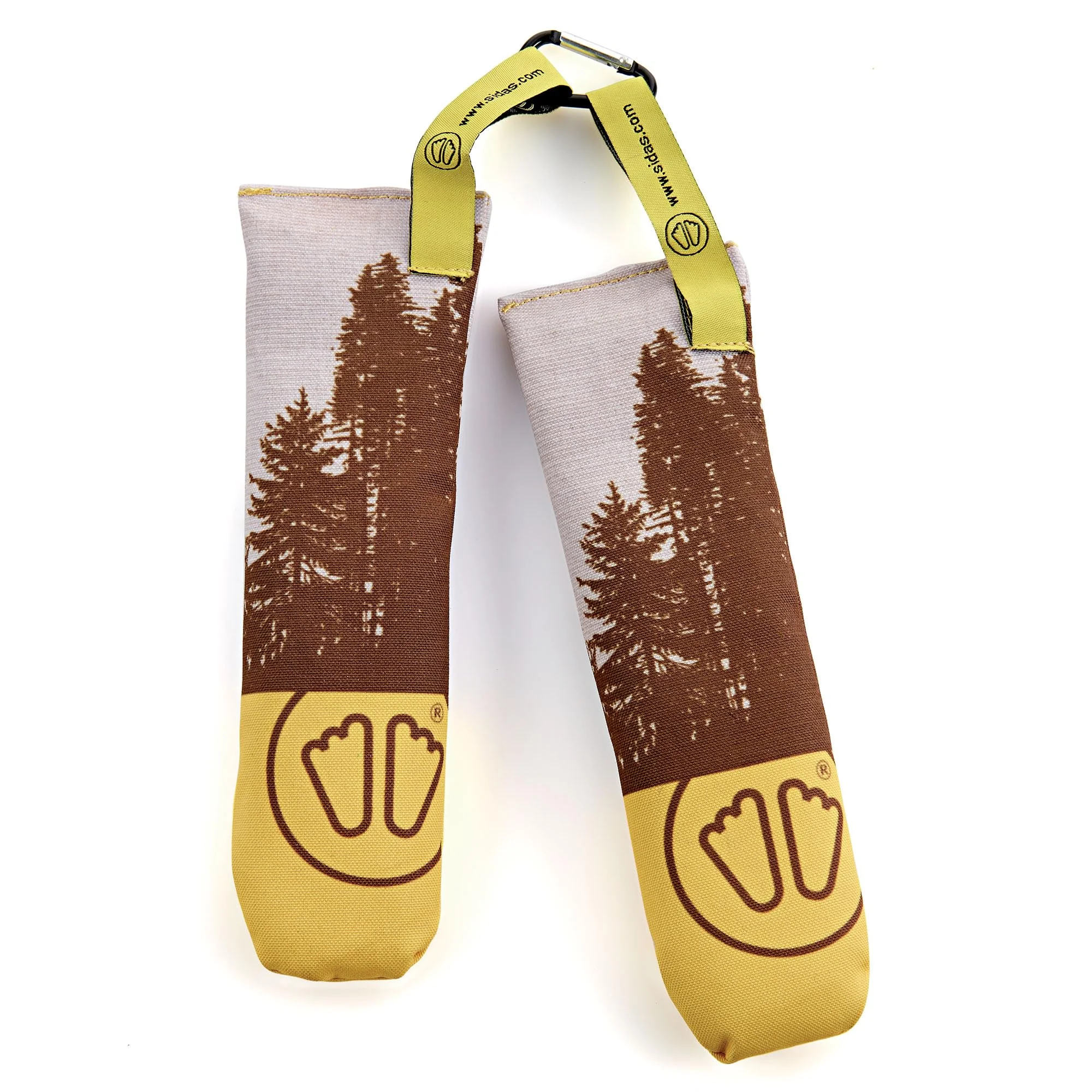
Sidas Unisex Dry Bag Cedar Wood
Pros
- Can be used in many types of shoes
- Great, natural smell
Cons
- Not for the worst smells
Testing notes: Tested by previous RW staff members for a period of several weeks. These cedar bags proved to be versatile during testing. While they were fantastic for quickly drying out and freshening up sweaty running shoes and workout sneakers, their biggest win is with less frequently worn footwear. We found them essential for shoes kept in long-term storage, such as those carbon-plated shoes you’re only going to wear on race day, or the vintage sneakers you hoard, as the cedar naturally protects the materials and keeps the interiors smelling clean and ready for their next outing.
Sidas Dryer Cedar Bags are fabric bags filled with natural cedar wood chips, sized to tuck into shoes, boots, drawers, and gym bag pockets. They leave behind a light, fresh cedar scent and ward off creepy crawlies.
Traditional Powders
Pros
- Can use all over the house
- Literally no smell
Cons
- Need to use it often
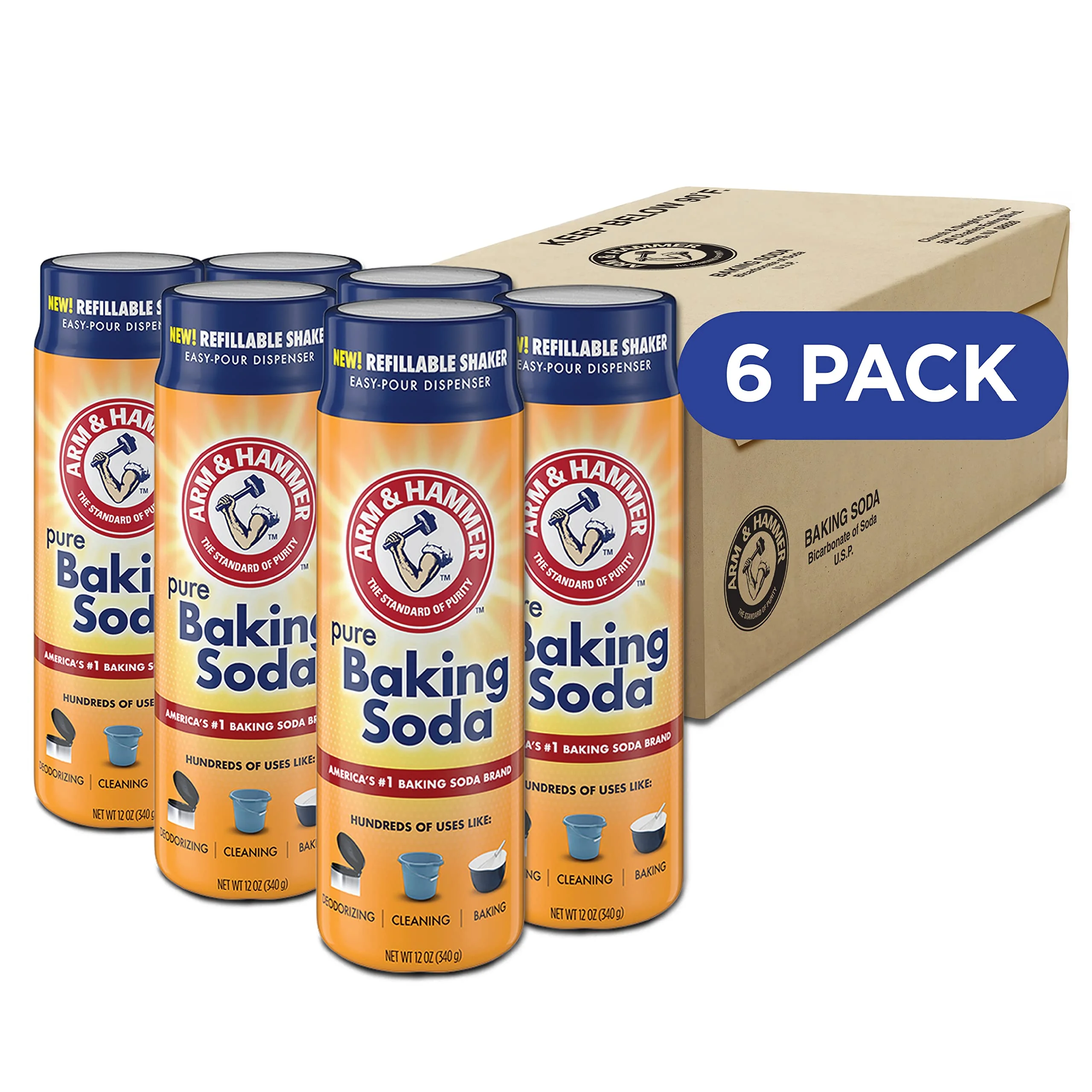
Testing notes: Tested by previous and current staff of RW over years-long have used. This is the OG superhero of stink, especially effective for running shoes where persistent moisture and odor are common issues, as well as around your gym bag, near the litter box, in your garbage pail, and basically anywhere you find funk. Its utility isn’t limited to the stink, either—it’s the same trusted baking soda that we all use for cleaning and deodorizing for eons.
The Arm & Hammer Household Baking Soda here is a shaker bottle set, which makes getting it where you want it a heck of a lot simpler. The shaker allows you to easily dust a fine layer of the magic bicarb into the insole and toebox of your shoes, and the crevices of your kid’s book bag and your gym bag. Once the baking soda has worked its magic, just shake it out or vacuum it up. Use liberally. Everywhere.
Odor-Eaters Foot Powder 100g
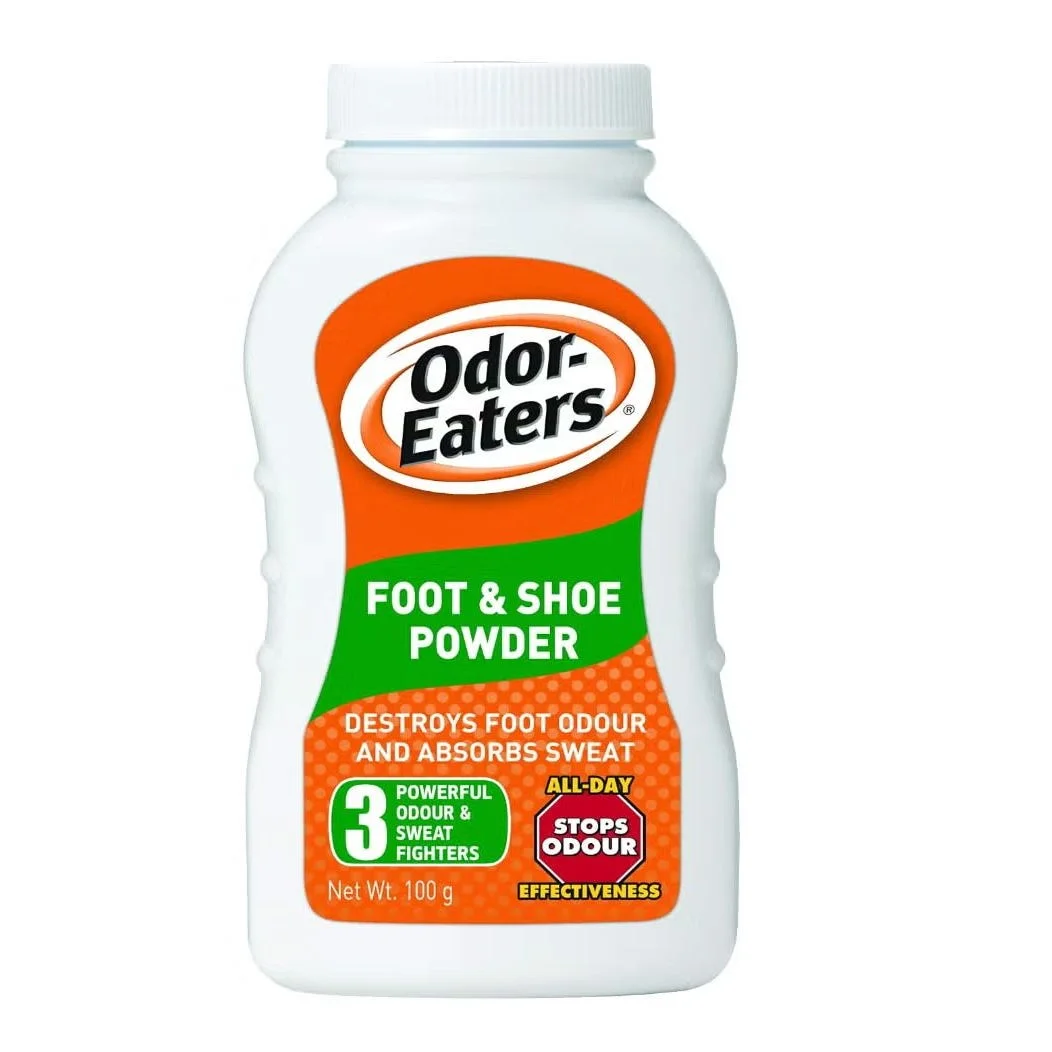
Odor-Eaters Foot Powder 100g
Pros
- Great for preventing smells and rubbing
- Strong odor relief
Cons
- The smell is medicinal
Testing notes: Tested currently by me, an ultra-distance runner, training for a 109K race. This really does double duty as prevention and cure. I use this before I head out on an ultra-distance training run, not only to help prevent moisture buildup and odor, but to help prevent rubbing and blisters on my feet. I combine the powder with toe taping and toe socks, and I do pretty well. So far this training season, I’ve kept nine of my 10 toenails, had minimal bad blistering, and my shoes aren’t terribly offensive. I do use more in the shoe after taking them off, and let them dry in the sunlight for added odor control.
Odor-Eaters foot powder combines cornstarch for the base, sodium bicarbonate (baking soda) for neutralizing odors, sodium polyacrylate, which is a polymer that traps moisture, benzethonium chloride for its antimicrobial properties, tricalcium phosphate to prevent caking, and fragrances for the funk. It does smell a bit medicinal—much like Tiger Balm and Vicks Salve—but I tell myself that’s how I know it’s good.
Which Type of Deodorizer Is Best?
Across that spectrum, five basic deodorizers stood out: sprays, shoe balls, charcoal bags, cedar inserts, and an old‑school baking soda shaker. Each tackles odor in a slightly different way.
Sprays are best when you need a fast reset and a little germ‑killing help between runs. They penetrate deeply into the fabric and foam, often bringing antimicrobial or enzymatic ingredients with them to neutralize odor at the source rather than just clouding it with perfume. Some can even be used as a preventative on your feet.
Shoe balls are more of a “drop‑and‑go” solution: small, hard pods that twist open inside the shoe and slowly release fragrance and odor‑absorbing agents. They shine for gym bags, lockers, and moderately smelly daily sneakers, and they are almost zero‑effort to use.
Charcoal inserts lean heavily on absorption and moisture control. Activated charcoal has a huge internal surface area, so it can trap odor molecules and help dry out shoes between workouts; this makes it especially appealing for runners who alternate shoes and want a low‑maintenance way to keep pairs fresh in the downtime.
Cedar inserts, on the other hand, bring a lighter, woody scent while also absorbing some moisture. Cedar is naturally resistant to certain fungi and insects, which is why it has been used for closets and trunks; in shoes, cedar helps shoes dry more completely while replacing “teen locker room” with “wood shop” on the smell scale.
Baking soda shakers are last but not least. Baking soda works by neutralizing acids, which make up a big part of that sour, nose‑wrinkling shoe odor. A shaker format lets you dust it into the insole and toebox, shake out any excess later, and repeat as needed. It is inexpensive, fragrance‑free, and particularly good for people who are sensitive to strong scents but still need something more than airing shoes out on the porch. When paired with breathable socks and reasonable shoe rotation, it can quietly keep even very hardworking trainers from becoming biohazards.

Cat Bowen, senior editor of commerce; reviews, is a seasoned runner with more than 20 years of distance running experience, including dozens of marathons, half marathons, and even a few ultra marathons. For over a decade, she has tested parenting, fitness, home, and running gear and written in-depth guides to help readers with their next purchase. Holding multiple advanced degrees and currently studying kinesiology, Cat Bowen brings research-backed insight to all of her guides. Passionate about women’s health and neurodivergent inclusion, she advocates for closing research gaps and helping others—especially AudHD people—find joy in running and fitness.