The Run/Walk Method Isn’t Just for Beginners. Here’s How to Use It to Train for a Faster Half Marathon.
Runners love the half marathon. Conquering 13.1 miles is a challenge, but it doesn’t take up all of your time to train for it. It’s fun, too, as you can run in beautiful places or right in your hometown with your friends lining the course.
Conquering a half marathon, though, does take some training and learning to pace yourself so you cross the finish line feeling strong. One solid pacing strategy? The run/walk method. It’s possible that, no matter your level of race experience, you will be able to finish a half marathon in personal-record time using the run/walk method.
“[The run/walk method is] a good way to stay in zone 2 when you do your training runs,” Christine Hetzel, an RRCA-certified run coach who uses the run/walk method in her own races, tells Runner’s World. “And while you can use specific interval times, you can also tune in to your rate of perceived effort to determine when to run and when to walk.”
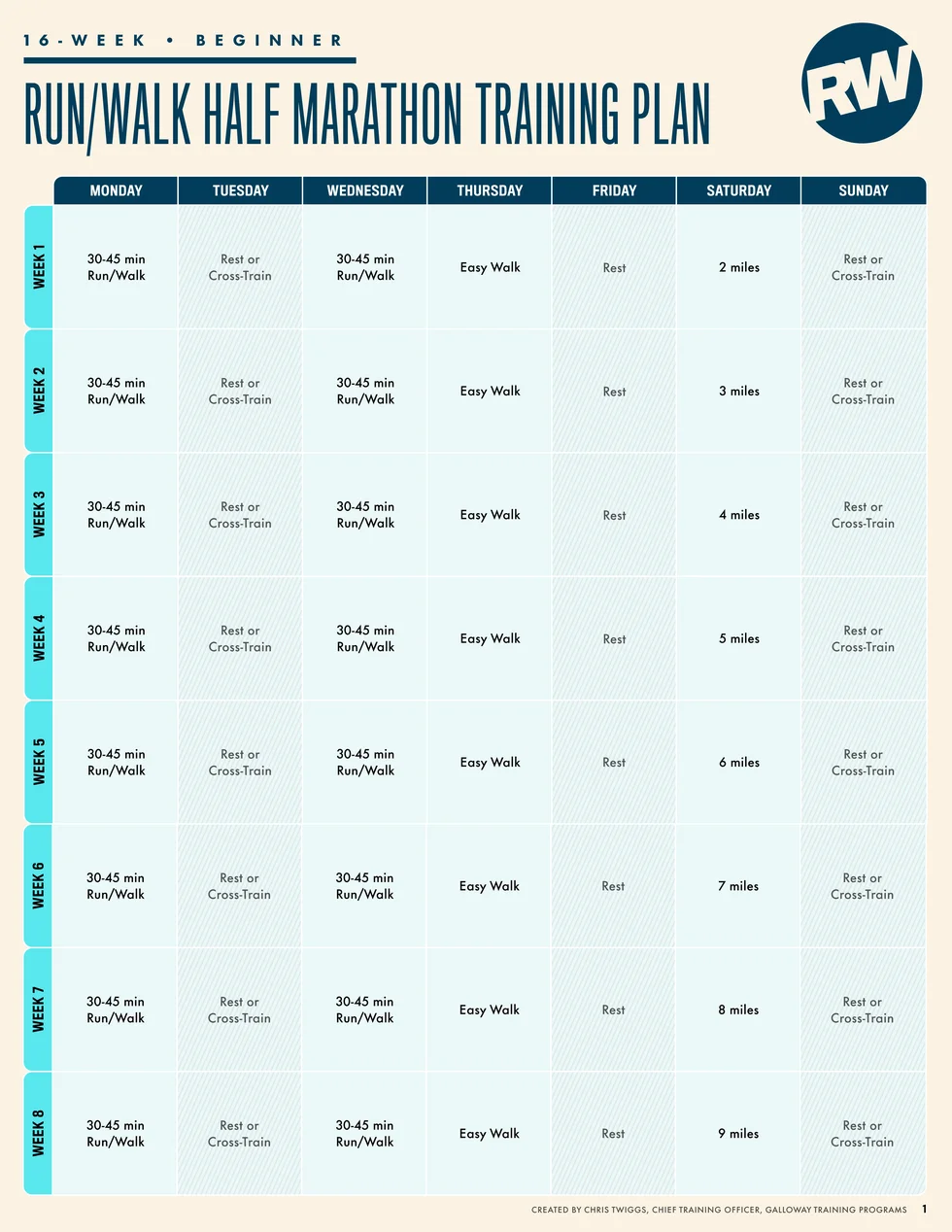
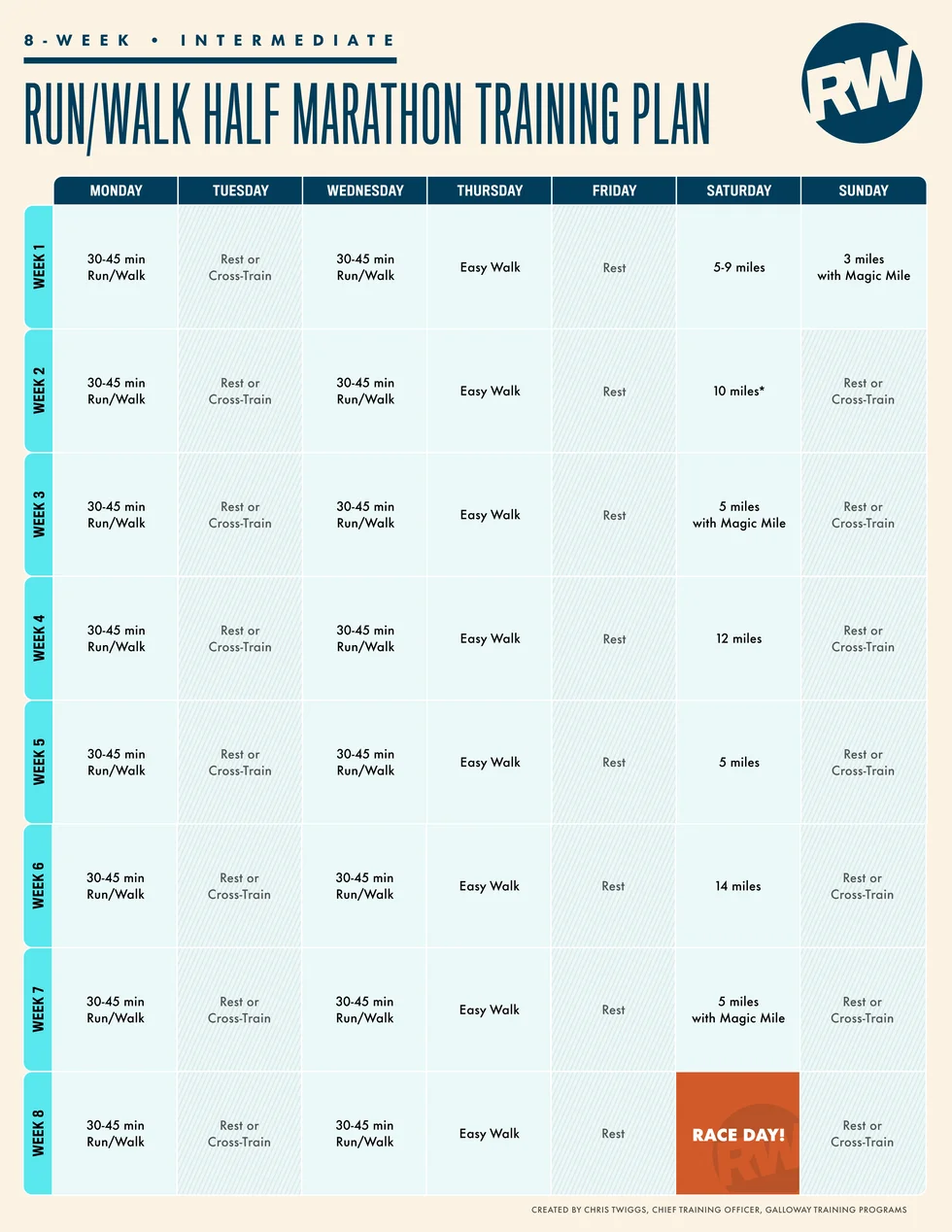
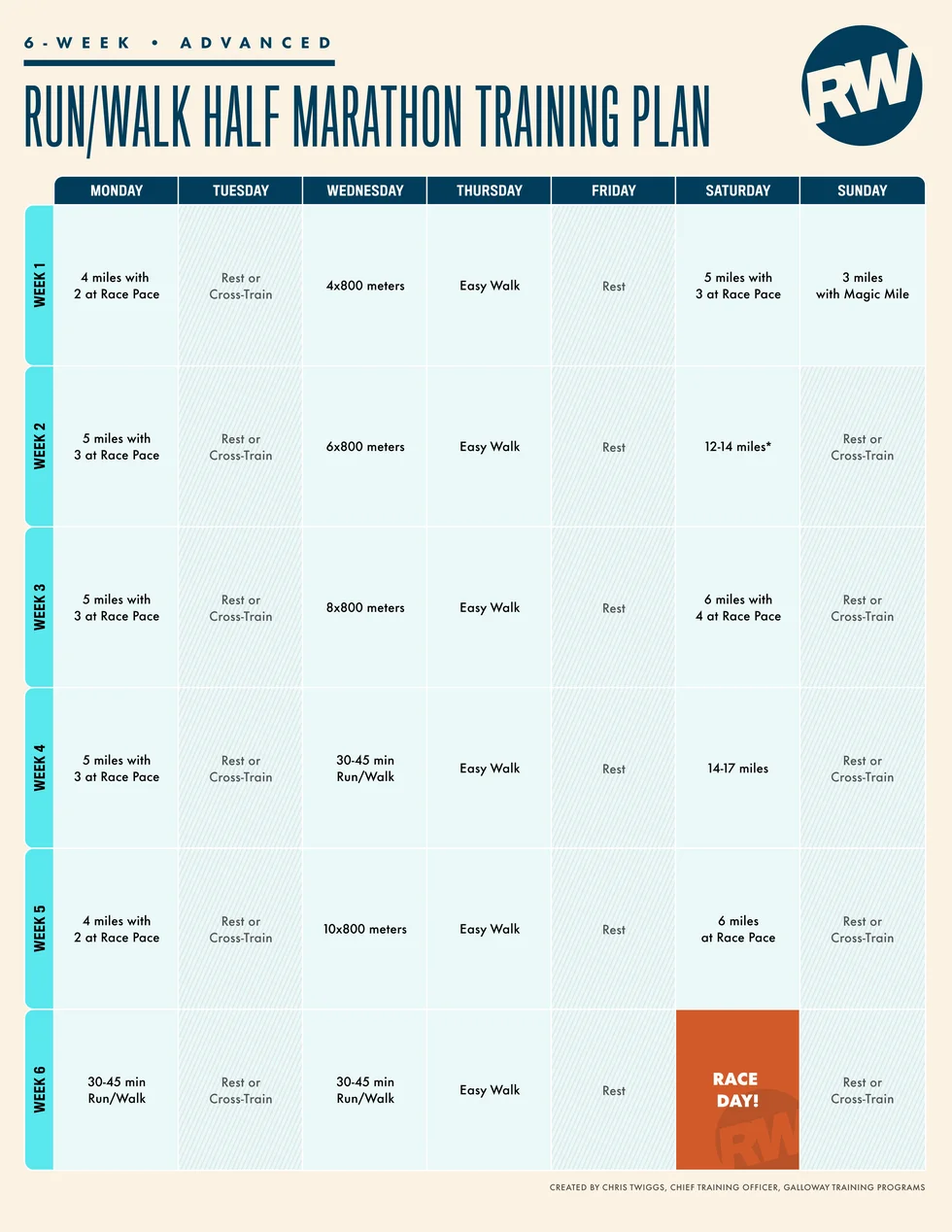
Keep reading to learn why the run/walk method could be your best race strategy for a half marathon. Plus, download a specific training plan—we have three designed for different experience levels—to help you reach your goals.
Benefits of the Run/Walk Method
“Run/walk is the most time-efficient way to run a race,” says Andrea Dell, an RRCA-certified run coach in Charlotte, North Carolina, who has trained runners for half marathons, marathons, and 100-milers. “It’s a strategy, not a weakness, to pace yourself with walks.”
In fact, Dell has used the run/walk method for many races, including a 100-miler that she finished in 33 hours and 13 minutes, and to score a PR in the half marathon.
“Run/walk works because you don’t want to run on tired legs,” says Dell. “It’s the same reason you taper, reduce your strength training, and avoid HIIT training before a race.” That is, it keeps your legs fresh and ready for longer distances.
Dell frequently runs back-to-back races using the run/walk method. “High mileage doesn’t have to be high intensity,” Dell says. “You can practice steady-state training and easy zone 2 long runs. My rule is that 80 percent needs to be easy and 20 percent needs to be hard.”
Using the run/walk method can actually improve your overall race time, too, as it allows you to spend more time on your feet without getting overly fatigued. “We find that most people tend to go five to seven minutes faster when they adopt run/walk,” Chris Twiggs, chief training officer and national program director of Galloway Training, tells Runner’s World. “This may help you PR because you won’t burn out.”
How to Train With the Run/Walk Method
Runners who use the run/walk method need to experiment with their run/walk intervals during training to find what will work best during a race. And there are plenty of ways to switch it up.
“I started with splits of 60 seconds running and 30 seconds walking,” Manny Davila, an ACE-certified personal trainer and RRCA-certified run coach, tells Runner’s World. Davila ran his first marathon in 2010 and has done 70 Disney races of all distances since then. He attributes his ability to take part in all of these events to his run/walk strategy and has used it to clock his fastest half of 1:45:14.
His takeaway for beginners? “I followed a run/walk plan for a year and a half when I started out,” Davila says, “and by the next year, I could feel I was changing and I thought I was walking too much. Eventually, I was able to listen to my own body, and I advise people to do that while they are listening to the beeps of the intervals.”
More experienced runners can also use the “Magic Mile” to determine their paces by plugging in their typical pace to determine a recommended run/walk ratio, says Twiggs.
3 Run/Walk Half Marathon Training Plans
1. Beginner Training Plan
2. Intermediate Training Plan
3. Advanced Training Plan
Expert-Backed Run/Walk Tips
Practice Acceleration Drills
One concern of experienced runners is the time “wasted” as you slow down from a run to a walk and then speed up from a walk to a run. That’s why you want to practice the acceleration glider drill to ease in and out of your walk intervals.
“You need to focus on this drill to smooth out transitions,” Twiggs says. “You need the smooth factor. You don’t want to slam on brakes to go into a walk and you don’t want to start running as if you’re taking off from blocks. It’s not starting and stopping; it’s accelerating and gliding.”
Follow a Pacer on Race Day
Longer races, like half marathons, often have pacers. To use them to your advantage, start behind the pacer. This helps ensure that you won’t pass them when you’re running while still keeping them within your sight during your walk intervals.
Finish Fast
The final piece of advice from Dell: Last mile, fast mile. If you pace yourself well for the majority of your half marathon, it’s likely you will be able to blaze through to the finish without any walk breaks. So don’t be afraid to run that entire last mile.

Donna Raskin has had a long career as a health and fitness writer and editor of books and magazine articles. A certified run coach who has practiced yoga for many years, she also loves to lift weights, dance, and go for long walks with her hound dog, Dolly.