The 8 Best Running Shoes for Runners With Flat Feet and Low Arches
Editor’s Note, August 11, 2026: Our Best Value pick, the New Balance Ellipse, is on sale for 20% off.
Shopping for running shoes can be especially frustrating if you have flat feet. There are conflicting opinions about what types of shoes best accommodate your foot shape. Some shoe brands add lots of arch support. Other experts say the opposite. What’s a flat-footed runner to do?
Despite the confusion, there are solutions out there, especially with flat feet being more common than you think. Finding shoes that work with your foot type, support good running form, and feel comfortable is paramount—and totally doable.
Not all flat feet are the same, which means there’s no universal solution that will work well for everyone. We’ll go over what it means to have flat feet and some of the potential issues the condition can present for runners. We’ve also highlighted shoe designs that might help alleviate any pain or discomfort you’re experiencing. Finally, we’ve picked the best running shoes for flat feet you can buy right now, including a wide range of options for walking, speedwork, trail running, and more.
Quick Glance: Best Running Shoes for Flat Feet
If you are... → Buy...
Shopping for a daily trainer → Brooks Adrenaline GTS 25 (Men’s/Women’s)
On a budget → New Balance Ellipse (Men’s/Women’s)
Searching for a lightweight daily trainer → Hoka Arahi 8 (Men’s/Women’s)
Adding speedwork to your training → Asics Magic Speed 5 (unisex)
In need of more cushioned support → Saucony Guide 19 (Men’s/Women’s)
Curious about zero-drop → Altra Fwd Via 2 (Men’s/Women’s)
Racing a marathon → Hoka Rocket X 3 (unisex)
Pavement-averse → Hoka Speedgoat 7 (Men’s/Women’s)
How We Selected
Runner’s World Running Reviews Editor, Amanda Furrer—who has relatively low arches—researched shoe testing data from our team of approximately 300 wear-testers. Our program includes runners of various experience levels, paces, gaits, and, most important for this guide, arch types. They logged hundreds of miles in these shoes, evaluating comfort, fit, and ride.
Our contributors also gathered intel from industry experts. Caitlin Giddings consulted Kimberly Davis, DC, ART, who is CEO and founder of RunLab in Austin, Texas, and physical therapist Jay Dicharry, author of Anatomy for Runners. Both Davis and Dicharry have extensive experience assessing and treating runners of all experience levels, gait types, and footwear needs; they were able to provide significant insight on the topic. Michael Charboneau, former RW editor and freelance reviewer for InsideHook, Men’s Journal, and other publications, also offered his expertise in our Q&A section.
Shop the best flat-footed running shoe deals on Amazon
Full Reviews
Brooks Adrenaline GTS 25

Pros
- Supportive guide rails stability for neutral runners and overpronators
- Plush, flexible upper

Cons
- Several testers wanted longer laces


Features at a Glance
| Weight | 10.6 oz (M9), 9.8 oz (W8) |
| Drop | 10 mm |
The Brooks Adrenaline GTS 25 is as much a runner-fave as its neutral counterpart, the Brooks Ghost 17. This updated version of the Adrenaline GTS features even more cushioning. Brooks heightened the forefoot 3 mm and the heel 1 mm, bringing the offset down from 12 mm to 10 mm. This means more of a balanced feel underfoot. The nitrogen-infused DNA Loft v3 foam provides a responsive, plush ride for everyday training and long runs.
Tester Peter Vuong, an overpronator with a flat arch, gave his seal of approval.
“This is a solid, all-around shoe with good flexibility, comfort, and a smooth ride,” he said. “I loved my runs in this shoe. It’s comfortable and laces up nice and snug. The fit is near-perfect. I tested it mostly on the road with a little trail. I would use this shoe for many occasions including a 5K race or nice Sunday 10-miler. It’s nice to have something for multiple uses like that.”
The shoe has the brand’s holistic stability guide rails system. Dense foam on the medial and lateral sides of the Adrenaline GTS act as “bumpers” to help align the knee and ankle when form gets erratic from overpronating. Testers said the fit and support were spot-on.
“I’ve run in just about every model of this shoe, many of them predating the guide rails system,” said tester Chris Garges. “This shoe provides the stability that I need as a heel-striking overpronator. I had no issues with the stability even later into a 14-mile training run. Some prior Adrenalines and the Glycerin GTS shoes seem to have a touch too much foot movement, particularly in warm, sweaty weather, which causes blisters or loss of toenails. I did not experience those issues with these shoes.”
Shop Men’s at brooksrunning.com | Shop Women’s at brooksrunning.com
Brooks Adrenaline GTS 25 Review
Pros
- Bouncy ride
- Plush feel
- Available in multiple widths
Cons
- Bulky and heavy
- Not meant for speedwork
| Weight | 9.6 oz (M), 7.7 oz (W) |
| Drop | 8 mm |
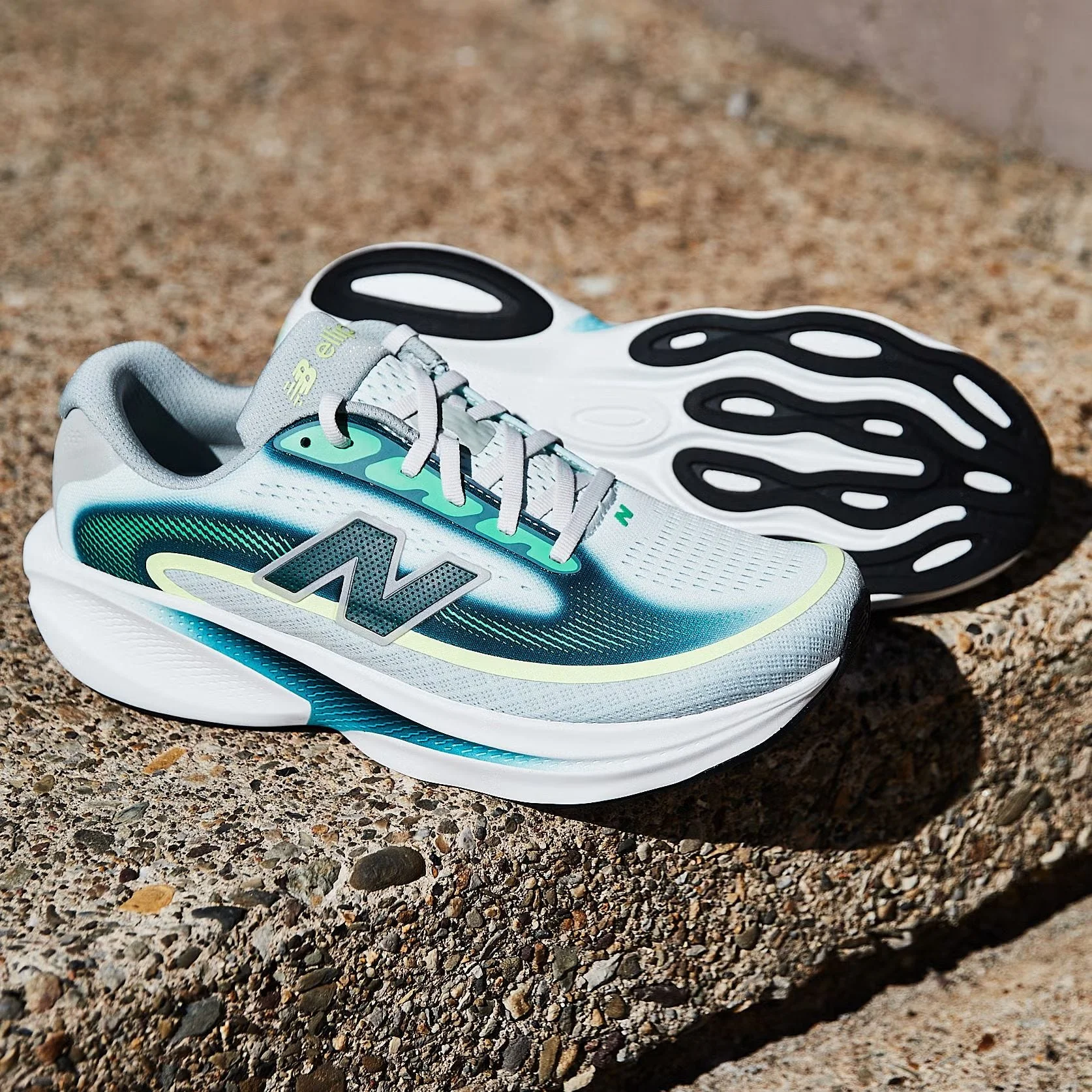
Think of the new Ellipse as your run club shoe; New Balance’s newest trainer is meant to make running easier with plenty of pop. The midsole is the brand’s Fresh Foam X, which ensures high energy return on your run as well as plenty of high-cushioned support that absorbs shock. It’s also a generous bed of plush for flat feet.
Testers praised the shoe’s cushioning, even though the ride for some felt slightly bulky. It’s not necessarily a speed shoe, but that didn’t stop some of our testers from going fast on that runner’s high. “It truly feels like I am at an advantage wearing these shoes,” said tester Laura Parks.
“The shoe is SO springy,” she continued. “The best word to describe the cushion is plush. I can feel my foot sinking into the cushion as it molds around me, while simultaneously still feeling the ground. The Ellipse has a cushy bounce sensation when I run in them that I haven’t quite felt before in other New Balance Fresh Foam models.”
Shop Men’s at newbalance.com | Shop Women’s at newbalance.com
Pros
- More cushioning than Arahi 7
- New H-Frame provides balanced support
Cons
- Wide on narrow feet
| Weight | 9.8 oz (M), 7,7 oz (W) |
| Drop | 8 mm |
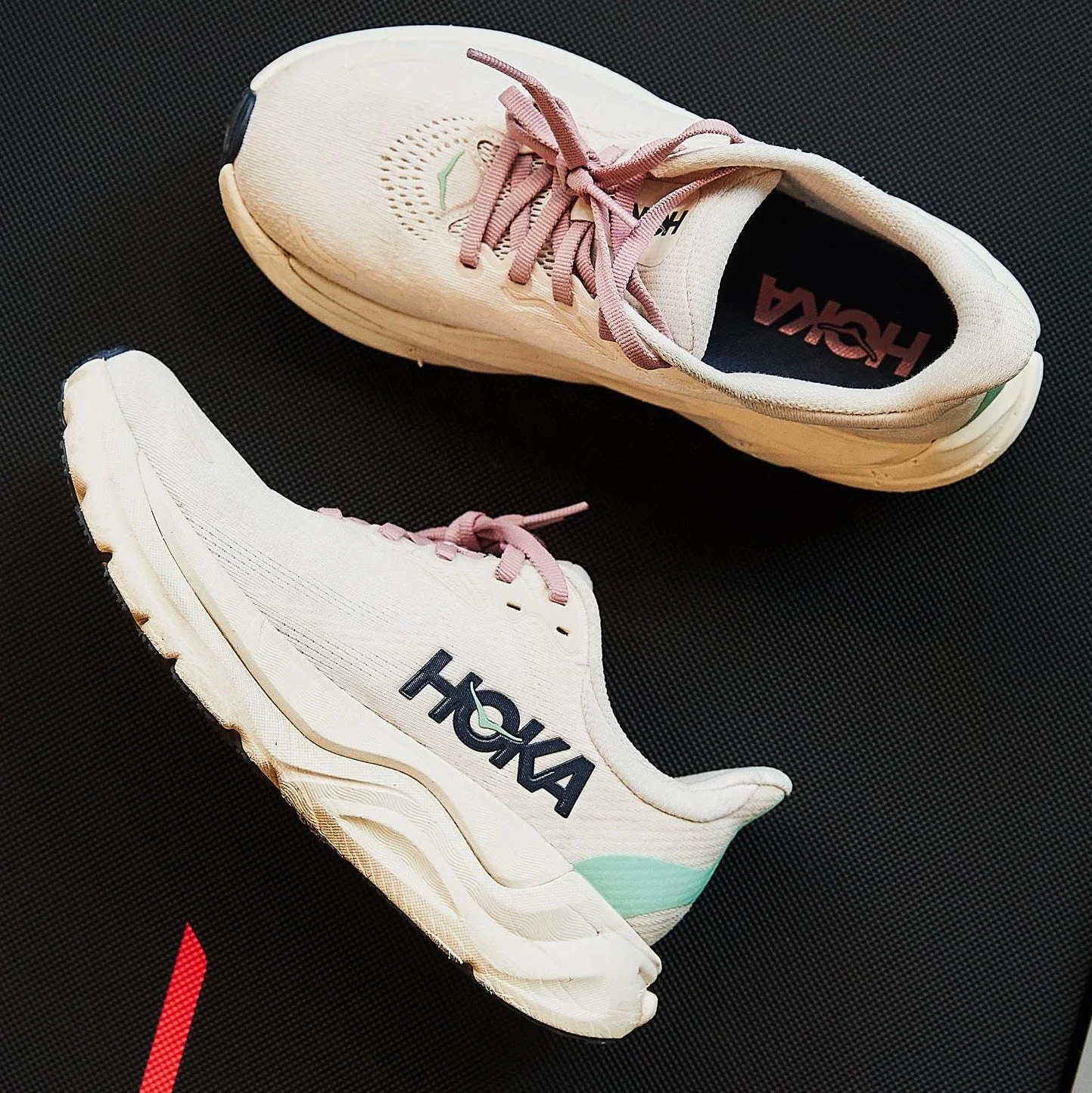
We loved the Arahi 8 so much we bestowed it Gear of the Year; the shoe is unlike its predecessor in all the best ways. The Hoka team knew they had to give the stability shoe a makeover and they started with the stability system itself. The trainer formerly had the brand’s J-Frame, which was a dense piece of J-shaped foam that wrapped around the heel. The H-Frame, a dense H-shaped piece of foam used in Hoka’s beefier shoes, like the Gaviota, provides a more balanced ride without overcorrecting your gait.
The midsole is dual-density compression-molded EVA foam; 3 mm of cushioning was added in the heel to absorb shock and ensure softer landings. Despite the added height, the Arahi 8 is lightweight and has a streamlined design. A versatile trainer, the shoe is great for everyday runs, fartlek workouts, and recovery days.
Shop Men’s at hoka.com | Shop Women’s at hoka.com
Asics Magic Speed 5
Pros
- Lightweight for speedwork
- Supportive, bouncy cushioning
- Propulsive turnover with plate in midsole
Cons
- Low stability
Features at a Glance
| Weight | 7.1 oz (unisex) |
| Drop | 7 mm |
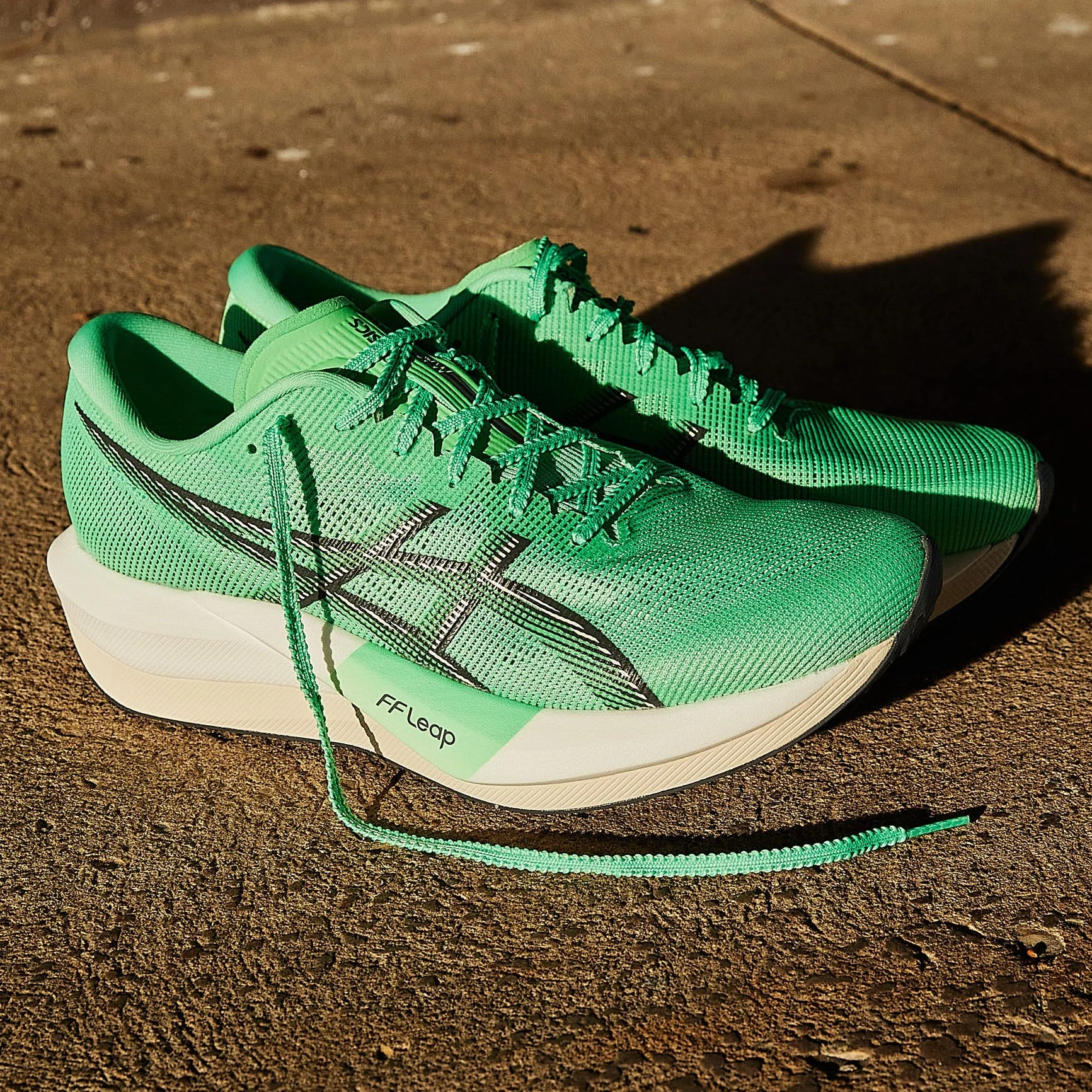
The Magic Speed 5 is a lightweight, speedy trainer with a carbon plate and super foam cushioning. Asics’s new FF Leap foam is featured in its racing shoes, the Metaspeed Edge and Sky. It’s 33 percent lighter and 13 percent more responsive compared to FF Blast foam, according to Asics. FF Leap is accompanied by FF Blast Plus, which provides even more cushioning underfoot. A full-length carbon-fiber plate helps stabilize these foams and encourages propulsive turnover.
Even though the shoe is lighter than its predecessor, testers were satisfied with the amount of support the Magic Speed 5 provided on their runs.
“These shoes had the perfect amount of cushioning,” said tester Stephanie Petrides. “I have very flat feet and tend to give my knees and ankles. A good pounding because of it, but the cushioning made everything very comfortable, but definitely was not too soft and didn’t make me feel like it was slowing me down. It also didn’t make the shoes feel heavy, which is a huge plus.”
Besides supporting runners with flat feet, the Magic Speed 5 is also an excellent choice for underpronators, or runners whose feet roll outward.
Saucony Guide 19

Pros
- Soft feel
- Cushioned ride
- Unobtrusive stability features
- Multiple widths
Cons
- Felt slightly long in the toe area
Features at a Glance
| Weight | 9.7 oz (M), 8.9 oz (W) |
| Drop | 6 mm |
Like many stability shoes these days, the Guide 19 provides support when you need it. The shoe has Saucony’s CenterPath technology, which uses higher sidewalls and a broader base to help stabilize erratic foot (and ankle and knee) movement. It also provides a locked-in, comfy fit that our testers favored for daily training and recovery runs.
The shoe has a slight rocker profile, which helps promote smooth heel-toe transitions on runs. Though the ride isn’t as responsive as other daily trainers (the Guide has Pwrrun foam, a proprietary EVA blend), it delivers a cushioned, supportive ride for collecting weekly mileage when you don’t feel like pushing the pace.
“Like its predecessor, this shoe made me feel good before even starting my runs,” said tester Dave Block. “I just love the comfort and feel! The shoe is very soft and slips on easily. I can’t think of any other shoe that feels this great, with the possible exception of the Adidas Pureboost, but that’s going back several years.”
Shop Men’s at saucony.com | Shop Women’s at saucony.com

Pros
- Wide toebox
- Soft but lightweight cushioning
- Low drop for zero drop-curious
Cons
- Too wide for narrow feet
Features at a Glance
| Weight | 10.6 oz (M), 8.7 oz (W) |
| Drop | 4 mm |
If you thought choosing to run in a low-drop shoe meant a non-supportive barefoot ride (not the ideal for runners with flat feet), then you’ve never run in the Altra Fwd Via 2. Formerly known for making exclusively zero-drop trainers, Altra has released low-drop shoes these past couple of years, welcoming the zero-drop curious into their fold.
Shoes like the Fwd Via 2 have a 4 mm offset, which is merely the height of two stacked nickels. This low heel-to-toe drop helps runners ease into running in this type of trainer without fully making the plunge to zero drop. The plush cushioning also helps with the low-drop transition. Your arches won’t feel sore due to lack of support thanks to the thick bed of Altra Ego P35 midsole foam, which reaches 37 mm in the heel.
Like all of Altra’s shoes, a wide toebox provides wiggle room. The shoe also has a slight rocker shape to promote propulsion.
Shop Men’s at altrarunning.com | Shop Women’s at altrarunning.com
Pros
- Slightly lighter than previous version
- Higher offset
- Wide platform
Cons
- Not as aggressive as other super shoes
Features at a Glance
| Weight | 8 oz (M10, unisex) |
| Drop | 7 mm |
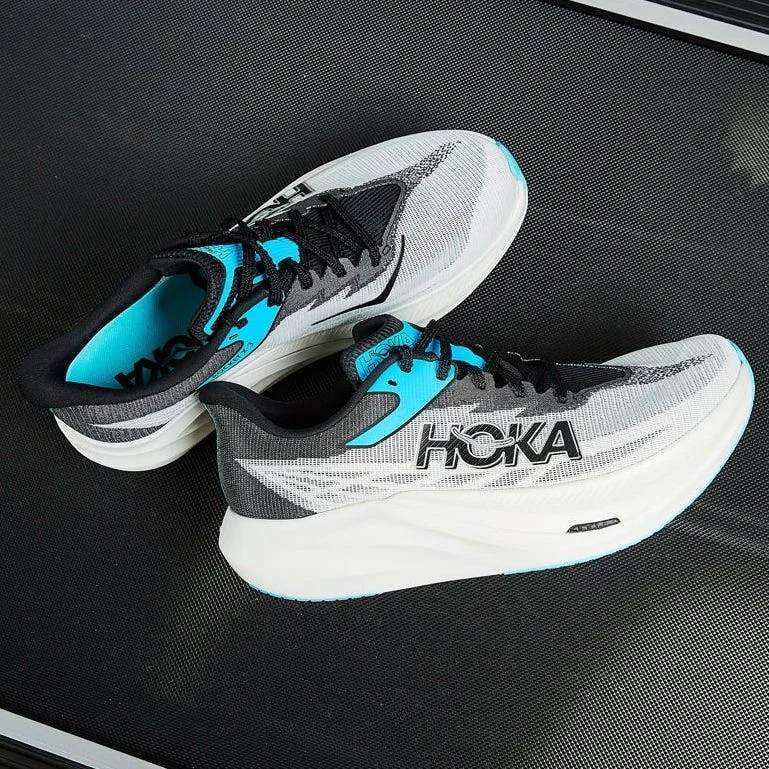
The Rocket X 3 is Hoka-soft with all the super shoe features. The broader base makes this shoe’s fit and ride not as severe as competitors’. Our midfoot didn’t feel squeezed, our toes weren’t crowded, and corner turns didn’t cause our life to flash before our eyes. What you get running in the Rocket X 3 is a stable—but fast—racing experience.
The shoe has dual-density PEBA foam and a winged carbon-fiber plate. Even though its ride is not as aggressive as the brand’s other racing shoe, the Cielo X1 2.0, it still packs a bouncy punch for running half marathons and marathons, and offers plenty of cushioning so your body won’t take a beating hours on the road.
“I love the push-off,” said Erica Bobstein. “They are bouncy and springy and they allow you to propel yourself forward with less effort. They do not have the same speedroll effect as the Saucony Endorphin Pro, but rather have an explosive push-off that requires less energy.”
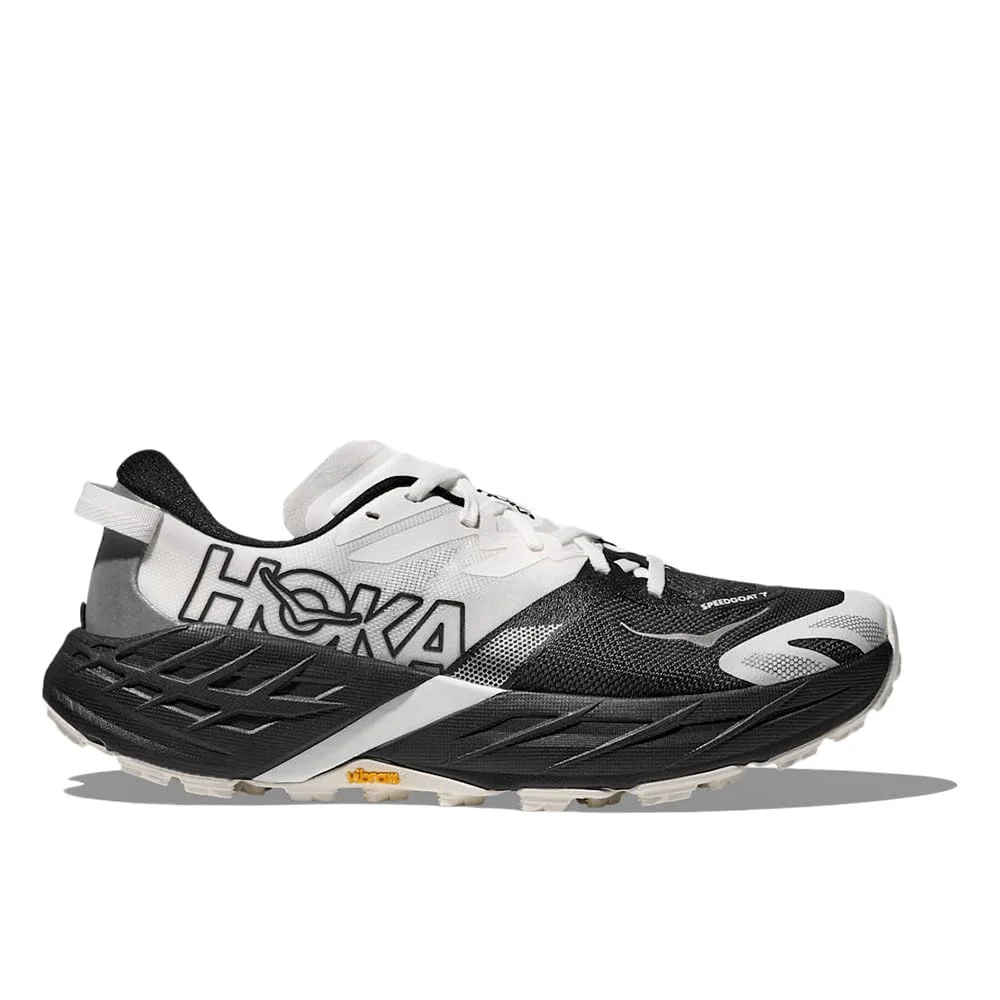
Pros
- Great for technical trails
- Comfortable at long distance
- Pull tab makes it easier to slide on
Cons
- A bit more snug than other Hokas
Key Specs
| Weight | 9.7 oz (M), 8.3 oz (W) |
| Drop | 4 mm |
A combination of plush maximum cushioning and all the tech you need to stay upright on the trail is a winning recipe for flat-footed runners tired of staying on the roads. The Speedgoat gets a reworking with its seventh iteration, resulting in a more secure—albeit, snug for wide feet—fit, and midsole foam that provides comfort for ultra distances.
Toothy lugs provide grip and stability over mixed, technical terrain, while the Meta-Rocker geometry smooths out heel-to-toe transitions. The supercritical EVA foam is tweaked to add more pop on the trail.
Tester Diane Grim, who previously tested the Speedgoat 6, noticed a significant difference in the shoe’s bounce with the 7. She found the ride more forgiving, “which could be great for the long runs, less foot fatigue.”
Shop Men’s at hoka.com | Shop Women’s at hoka.com
What to Consider
Running Shoes for Flat Feet FAQ
With Running Expert Michael Charboneau

Amanda Furrer, Editor, Running Reviews, studied journalism at NYU and writing at Emerson College. She has reviewed gear and covered other topics in the running space for almost 10 years. Since 2013, she has consecutively run the Boston Marathon. She also has a master’s degree in gastronomy from Boston University and was formerly a professional baker for two years before hanging up her apron.

Michael is a freelance writer with years of experience covering gear and the outdoors for Runner's World and other publications; when he's not writing, he's usually biking, hiking, and running in the mountains around Los Angeles, where he lives.