Norda 002 Trail Running Shoes Are Built for the Hard Scrambles
On my first run up Anthony’s Nose down to Peekskill in Upstate, New York, wearing my Norda 002 trail running shoes, I was sold. If you’re unfamiliar, this trail has 1,900 feet of gain with gnarly passes up and down the peak, and the majority of the climb and descent are both narrow and uneven. We’re talking steep inclines and declines where your poles have a hard time finding purchase.
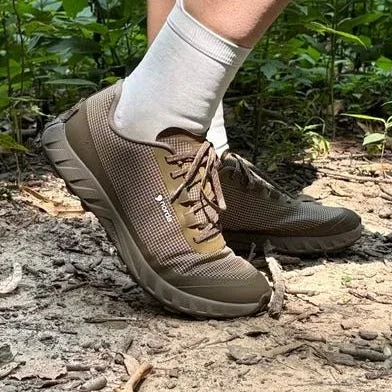
The 002, which is the follow-up to the 001, is designed to let you feel the ground in a way that shoes with a higher stack and more exterior rubber do not. It’s lighter, comfier, more flexible, and a lot more breathable than the 001s. When you’re literally between a rock and a hard place—that matters.
Pros
- Fantastic on technical trails
- Great ground feel
- Locked-down lacing

Cons
- Could use a bit more protection in the toe
- Not made for long runs

| Best For | Technical trails, hard scramble, canicross, speedwork |
| Weight | 9 oz (M8.5), 7.7 oz (W8) |
| Drop | 4 mm |
| Stack | 19 mm |
| Outsole | 5 mm lugs, Vibram Litebase Megagrip Soleplate |
| Lug Depth | 5 mm |
The Stack and Sole
Max stack besties, hold on to your shorts because these shoes are minimal at 19 mm in the heel and 15 mm in the forefoot, giving you only a 4mm drop. However, unlike the 001, they have a cushioned collar and a bit more padding around the heel that helps absorb impact and protect your foot on spikier terrain. These aren’t shoes for ultramarathons; these are for the training runs where you’re building the dexterity to keep going for 150 miles. Because of that low drop and intense ground feel, you are learning the motion of your body, gaining proprioceptive awareness, speed, and strength to carry you for when you do increase your mileage.
The sole is made of Vibram’s Lightbase material, which is exactly what it sounds like: a lightweight Vibram outsole that protects the foot without bulk or weight. The lugs are generous at 5 mm, and they grip the trail well without making you feel stuck. It’s not perfect, though. Personally, I’d love a hair more toe coverage up front, because as any scramble chaser will tell you, those areas get beaten up, and mine certainly did. A tiny bit of extra protection would go a long way here.
Side note: If you do any sort of trail running with a canine, as I do, you know that sometimes you need to pull them back if they get too excited. More than once, I’ve nearly eaten it (my dog thinks it’s hilarious). Not in the Nordas. I feel so much more planted and safe practicing for canicross in these.

The Upper
The upper is constructed out of one piece of Dyneema, which is ounce for ounce the strongest/lightest material you can use for this application. It is as strong as steel cables and incredibly breathable. What that means in practice is a ton of protection and durability that remains light. It also means it’s not as weatherproof as many other trail running shoes, but at a hard effort in the heat? You will not care. What is worth noting and caring about is the combination of the lock-in lacing system and the gusseted tongue that allow for movement when you need it, while simultaneously preventing lace bite.
The Fit
The fit is more anatomical than aesthetic, with a wider forefoot and toebox than many competitors, allowing the metatarsal bones to splay out to give you stability on the incline. It also provides space for your toes to curl for ease on the descent. This means that it’s a bit more accommodating on a wider foot, but if you have truly wide feet, these are not the shoes for you.
Longevity and the Wrap-up
I only have 150 kilometers on these shoes right now, but they still look great. Even after a few cleanings, they have held up extraordinarily well, and knowing from personal experience, if they did not, Norda would make that right. (My 001 Spikes were a manufacturing anomaly and they were replaced posthaste.) However, and this is a whopper of a however, you are paying for this durability and longevity. These are $295. In my incredibly un-humble, I-do-this-ish-for-a-living opinion, it’s worth it if you’re hitting the unforgiving trails in training or even just for fun. They’re especially great for East Coast runners who are dealing with rocks and mud and ice all in unpredictable waves. They’re a great shoe.
Buy Men’s at nordarun.com | Buy Women’s at nordarun.com

Cat Bowen, senior editor of commerce; reviews, is a seasoned runner with more than 20 years of distance running experience, including dozens of marathons, half marathons, and even a few ultra marathons. For over a decade, she has tested parenting, fitness, home, and running gear and written in-depth guides to help readers with their next purchase. Holding multiple advanced degrees and currently studying kinesiology, Cat Bowen brings research-backed insight to all of her guides. Passionate about women’s health and neurodivergent inclusion, she advocates for closing research gaps and helping others—especially AudHD people—find joy in running and fitness.