She Ran 1,242 Miles Across the Alps in Under 30 Days—Faster Than Anyone in History
Sophie Woods’s record-breaking fastest known time (FKT) across the Alps isn't just an enormous and fast effort; it might represent a redrawing of what's possible.
The 42-year-old New Zealand-born trail runner who lives in Andorra rewrote the record book on August 1 when she finished the full Via Alpina route in under 30 days, completing the 1,242-mile course faster than any woman or man ever has.
The previous FKTs were approximately 38 days for women and 35 days for men. Woods didn't just chip away at the women's record, she blew past both of them at once.
“Ecstatic, but knackered,” she told The BBC after completing the route. “I’m really tired.”
She has reason to be exhausted. The rugged Via Alpina route is a connection of numerous trails across southern Europe with a cumulative vertical gain and loss of nearly 360,000 feet, the equivalent of summiting Mount Everest a dozen times from start to finish.
“Before I started, I couldn't think about the whole thing,” Woods said to The BBC. “The idea of running 2,000 kilometers is just silly. So being able to chunk it into days and just go, ‘Well, I know that I can do day one. I can do that.’ And I really had to make sure that through the whole thing I was only ever thinking about the day, the hour, the sort of minute that I was in, because if I started thinking about the end, then for sure I was going to twist an ankle or, you know, face plant.”
Women Taking Crowns
Woods left Trieste, Italy, on Saturday, July 4, and with a relentless mindset and little sleep, she pushed even harder than what she and her support team thought was possible. She averaged about 40 miles of running and hiking with 8,200 to 13,000 feet of climbing every single day for a month. She crossed portions of eight countries—Italy, Slovenia, Austria, Germany, Liechtenstein, Switzerland, France, and Monaco—amid stormy weather, trails washed out by flash floods, wildfire smoke, and excessive heat that topped 104 degrees at times.
Knowing she was within reach of finishing in under 30 days, Woods covered 140 miles over the final three days, including 52.5 miles through the night on July 31, and then after a 90-minute nap, the final 36 miles to the end point in Monaco to complete her journey on Saturday evening.
“Honestly, I think it’s absolutely insane and so inspiring,” said Canadian professional ultrarunner Marianne Hogan, who is training in Chamonix, France, and followed Woods’s progress online. “I love seeing women take overall FKTs. It’s just so cool and such an awesome reminder of what’s possible. Huge respect to Sophie for such a massive undertaking!”
Woods’s feat comes at a time when other female ultrarunners have been rewriting records, including Colorado’s Rachel Entrekin becoming the outright winner of Arizona’s Cocodona 250 ultradistance trail race in a new course record (56 hours, 9 minutes, and 48 seconds) in May.
Last September, New Hampshire’s Lyla “Sugar” Harrod set a new overall self-supported record on the 2,198-mile Appalachian Trail, finishing her southbound journey in 52 days, 18 hours, and 37 minutes. She also became the first transgender athlete to hold an AT FKT.
Last August, Colorado trail runner Tara Dower ran Vermont's 272-mile Long Trail, supported, in 3 days, 18 hours, and 29 minutes, taking down the overall record, men included, by close to 3 hours.
Also in 2025, Germany’s Paulina Zäck covered New Zealand's 1,898-mile Te Araroa Trail in 54 days, 9 hours, and 48 minutes, the fastest self-supported crossing on record.
The line Woods completed is known as the 2024 Via Alpina route, which takes backpackers three to five months to complete, but it has only been raced against the clock twice before. British ultrarunner Jake Catterall set the men's mark and previous overall FKT in August 2024, 35 days and 21 hours. A year later, Dutch athlete Tessa Caspers put down the fastest women's time, 38 days and 2 hours. (Karel Sabbe, a Belgian ultrarunner, completed a 30-day crossing in 2021 but it was on a much different route.)
Fastest Known Time, which ratifies these records, lists it as a premier route, meaning any claim requires a high standard of documentation. Woods was running supported, tracked by Garmin run-tracking technology.
In breaking down what it would take to surpass the overall FKT, Woods and her husband, George Woods, realized she’d be better off focusing on longer days on the trail and not aiming for faster segments every day.
Woods wound up sleeping three to six hours per night, depending on the segment she had just completed and what was on the docket for the next day. She said she consumed between 6,000 and 7,000 calories per day, mostly from high-carb sports drinks.
“She said the first two weeks were hell, and then she said eventually the body adapts, gets used to it, and then she was just cruising,” said Martin Gaffuri, a professional trail runner and event announcer from France. “It’s a super impressive effort and result. Just that sleep deprivation for that long blows my mind.”
An Adventure, Not a Race

This didn’t come from nowhere. Woods left London behind for the mountains years ago, first living in Italy and France, and eventually settling in Andorra. Her ultrarunning résumé reads like a checklist of the sport's hardest days out: multiple finishes at the 205-mile Tor des Géants, five finishes and a top-10 result at the 106-mile Ultra-Trail du Mont-Blanc, a skyrunning title in the U.K., a fourth-place finish in the seven-day, 160-mile Marathon des Sables in Morocco, and a podium finish at the brutal winter edition of the legendary 268-mile Spine Race in the U.K.
“I've run some of the most amazing races around the world, but I was just feeling a bit like I wasn't learning anything anymore from racing,” Woods said to The BBC. “I'd never heard of the Via Alpina and I wasn't particularly interested in doing an FKT. But when my husband said to me, ‘Do you want to have a crack at running around the Alps?’ It was like, ‘Wow, imagine, like, what an incredible experience.’ And it was about the adventure more than trying to break a record.”
But the more interesting story sits underneath her race résumé. Woods has been open about a difficult fertility journey, including time spent going through IVF, and about wanting her life to look different on the other side of it.
Last year, that journey became the subject of a documentary called Off Course that she made alongside friend and fellow professional ultrarunner Stephanie Case, following the two of them through the uncertainty of their individual paths to parenthood and their strong friendship. Case, a Canadian trail runner who lives in Chamonix, gave birth to her daughter in November 2024.
Case said the new Via Alpina FKT endeavor has been part of Woods’s journey to fall in love with running again and reconnect with her identity on her own terms “and to show other women, no matter what stage of their life they are at, that they can go do big, scary things.”
“Sophie is incredibly selfless, loyal, and humble,” Case said. “When the two of us went through IVF a couple of years ago, she agreed to be a part of a film project I was spearheading. While we both hoped we would be successful in getting pregnant, that unfortunately wasn’t the case … and yet Sophie was there to support me the entire way. I don’t know if I would have had the strength had the situation been reversed. She’s a brilliant human being.”
Woods didn't do it alone. Her husband crewed her the entire way. Friend and professional photographer Zoe Salt covered a lot of ground alongside her, documenting the effort on camera. And her dog, Nila, came along in the support van.
Case said Woods’s willingness to be candid about how hard it was—physically and emotionally—is a big part of why the attempt caught fire well beyond the usual ultrarunning circles.
“As women, we need to push ourselves to do things we aren’t sure we will finish, things at which we think we might fail,” Case said. “Because you know what? We are way stronger than we’ve been led to believe, and there is really only one way to find that out for ourselves. I hope Sophie’s FKT shows all of us that we can accomplish way more than we think we can.”
Woods began her quest with little fanfare, but it gained international attention after Case posted about it on social media.
“I’m all about supporting women, no matter who they are, in achieving their trail running dreams,” Case said.
“Until I posted about Sophie and it went viral, almost no one was talking about her … now, thankfully, she has over 50,000 followers. But in general, women are still getting less attention for the feats they take on, and less visibility means less women seeing someone they could become. Visibility helps demystify ‘impossible’ challenges and makes them seem feasible. Second, women need more support to be able to take on big goals. The barrier to entry for women is still higher than it is for men for many reasons. But way more women are out there crushing it on the trails, in the mountains, on the ocean, and in the desert than any of us are aware of.”
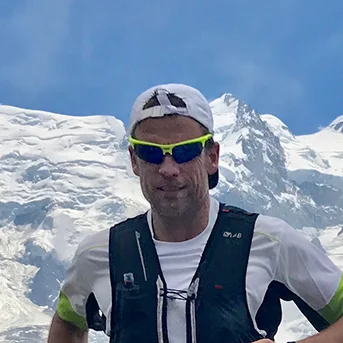
Brian Metzler is a Boulder, Colorado, writer and editor whose work has appeared in Runner’s World, Sports Illustrated, ESPN, Outside, Trail Runner, The Chicago Tribune, and Red Bulletin. He’s a former walk-on college middle-distance runner who has transitioned to trail running and pack burro racing in Colorado.