As a Competitive Runner, I Was Skeptical of This Underrated Tool My Coach Harped on Using—Until I Saw Results
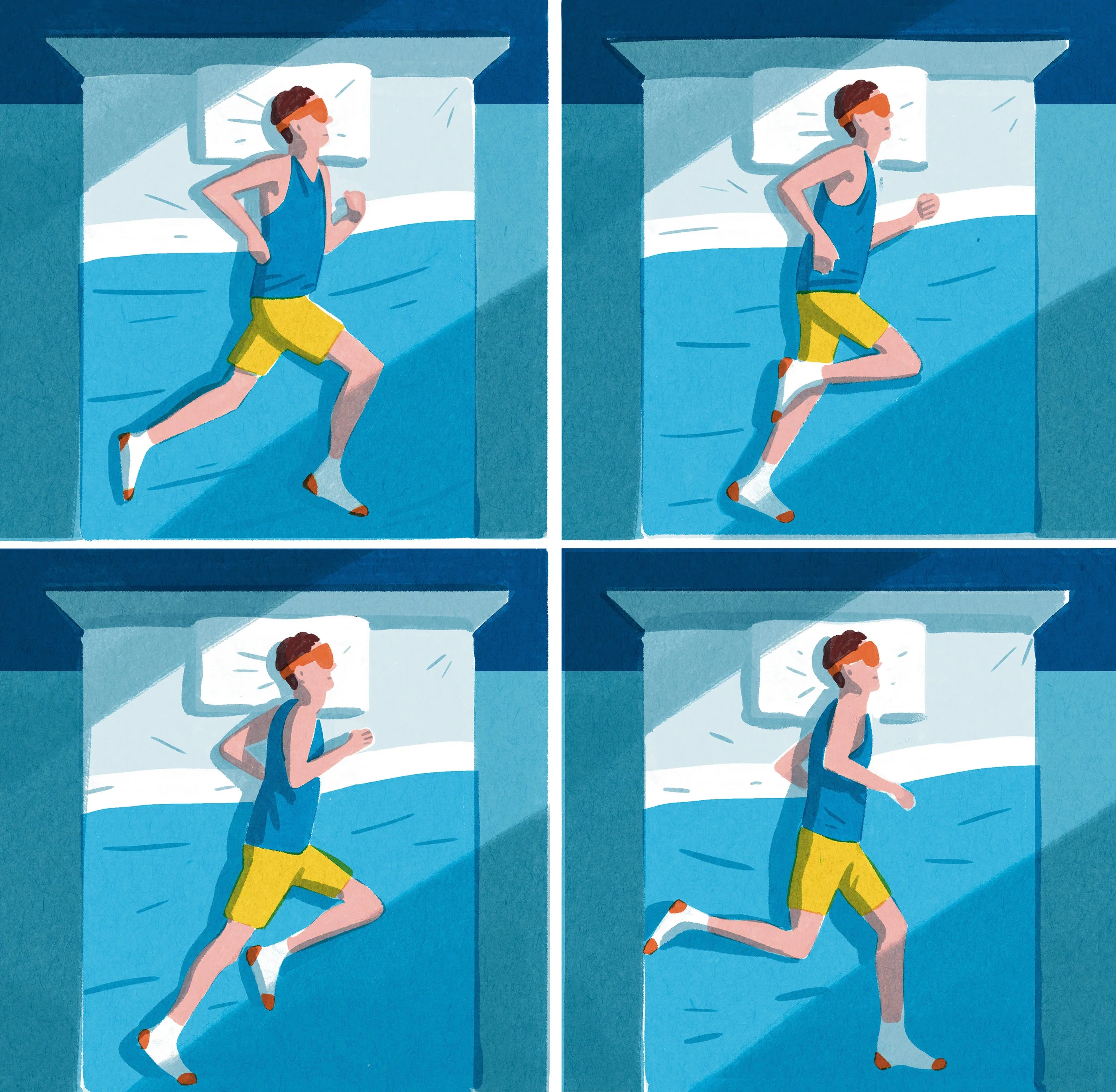
Not long after I joined the Wake Forest University cross-country team in Winston-Salem, North Carolina, as a graduate student, I sat in on an illuminating meeting. Our assistant coach was harping on the importance of not running.
“Practice takes up three hours of the day, but the other 21 hours of the day are just as important,” Coach Ferris said. “That’s where the real gains take place. Fueling appropriately, staying on top of schoolwork—and sleeping.” The Wake Forest team was really good at sleeping.
When I was in undergrad at Winthrop University in Rock Hill, South Carolina, I would sleep around six to eight hours a night, which was better than most college students. But I was running 70 miles a week and was constantly tired. I was convinced the mileage made me groggy—not my poor sleep habits. But at Wake Forest, Coach Ferris had the team aim for eight to 10 hours daily. At first, it seemed unrealistic, especially during cross-country season when practice started at 6:30 a.m. But then I realized that one of my teammates, who ran north of 100 miles a week, would get close to 10 hours a day. His secret? Naps.
The problem was that naps have never come easily to me. I would struggle to fall asleep during the day—my mind would race, convincing me it was a waste of time. But the Wake Forest team, one of the top in the country, showed me some tricks for executing a high-quality sleep diet. I started implementing more naps into my routine, and it’s helped me stay healthy since graduating in 2021, as I’ve transitioned to marathon training and higher mileage.
Now they’re a key part of my training.
During the workweek, I don’t always have time to fit one in, but one of my greatest joys in life is a post–long run nap on the weekend. My ideal Saturday goes like this: I wake up around 7 a.m., sip on some coffee and eat a Rice Krispies Treat, then drive to my favorite gravel long-run spot in New Jersey. Once I crank out an 18-miler with my buddies, I grab brunch at the coffee shop down the road. After I hit the shower, I knock out for an early afternoon nap. Thirty minutes is all I need. For the rest of the day, I lounge around watching college football.
Sleep is when your body repairs its muscle cells, bolsters your immune system, and refreshes your mind. Although deep sleep is when your body regenerates the most, naps are a great way to add more rest to your day. Here are some tips for how I maximize my midday snooze.
Stick to a Time Frame
I prefer to nap after lunchtime because if I put it off until the late afternoon or early evening—4 p.m. is usually my cutoff—I find it harder to fall asleep at night. And since it takes about 30 minutes for your body to go into deep sleep, I keep my naps short to avoid waking up groggy and disoriented.
My strategy is to set a timer on my phone for 35 minutes. That gives me about 10 minutes to fall asleep without the fear of oversleeping. Sometimes I wake up a few minutes before my alarm, and it still feels like I was asleep for hours. Even just 10 to 15 minutes feels great.
Wear an Eye Mask
As someone who needs total darkness to fall asleep (I covered up my old WiFi router because the blinking was annoying), a sleep mask is essential for me. The quality doesn’t matter too much (the airplane freebie is good enough), but my mom bought me a silk one from Alaska Bear ($15), which is especially soft. When I wake up from my nap, taking off the mask and flooding my eyes with daylight helps me get my circadian rhythm back on track.
Block Out Sound
I get distracted by the city sounds (e.g., motorcycles) outside my window, so earplugs are a necessity. I like the basic foam ones you can get from Target, which are $3.50 for a 12-pack. They’re marketed as disposable, but you can totally reuse them.
Stay Cool
I prefer my room to be under 70 degrees. Cool conditions have been shown to aid in sleep quality.
Prevent Distractions
I always activate Do Not Disturb mode on my devices to avoid being disrupted by the potential buzz of a notification.
Not everyone is a natural napper. My girlfriend, for example, hasn’t taken a nap since elementary school, because she says her mind struggles to shift out of “day mode.” I, too, sometimes find it hard to nap when I have a busy day or too much to think about. To relieve some of that pressure, I think of naps as a bonus to my running. If I can fit one in (on top of a good night’s sleep—not instead of it), then it’s only going to help my recovery.
And if I can’t fall asleep, I don’t force it. I still keep my eyes closed and use it as time to rest, away from my phone, sometimes teetering on the edge of the first stage of sleep. A nap attempt, in my opinion, is never a waste of time.

Theo Kahler is the senior news editor at Runner’s World. He’s a former all-conference collegiate runner at Winthrop University, and he received his master’s degree in liberal arts studies from Wake Forest University, where he was a member of one of the top distance-running teams in the NCAA. Kahler has reported on the ground at major events such as the Paris Olympics, U.S. Olympic Trials, New York City Marathon, and Boston Marathon. He’s run 14:20 in the 5K, 1:05:37 in the half marathon, and finished 40th at the 2025 New York City Marathon. He enjoys spotting tracks from the sky on airplanes. (Look for colorful ovals around football fields.)